Skip to content

Posts from the "Highway Removal" Category

112 Comments

The Case for Removing the 280 Freeway

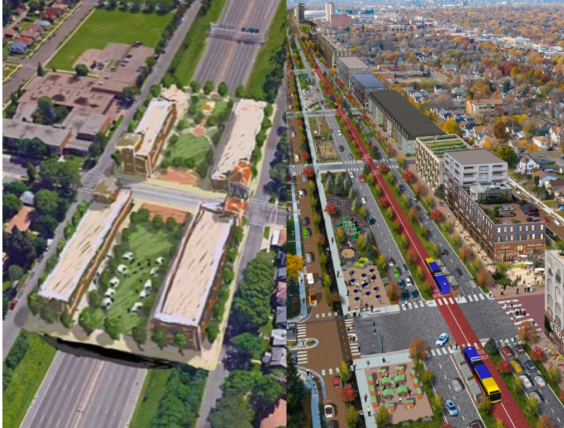
Urban Design student Ben Caldwell's vision for an alternative way to use the land currently occupied by the 280 freeway.

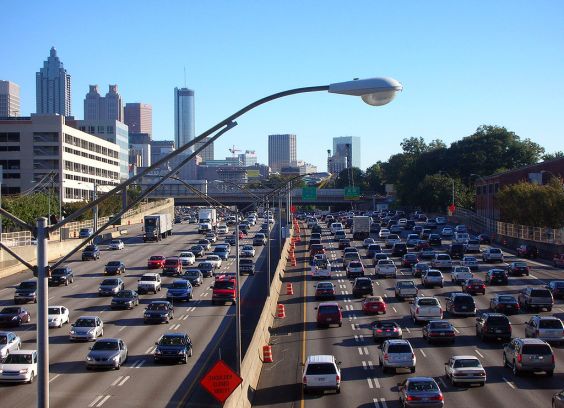
Talk of San Francisco’s next freeway removal has heated up since a proposal from the Mayor’s Office to take down the northern spur of I-280 went public. The highway teardown would open up land for housing, connect neighborhoods, and help bring high-speed rail and Caltrain downtown.

“The good news is this would be the third segment of freeway we will have removed,” said Livable City Director Tom Radulovich, referring to the removal of the Central and Embarcadero Freeways, which revitalized the neighborhoods the roads used to divide. “Before each of those freeway removals, carmageddon was predicted, and it didn’t happen.”

While San Francisco officials say they’ll have to go though years of analysis and negotiations before any decision is made, building public support will take some work, judging by the outraged listeners who chimed in on the issue on an edition of KQED Forum last week.

On the forum, SF Planning Department Director John Rahaim stopped short of endorsing the proposal, but acknowledged, “If it works from a transportation standpoint, we think there could be some substantial benefits: increased park space, reconnecting Mission Bay to the rest of the city, opening up land for development, and connecting that part of that city that is kind of divided right now by the freeway.”

Transportation agencies certainly seem to be thinking seriously about the highway removal. Ben Caldwell, a masters student at UC Berkeley’s Department of Urban Design, did recent a project [PDF] analyzing the removal of the same same section of freeway (completely coincidental to the mayor’s proposal), and he’s already been invited to make presentations for staff at the SF Municipal Transportation Agency and Caltrans. (He hasn’t presented it to them yet.)

Read more…

173 Comments

Mayor’s Transpo Chief: “Let’s Be San Francisco and Take Down the Freeway”

This post supported by

The 280 freeway looking from Potrero Hill, where it divides the neighborhood from Mission Bay. Photo: Michael Patrick/Flickr

The idea of removing the northern section of Highway 280 near Mission Bay is gaining more traction as planners look for ideal ways to usher in high-speed rail and transit-oriented development in downtown San Francisco.

At a SPUR forum yesterday, Mayor Ed Lee’s transportation policy director, Gillian Gillett, sketched out a proposal to follow in the footsteps of the removals of the Embarcadero Freeway and a section of the Central Freeway, which revitalized the neighborhoods the roads used to divide. As Adina Levin at Green Caltrain reported, Gillett argued that replacing the elevated portion of I-280 with a street-level boulevard, from its current terminus at 4th and King Streets south to 16th Street, would improve the livability of the area, open up land to develop new neighborhoods, provide funding through real estate revenue, and open up engineering solutions to facilitate the extension of Caltrain and CA High-Speed Rail to the planned Transbay Transit Center.

If the freeway is left to stand, its pillars would present an engineering obstacle to running the train tracks undergound, meaning the only other feasible way to allow rail tracks to safely and expediently cross 16th Street would be to dip 16th underneath the tracks. And that would make the intersection — a gateway to Mission Bay — even more hostile for people walking and biking than it already is.

As past cases have shown, creating a surface street where that part of I-280 now stands and integrating it into the neighborhood would actually reduce overall car traffic. In a moment that would make the city’s mid-20th Century freeway protesters proud, Gillett told the crowd, “Let’s be San Francisco and take down the freeway.”

Walk SF Executive Director Elizabeth Stampe called the proposal “an exciting opportunity to re-orient our city around sustainable public transportation and create a more walkable city.”

Read more…

The Nowtopian 12 Comments

Whose Streets?

Market and Kearny and 3rd Streets, 1909. (Photo: San Francisco History Center, SF Public Library)

“Whose Streets? OUR Streets!” yell rowdy demonstrators when they surge off the sidewalk and into thoroughfares. True enough, the streets are our public commons, what’s left of it (along with libraries and our diminishing public schools), but most of the time these public avenues are dedicated to the movement of vehicles, mostly privately owned autos. Other uses are frowned upon, discouraged by laws and regulations and what has become our “customary expectations.” Ask any driver who is impeded by anything other than a “normal” traffic jam and they’ll be quick to denounce the inappropriate use or blockage of the street.

Bicyclists have been working to make space on the streets of San Francisco for bicycling, and to do that they’ve been trying to reshape public expectations about how streets are used. Predictably there’s been a pushback from motorists and their allies, who imagine that the norms of mid-20th century American life can be extended indefinitely into the future. But cyclists and their natural allies, pedestrians, can take heart from a lost history that has been illuminated by Peter D. Norton in his recent book Fighting Traffic: The Dawn of the Motor Age in the American City. He skillfully excavates the shift that was engineered in public opinion during the 1920s by the organized forces of what called itself “Motordom.” Their efforts turned pedestrians into scofflaws known as “jaywalkers,” shifted the burden of public safety from speeding motorists to their victims, and reorganized American urban design around providing more roads and more space for private cars.

Read more…

12 Comments

Will SF Tear Down That Freeway? 280 Removal Study for HSR Moves Forward

The Caltrain tracks under I-280. Photo: Troy Holden

The San Francisco Examiner, in typical tabloid fashion, picked up on a story this morning that we first reported nearly a year ago. The city is seriously studying demolishing the northernmost segment of Interstate 280 to accommodate four tracks for high-speed rail, and prevent the depressing of several city streets, including 16th Street, which Mission Bay residents and institutions fear would further divide and isolate their neighborhood.

The freeway would be replaced with a boulevard running along the path of the current freeway, and could include a park at the mouth of Mission Bay as well as a bike path on the eastern edge, according to our sources. It could also set the stage for a future freeway-to-boulevard conversion southward to Chavez, or even farther.

While the idea sounds exciting, the city is still far away from a fully developed design. However, it does seem likely the city will propose it as one of the track alignment alternatives to be considered in the High-Speed Rail Environmental Impact Report due out in 2012. City planners have been working with the California High-Speed Rail Authority and Caltrans on advancing the concept.

Streetsblog DC 4 Comments

Fighting Freeways: War Stories From Portland

Rail~volution is underway in Portland, Oregon, bringing together more than 1,000 city planners, engineers, transit advocates, bike policy experts, and elected officials to strategize about making cities and towns better for transit, walking, and biking.

Monday started with 15 different workshops that took place around the city, including one highlighting Portland’s “Lost Freeways” – the roads that were never built, and one that was actually torn out. These battles happened decades ago, but in many cities, highway fights continue to this day, and in some, teardowns are looking more and more possible. (Take note, readers in New Orleans, St. Louis, Seattle, New York, and New Haven.)

Traveling around on bikes and on foot, two groups visited some notable sites in Portland’s battles against freeways. First, we saw some battlegrounds where the anti-freeway movement lost.

South Park Blocks and I-405

Here's the block of the Goose Hollow neighborhood right next to I-405...

Here's the block of the Goose Hollow neighborhood right next to I-405...

... and here's the highway that paved over two more blocks just like it. Images by Shoshanah Oppenheim.

... and here's the highway that paved over two more blocks just like it. Photos by Shoshanah Oppenheim

In 1943, Portland invited New York’s master freeway planner, Robert Moses, to come to town. After a month of study, he came out with an 86-page document mapping out the “future of Portland”: 14 freeways and a tangle of limited-access parkways to re-make the city. Portland would have become what longtime local transit official Dick Feeney calls “a wonderful place to drive a car through,” where “the neighborhoods would have all vanished.”

Today, one of those highways, I-405, runs right through downtown. Tour guide Sarah Mirk, author of Oregon history comic books (including one about dead highways), took us to a little grassy patchy just across the I-405 overpass from the South Park Blocks, built in the mid-1960s.

This little marooned park over here is an orphan of when they built the I-405 freeway right here. The South Park Blocks are something people love in Portland; it’s a historic part of our city. And when they built I-405 through, they not only tore out two solid blocks of dense housing here in this neighborhood – which was really diverse, low-income housing – they also tore out two blocks of the South Park Blocks. People were really upset about that. And as a concession to people who were really upset about tearing out the park blocks, they said, we’ll do a ‘park-like treatment’ on the overpass coming over here. So you can see the overgrown bramble, and the cement, and the weeds. This is the ‘park-like treatment’ given to the South Park Blocks.

The freeway cut the neighborhood off from their school and library on the other side, becoming a “wall” between the residents and the services they used. Developers put in a bike-ped trail along the freeway as a concession.

That trail – unsigned, virtually unknown and unused – is known informally as the Ho Chi Minh trail. “Not to honor the Vietnamese leader,” says Mirk, “but because it was so dangerous and there were lots of muggings along here at night. There’s zero lighting, the neighbors have put up barbed wire, and it’s out of sight, out of sound. No one can hear you scream over the sound of the freeway.”

In my next post, I’ll get to the good stuff: the freeway plans that never saw the light of day, and one that came tumbling down.

14 Comments

Enrique Peñalosa Urges SF to Embrace Pedestrians and Public Space

Enrique_small.jpgPhoto: Matthew Roth
Celebrated Colombian urbanist and former mayor of Bogotá Enrique Peñalosa told a standing room audience of more than one hundred people at the San Francisco Public Library last night that San Francisco can be friendly to cars or to people, but not both. Further, he argued that there is no fundamental technical reason why streets have to function only as free-flowing arteries to move cars, but that the state of our cities in America is a political decision that we can overturn and that American's perceptions of what is possible in cities will follow suit.

"I don't say this as a car-hater--I have a car, I think cars can be wonderful to go to the countryside--but clearly the faster cars go in a city, the wider the roads are, the less pleasant is it to be around. The narrower the street, the slower the speeds, the wider the sidewalks, the better you can feel. High-velocity urban roads are sort of fences in a cow pasture."

Road space, he argued, is the most valuable asset in a city and it is a resource that society can use as it pleases, distributing it between all transportation modes or only one. He stated what is obvious, but what seems to rarely be acknowledged by traffic engineers and politicians in San Francisco: less space for cars will mean less cars. "There is no such thing as a 'natural' level of car use in a city. There is nothing technical about how much space you should give to cars or to pedestrians. It's not like you have to ask a transport engineer permission. What is clear is this is a political decision."

Peñalosa's trip was underwritten by the Institute for Transportation and Development Policy (ITDP) and was part of the kick-off of the Great Streets Project, a join initiative between the SFBC, SPUR, Project for Public Spaces, and The Livable Streets Initiative (parent company of Streetsblog). Peñalosa earlier in the day met with Mayor Gavin Newsom, which he said went quite well.

"I think [Newsom] was very sensitive to all these issues and he even told some of his people to look into how these things are being used in other cities, the designs that are being used to improve the pedestrian and bicycle spaces there," he said.

Read more...

The Nowtopian 25 Comments

Revisiting the San Francisco Freeway Revolt

Editor's note: This piece was written for Shaping San Francisco and is now incorporated into the new wiki version, your best place to research San Francisco history, FoundSF.org.

Ecology1_freeway_protest_embarcadero.jpgProtesters march along Embarcadero in early 1960s, stump of Embarcadero Freeway ends behind them at Broadway.
Photo courtesy San Francisco History Center, SF Public Library

In the 1950s, the California Division of Highways had a plan to extend freeways across San Francisco. At that time the freeway reigned supreme in California, but San Francisco harbored the seeds of an incipient revolt which ultimately saved several neighborhoods from the wrecking ball and also put up the first serious opposition to the post-WWII consensus on automobiles, freeways, and suburbanization.

Fwy_NBeachIntx.jpgEarly plan for 8-lane freeway to cut under Russian Hill on its way from the Embarcadero to the Golden Gate Bridge.

Read more...

10 Comments

What’s in a Neighborhood

International_Blvd.jpgA Sunday Stroll on International Boulevard, Flickr photo by madpai
How would you define the boundaries of your neighborhood? Is it the streets that describe it? Is it the people who live in it, a cultural or demographic group that you belong to, or that excludes you?  Do you think your neighbors would describe your neighborhood the same way you do?

I live on Mission Street, a few blocks south of Cesar Chavez, on the side of the street that the Post Office includes in its Bernal Heights boundary.  If I tell people I live in Bernal Heights, most assume I'm up on Cortland Street in the commercial center of Bernal Heights, a fifteen minute walk.  If I say Mission, they assume the area north of Cesar Chavez between 24th Street and 14th Street, a 10 to 20 minute walk.  No one knows what I mean if I say Precita Valley.  Inevitably, I just say I live across the street from the bar El Rio and most people know exactly where I am.

Berkeley landscape architecture graduate student Robert Lemon was recently awarded the Landscape Architecture Foundation's Dangermond Fellowship to examine questions of neighborhood identity in the Oakland districts of Fruitvale, West Oakland, and Chinatown. He's hoping the information he gathers will inform city planners and politicians not only about how members of a community define themselves, but ways the city can improve the neighborhood according to those geographic and cultural identities.

Mapping Oakland is based on previous experience Lemon had as a planner in Columbus, Ohio, and research he did for a Berkeley class on the relocation of the I-880 in West Oakland after the 1989 Loma Prieta earthquake destroyed a section of it. 

Lemon has completed most of the survey work he intends to collect and is now filtering through the data for patterns, which he expects will vary by demographic and cultural subsets.  Lemon and a Berkeley counterpart will create GIS maps to give a visual representation to the dynamics of those neighborhoods.  He explained that three respondents will have three different perspectives on the boundaries of a neighborhood and, using GIS, he will map the errors of disagreement among all respondents.  If a block within a neighborhood is repeatedly excluded from the boundaries, he wants to know which that is and why it is defined the way it is.

Read more...

9 Comments

Mayor Newsom, Caltrans Announce Plans to Remove Portions of I-280

fireball_2.jpgA controlled explosion from the filming of the TV series "Trauma," on a closed portion of I-280
Mayor Gavin Newsom yesterday announced one of his most ambitious plans for re-shaping San Francisco, telling reporters at a press conference with Caltrans Director Will Kemption and Caltrain Director Michael Scanlan that the city would move forward with plans to tear down sections of I-280 through San Francisco.  

"As we saw this weekend with the filming of the new TV series 'Trauma,' we can close a section of 280 and it doesn't back up all the way to San Bruno," said Mayor Newsom.  "I'm committed to actively looking for projects where we can transform our streets into public open space, especially in neighborhoods that have so little of it.  Show me another project that gives back more space to our great city than this."

Mayor Newsom painted a grand vision of a ribbon park in the footprint of the current freeway and said the city would rezone much of the area for residential development, much of which would be affordable housing, he claimed.  "Think Rock Creek Park for the next century," said Mayor Newsom.  "If New York City can convert an old rail line through Manhattan into the Highline Park, surely we can transform our outdated infrastructure into green space."

Caltrans' Kempton said that the agency had considered various freeways that underperformed their transportation function after the successful removal of segments of the Embarcadero Freeway and Central Freeway to Market Street, but said that they weren't seriously thinking about this section of I-280 until Mayor Newsom approached Governor Schwarzenegger late last year. 

"We've understood that it was possible to make changes to further segments of the Embarcadero Freeway," said Kempton, "but we didn't see it as a priority until Mayor Newsom made it so.  Now, we're only committing to study it, but we know the Obama administration is looking for innovative transportation projects, and I wouldn't be surprised if there are unspent federal stimulus funds from other states that we can apply for in six months, a year from now."

"Highway de-construction can be just as shovel-ready as highway re-construction," said Kempton.

Read more...

10 Comments

San Francisco’s Unbuilt Freeway Network Revisited

Picture_4.pngSome of San Francisco's unbuilt freeways

Hunter College student and photographer Andrew Lynch recently posted Google Map mashups of the unbuilt freeways that made up many of the master plans in cities around the country in the 1950s and 1960s.  San Francisco, New York City, and Boston avoided the worst of automobility, while the map of Los Angeles freeways was pretty well paved.

The maps are a stark reminder of how devastating the plans would have been to San Francisco's livability had the public not revolted against the master planners.  I'd currently be huffing fumes from the Mission/Bernal Heights freeway, there'd be no Panhandle, and North Beach and the Marina would likely have much lower property values.  But you can imagine the pleasure of motoring past Ocean Beach at 70 mph without forced stops at traffic signals!

Alternately, can anyone tell me why the upper portion of Market Street where it becomes Portola Drive still has elevated segments?  I would think the value of new development with those views would have trumped the convenience of speeding through that neighborhood with limited stop lights.