Skip to content

Posts from the "Trucks" Category

Streetsblog DC 5 Comments

The Problems With Ports, or Why We Need a National Freight Act

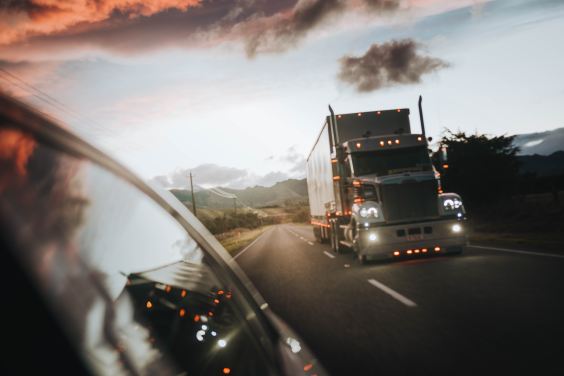
Maybe you commute by train, or maybe you've switched from driving to biking. But your stuff is still traveling the country by diesel truck.

port_of_oakland_noaa.jpgContainers at the Port of Oakland. Photo: NOAA
Nearly a quarter of transportation-related greenhouse gas emissions come from freight. The movement of goods from port of entry to a store near you throws enough particulate pollution into the air to shorten the lives of 21,000 people each year, according to the Clean Air Task Force.

The freight sector is lumbering under inefficient and outdated systems that cause pollution, public health problems, safety hazards, and delivery delays. There’s never been a coordinated national approach to solving these problems. And with no deliberate strategy, the default approach is often to build more highways.

As Stephen Davis of Transportation for America writes:

If a port is congested or wants to expand, there’s little available federal money to spend directly on rail or any other mode. Your choices are highways or highways. When a state or port does spend to improve operations, there is no accountability to make sure they’re actually reducing port/freight congestion, moving freight faster, or reducing air pollution in surrounding communities.

Enter the FREIGHT Act. (That’s the Focusing Resources, Economic Investment and Guidance to Help Transportation Act of 2010, with true Capitol Hill acronym panache.) The FREIGHT Act was introduced in the Senate toward the end of July and in the House a week later.

The bill focuses on areas known as "connectors," said Kathryn Phillips of the Environmental Defense Fund. “All the literature and studies say it’s the connector areas, the hubs, where you have the most congestion and environmental impacts.” The bill calls for troubleshooting at these bottlenecks, where products are transferred “from boat to truck to another truck to rail” and everything gets bogged down. Trucks get stuck in traffic; trains sit on the tracks; ships idle at port.

Communities near international ports pay the price. In Riverside, California, traffic gets tied up at 26 at-grade rail crossings 128 times a day when trains pass. Add to that the noise and pollution nearby neighborhoods must contend with.

Read more...
No Comments

Know Your Transportation Lobbyists: The American Trucking Association

Earlier this week, we took a closer look at the congressional lobbying teams employed by the transport sector's biggest players, AASHTO and APTA. Today, it's time to meet the representatives of the American Trucking Association (ATA), which reported $1.32 million in lobbying spending during the first half of this year on its congressional disclosures -- more than AASHTO and APTA's combined K Street bills.

The ATA is a dedicated opponent of expanding tolling to pay for infrastructure improvements, particularly on the interstate highway system and through congestion pricing plans.

Its lobbying activities extend to throwing cold water on legislation tackling climate change, which the group recently lamented would "impose significant costs on American consumers."

One prominent recent addition to the ATA's lobbying slate is James Lee Witt, director of the Federal Emergency Management Agency (FEMA) during the Clinton administration.

Witt and two colleagues at the consulting firm Global Options Group, Edward Fry and Bob Nash, who was Hillary Clinton's deputy campaign manager during her presidential run, registered to lobby for the truckers in June but have yet to declare any activity.

Aside from Global Options Group, the ATA has 15 lobbyists defending its priorities on the Hill. Its in-house team includes CEO Bill Graves, formerly the GOP governor of Kansas; Timothy P. Lynch, a 27-year veteran transport lobbyist; and Michael Robinson, a longtime adviser to the ex-House Majority Leader (and current indicted TV dance contestant) Tom DeLay (R-TX).

Read more...

5 Comments

To Save the Planet and Money, More Businesses are Delivering by Bicycle

When San Franciscans who've been around for a while think about delivery by bicycle, the first thing that comes to mind might be Kozmo.com. Sometimes cited as the epitome of dot-com boom excess, the company promised one-hour delivery of a variety of goods, free of any delivery charges. That model proved flawed, along with many other dot-com dreams that nevertheless attracted generous venture capital funding.

IMG_4144.jpgMatthew McKee, Mike Kirkman, and Brad Butler of Bicycle Coffee Company. Photo: Michael Rhodes
Today, in the depths of a recession, bicycle delivery in San Francisco is beginning to rise again, this time with an emphasis on sustainability - both environmental and financial.

"We're not really interested in doing things that aren't sustainable in our lives," said Brad Butler of Bicycle Coffee Company, which delivers coffee throughout the city and the East Bay by bicycle. "I think bicycling is the most effective and efficient vehicle and the most earth-healthy vehicle that I know of in the city."

Sustainability starts early in the process for Bicycle Coffee Company, which is based in San Francisco and is mostly comprised of brothers, cousins, and close friends. The entire concept started with a trip to Costa Rica: the plan was to start an eco lodge.

"This was our idea of our next endeavor," said Butler. "To go down there and build a project that would consist of land, we would grow all of our own food, and we'd basically be self-sustainable and invite people down from the States, Europe, basically anybody who'd like to come and live this life, a prehistoric type of life."

But the recession intervened, and the eco lodge plan was postponed.

"We just liked these communities and the farms there, and we all liked coffee, and drink coffee, and liked being in this area," explains Matthew McKee, Butler's cousin. "So we were thinking, well, shoot, what can we do with coffee and with the connections we have in San Francisco, and how can we find a way for us still to all have a business and work together, but go back to San Francisco and take back with us something we've learned in our adventures in Panama."

Read more...