Skip to content

Posts from the "Walking" Category

16 Comments

“Street Fight”: The New Guide to SF’s Transportation Politics

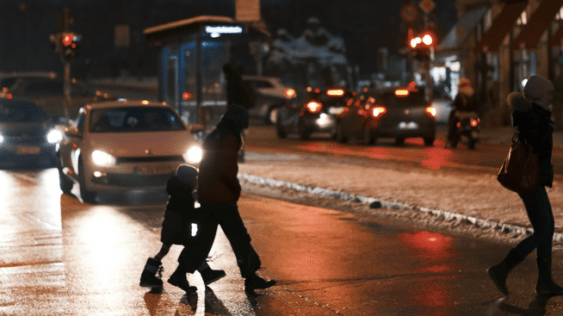
On the Sunset District’s 19th Avenue, a street transformed into an urban highway environment in the mid-20th century, Muni buses jostle for room on a car-clogged six-lane roadway, where residents put their lives in the hands of long-distance car commuters every time they cross. And all but the exceptionally adventurous can forget about bicycling on the motorway.

SFSU students cross 19th Avenue. Photo: San Francisco Sentinel

Those types of conditions are common throughout dense, car-dominated San Francisco, and they’re what Jason Henderson describes as a “mobility stalemate, whereby everyone using the street has an unpleasant experience, but any improvement to one mode of transport comes at the expense of others.”

That’s how Henderson explains it in his new book “Street Fight: The Politics of Mobility in San Francisco.” Henderson is a geography professor at SF State University, which happens to sit on the southern end of 19th Avenue.

When it comes to getting around and allocating street space in San Francisco, there are three primary ideologies battling it out — and sometimes working together — to shape decisions, according to Henderson. It’s these three conceptions of mobility — progressive, neoliberal, and conservative — that jostle to determine “how the city should be configured, for whom and by whom,” said Henderson at a talk on his book at SFSU yesterday. And while San Francisco has a national reputation as a walkable, progressive bastion, outsiders may be surprised to find that influential political forces in the city can be just as car-centric as, say, those in the American South (where Henderson hails from).

Henderson’s framework can be very useful for understanding why, say, a group of merchants would fiercely oppose the removal of car parking on Polk Street even if studies show that 85 percent of people on Polk arrive without a car. It’s a reaction rooted in a conservative paradigm that views the automobile as essential to family life and commerce, and which assumes space for cars can’t be sacrificed for safety.

As Henderson put it, transportation is typically thought of as an issue that transcends ideology. Yet while the conventional divide between Democrats and Republicans may have little to do with merchants who fight tooth-and-nail to preserve parking even in SF’s most socially liberal neighborhoods, the use of street space is as political a topic as any.

San Francisco’s social values have become a bellwether for progressivism nationwide, but there remains a deep strain of car-centric ideology concerning streets and transportation in the city, said Henderson. “When it comes to mobility and the car, there is a very conservative discourse that essentializes the car.”

For decades, transportation planning in American cities prioritized the movement and storage of cars should above just about everything else. This way of thinking became so entrenched that car-centric engineering tools like Level of Service — a metric that treats the movement of motor traffic as pretty much the sole purpose of a street — were generally regarded as apolitical. As a result, it’s now normal for the vast majority of street space to be devoted to cars.

Henderson, borrowing a quote from the author of an oral history of car-centric transportation planning, described the conventional engineering mantra like this: “On the eighth day, there was LOS.”

“In transportation, engineers and planners do have normative visions of how the city should be configured and organized, and do have ideas and beliefs about who should be making those decisions,” said Henderson. “It is not unbiased.”

Read more…

46 Comments

At 40 Years, San Francisco’s Transit-First Policy Still Struggles for Traction

This post supported by

Four decades after San Francisco's transit-first policy was adopted, Geary Boulevard remains designed to give priority to auto drivers over people walking, cycling, and riding Muni's busiest bus line. Photo: jivedanson/Flickr

The first private automobile users on early 20th-century American streets were generally accorded no special privileges on the public right-of-way. “The center of the road was reserved for streetcars, and the new automobiles had to move out of the way,” as Renee Montagne describes it in the 1996 documentary Taken for a Ride, which chronicles the decline of American public transit over the 20th century.

When the San Francisco Board of Supervisors adopted a transit-first policy on March 19, 1973 — 40 years ago this week — a return to the early 1900s streetscape may not have been what they had in mind, but the city’s intent to undo decades of urban planning and governance geared towards promoting driving at the expense of public transit was clear. A key provision of the policy reads, “Decisions regarding the use of limited public street and sidewalk space shall encourage the use of public rights of way by pedestrians, bicyclists, and public transit, and shall strive to reduce traffic and improve public health and safety.” (The policy was amended to include pedestrians and bicyclists in 1999.)

Yet today, the vast majority of San Francisco’s street space remains devoted to moving and storing private automobiles, making the public right-of-way hostile to walking and bicycling. Muni remains underfunded, with vehicle breakdowns and delays caused by car traffic a daily part of riding transit.

“When there’s excess road space that cars don’t need, it’s given over to bikes, peds, and transit,” said Livable City Executive Director Tom Radulovich, “but where there’s a real shortage of road space, in the most congested parts of the city, the car is still the priority.”

“It seems like the transit-first policy is just a recommendation,” said Jason Henderson, a geography professor at SF State University and author of the upcoming book Street Fight: The Politics of Mobility in San Francisco. “There’s no requirement for the city’s decision-makers to actually follow it.”

Since Ed Reiskin became director of the SF Municipal Transportation Agency in July of 2011, he’s helped develop a new strategic plan for the agency that sets a five-year goal of reducing driving to 50 percent of all trips, down from the current estimate of 62 percent — a number that hasn’t changed significantly since the 70s.

“We haven’t really moved the needle that much,” said Reiskin. “In the big scheme of things, a lot of people are still relying on their own single-occupant automobile to get around the city.”

Read more…

3 Comments

Advocates Call on Gov. Brown to Prioritize Biking, Walking in State Budget

This article is cross-posted from the blog of former Streetsblog SF editor Bryan Goebel, who’s aiming to launch a new website ”devoted to sustained coverage of biking, walking and transit issues in Sacramento, both at the Capitol and locally.” You can also follow Bryan on Twitter.

A proposal in Governor Jerry Brown’s budget that would change how the administration doles out federal and state money for biking and walking improvements could imperil critical street safety programs such as Safe Routes to School at a time when California is facing a growing health crisis and trying to reduce greenhouse gas emissions.

“It does not reflect a serious sense of purpose by this Governor’s Office or the transportation bureaucracy to really make bicycling and walking a central part of California’s transportation system,” said Dave Snyder of the California Bicycle Coalition.

The move by the administration is a response to the federal transportation bill passed by Congress last year. MAP-21 ended some dedicated funding for biking and walking programs.

States are also receiving less money under Transportation Alternatives, the federal program previously known as Transportation Enhancements, which historically granted the bulk of bicycle and pedestrian funding to state transportation agencies and metropolitan planning organizations.

The League of American Bicyclists is encouraging state transportation agencies to make up for the cuts by seeking funding for street safety projects from other eligible pots of federal money.

California is receiving $80 million in TA funds, $13 million less than last year. In its current form, Brown’s budget, which has been widely praised for being balanced, would not kick in any other money to make up for the loss.

Under the administration’s proposal, the Business, Transportation and Housing Agency, which oversees Caltrans, would combine five funding programs, including Safe Routes and the Bicycle Transportation Account, into what’s being called the “Active Transportation Program.”

The combined total in the account would be $134 million, compared to $147 million last year.

Read more…

11 Comments

How Do You Share the Wiggle?

With a growing number of new bike commuters on the Wiggle — and more on the way with the imminent arrival of separated bike lanes on Fell and Oak Streets — the route is a kind of petri dish for a maturing culture of respect between people walking, bicycling, and driving.

In a new video, a group called Neighbors Developing Divisadero surveyed some regular Wiggle users at last month’s Sunday Streets in NoPa about what they see as the etiquette for each mode of travel.

While the Wiggle is actually very safe, with relatively calm traffic and very few crashes, negotiating intersections can get hairy when people are in a rush. The SFMTA has been adding green-backed sharrows, continental crosswalks, and daylighting treatments this year in a bid to improve visibility and navigation along the route. And reducing through car traffic would no doubt provide more breathing room for pedestrians and bicyclists as well. But sometimes, it seems, people simply just need to be more considerate.

Read more…

15 Comments

Wayfinding Signs: A Nice Touch for the Developing “Green Connections” Plan

This post supported by

City planners continue developing a vision for a network of lush, pleasant streets prioritized for walking and biking between the city’s parks and waterfronts. Staff from the SF Planning Department plans to present its draft network [PDF] for the ”Green Connections” project at an open house next Wednesday, October 3, and the public is invited to weigh in on the selected routes.

Photo: SFMTA

Coincidentally, one tool that could be used in Green Connections was recently implemented, at least temporarily, downtown and along the Embarcadero: Wayfinding signs listing estimated walking times to major destinations. Walk SF Executive Director Elizabeth Stampe said they’re an important way to help encourage walking, since many visitors (and residents) may be surprised to learn how quickly they can hoof it from one neighborhood to another.

“A lot of people might take the bus to North Beach, but they don’t know that they could get there in 15 or 20 minutes from downtown,” said Stampe. “Showing how easy it is to get from one place to another will help get more people walking.”

The idea of Green Connections is to lay out a plan of street routes connecting parks and waterfront destinations to prioritize for greenery, pedestrian and bicycle improvements over the next 20 years. In addition to the Planning Department’s community meetings, Walk SF has been leading park-to-park walks along with Nature in the City, and the SF Parks Alliance over the year to field residents’ thoughts on how the corridors can be improved.

The signs at the Embarcadero were put in by the SF Municipal Transportation Agency to help point visitors to, from, and along the waterfront during the America’s Cup yacht races this year and next summer. They were recommended in the People Plan, which is aimed at making it easier for visitors to walk, bike and take transit to the crowded events.

Read more…

6 Comments

SFMTA Promotes Walking and Biking as Solution to Muni Shutdown

The SFBC's map of bike routes along the disrupted N and J lines is being promoted by the SFMTA. Click to enlarge.

As the SFTMA braces for the nine-day shutdown of Muni’s N-Judah line and other detours starting tomorrow, the agency has been encouraging the tens of thousands of riders whose commutes will be disrupted to bike and walk to work as a way to avoid the anticipated Muni havoc.

The agency has even teamed up with biking and walking advocates. The SFMTA home page currently sports an alert directing visitors to the websites of the SF Bike Coalition (SFBC) and Walk SF for info on biking and walking, and staff recently sent out a press release promoting the SFBC’s “bike trains” and the organization’s easy-to-follow map highlighting the main bike routes along the disrupted N and J lines.

Overview of the detours. See full map in this PDF.

While these kinds of promotions wouldn’t be unusual leading up to Bike to Work Day (Walk to Work Day is a little less visible), and ads encouraging Muni trips to events like ballgames can regularly be seen on buses and trains, nudging regular commuters to try human-powered transport seems to be a novel step in the right direction. Will it stick?

SFMTA Director of Transportation Ed Reiskin said the agency will “absolutely” continue regularly promoting bicycling as a transportation solution in cases like tomorrow’s shutdown. “I think one of the reasons the voters put together the transportation department and the transit agency was for exactly something like this,” he said. “When we’re looking at how we deal with a pretty significant disruption in the transit service, we’re looking at all modes.”

Read more…

8 Comments

SFMTA Completes Implementation of 15-MPH Zones at 181 Schools

Students on Walk to School Day 2010. Photo: Adrienne Johnson/Flickr

San Francisco became the first major city in California to implement all of its planned 15-MPH school zones, the SFMTA announced today. With proper enforcement, the measure promises make the streets surrounding 181 schools safer and more inviting for students and parents walking and biking.

An SFMTA worker installs a 15-MPH school zone sign last August. Photo: Bryan Goebel/Flickr

“This is a big step forward for everyone who walks in San Francisco,” said Walk SF Executive Director Elizabeth Stampe in a statement. “We applaud the Mayor’s leadership on this, the SFMTA’s quick action to establish the zones, and the Police Department’s commitment to enforcing these new safer speeds.”

The SFMTA began installing 15 MPH speed limit signs at schools in August. Although the agency originally estimated the zones would go in at around 200 private and public K-12 schools, only 181 “are eligible under a 2008 state law which allows the 15-mph zones on two-lane streets for 500 feet around a school,” reads an SFMTA statement. Captain Denis F. O’Leary, head of the SFPD Traffic Company, said police are out enforcing the signs.

“Walking in San Francisco should be inviting and safe for all residents,” said SFMTA Director of Transportation Ed Reiskin, who added that the agency “is committed to working with our city partners to ensure that kids can get to their schools safely. We will continue to seek out comprehensive and innovative street improvements for everyone.”

“Hopefully,” said Stampe, “this will be the first of many cities.”

7 Comments

SFMTA Brings Humane, Two-Way Traffic Back to Ellis and Eddy

This post supported by

The SFMTA began converting several blocks of Ellis and Eddy to two-way streets in the Tenderloin last week. The conversion is expected to calm motor traffic on the former multi-lane, one-way arterial streets designed to rush car traffic through one of the city’s densest neighborhoods.

Eddy Street looking west from Hyde to Larkin last Wednesday. Photo: geekstinkbreath/Flickr

“Converting one-way streets to two-way is a proven way to slow traffic, and help neighborhood businesses thrive,” said Livable City Director Tom Radulovich. “It is also good to see San Francisco finally prioritizing the safety and livability of this mostly car-free neighborhood, where four out of five households are non-car-owning.”

The Tenderloin, with its high volume of pedestrians, has seen some of the highest rates of pedestrian injuries in the city since nearly all of its streets were redesigned as freeway-like, one-way traffic funnels decades ago. The change should make the streets safer and more inviting for people walking, bicycling, shopping and socializing.

“San Francisco has a nasty habit of imposing the greatest traffic impacts onto dense neighborhoods that contribute the least to generating auto traffic,” Radulovich added.

Two-waying streets was recommended in the Tenderloin/Little Saigon Community Study adopted by the SF County Transportation Authority in 2007. The projects in the plan have seen repeated delays since its adoption, for reasons that remain unclear, but the SFMTA made progress last August, implementing the first of the conversions on McAllister Street. The study also calls for two-waying Leavenworth and Jones Streets.

The SFMTA converted two blocks of Eddy (Larkin to Leavenworth) and plans to convert four blocks of Ellis (Polk to Jones) by mid-May, said SFMTA spokesperson Paul Rose. Although the study recommended two-waying all of the one-way blocks on Ellis (from Cyril Magnin to Gough Streets) and Eddy (from Cyril Magnin to Larkin Streets), only the initial six have been approved by the agency’s Board of Directors.

Radulovich said he’s “very happy about the incremental progress.”

Two-waying Eddy also opens the way for the 31-Balboa to run in both directions on the street, eliminating the westbound detour onto Turk Street — similar to the 5-Fulton’s re-route onto McAllister last year. Service on the 31 could be sped up by removing the unnecessary turns, and the route would be simpler for riders to follow. Two-waying Leavenworth and Jones could allow for a similar simplification of the 27-Folsom route.

Radulovich noted that a two-way Eddy also presents an “exciting possibility” for an east-west bikeway on the street, as it is “a relatively level route from Broderick to Market, and could link up with the 5th Street bike lanes if we close the bike network gap on 5th between Market and Mission,” though he said the idea hasn’t been “officially” considered yet.

The SFMTA also two-wayed a commercial stretch of Hayes Street last November.

See more photos of Eddy Street after the break.

Read more…

2 Comments

Tomorrow: Walk SF Wants to Hear About Your Walk to Work Day

It’s Walk to Work Day in San Francisco tomorrow and in recognition of the occasion, Walk SF is asking San Franciscans to post about their walking commute on Facebook and Twitter. Participants will not only enter to win a prize from Walk SF, but they’ll be supporting good advocacy. GJEL Attorneys will donate $25 to Walk SF for each post made.

“We’re looking forward to hearing what people notice when they walk,” said Walk SF Executive Director Elizabeth Stampe. “What are the best parts of your walk? What feels unsafe? What would encourage you to walk more?”

Even if your trip to work is too long to walk the whole way, Walk SF is encouraging commuters to walk the first or last half-mile of their trip.

You can also join Walk SF for a pre-event happy hour tonight from 5:30 to 7:30 at Ma’velous at 1408 Market Street.

5 Comments

Which SF Neighborhoods Have the Strongest Walkable Magnetism?

Walkability, transit access, good local schools — San Franciscans clamor to live in neighborhoods with features like these.

Potrero Hill artist Wendy MacNaughton’s ”mental map” of the city lists the strongest qualities of seven areas that stand out for her, among them SoMa’s “best transit access in town” and the “convenient, walkable, easy everything” nature of Lower Pacific Heights and the Fillmore area.

It’s no wonder, considering such characteristics correlate strongly with happiness. Unfortunately, walkable neighborhoods are a scarce resource in this country, which means living in one can come at a high price.

I spotted a copy of the poster hanging in the cafe at City Hall, where an employee pointed out that it was featured on the July 2010 cover of 7×7 Magazine, which commissioned MacNaughton to create the map.