Is It Time for America to Break Up With the Private Car? An Interview with Lime’s Wayne Ting
9:01 PM PDT on May 30, 2023
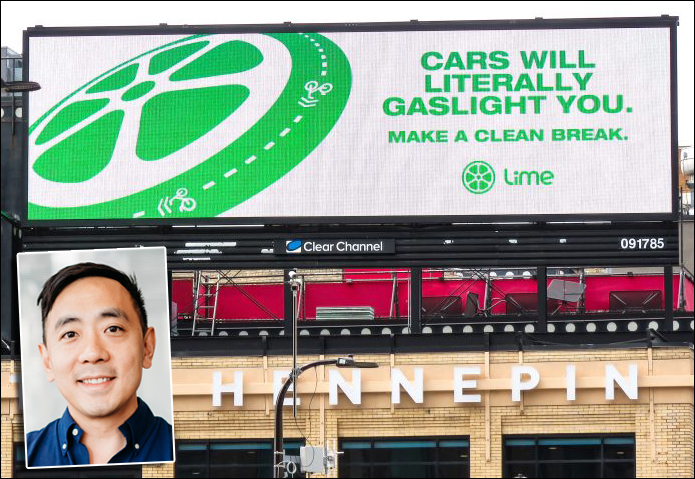
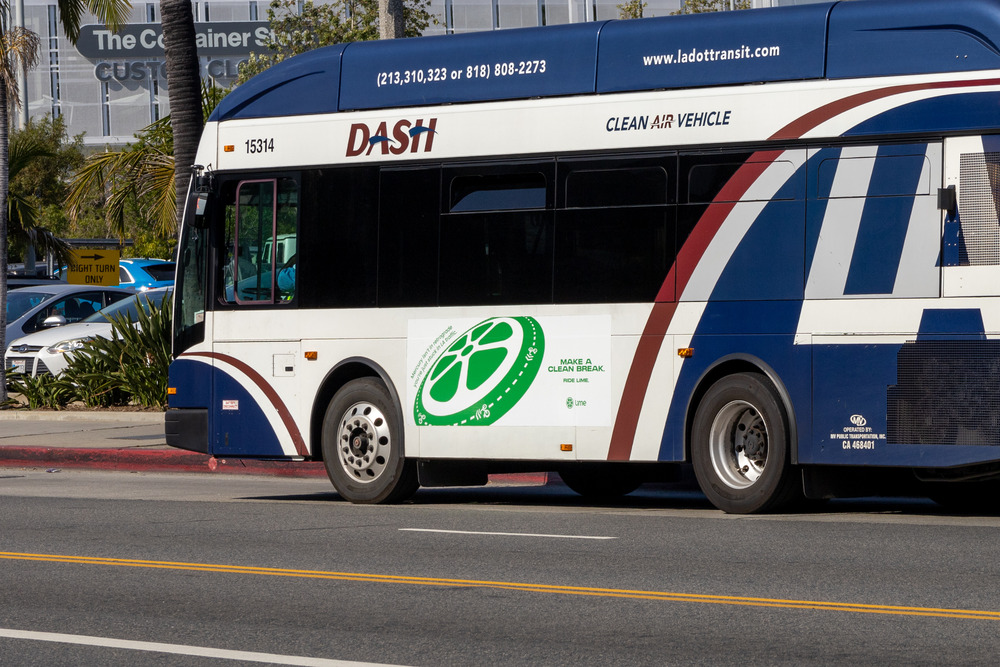
Between 42,000 crash deaths a year and rising tailpipe emissions that are swiftly killing the planet, America’s long love affair with the privately owned car has been a toxic relationship. Now, one micromobility company is sending a message to riders that it’s time to break up — even if their cities aren’t perfectly ridable yet. And its CEO says that bold stance is a big part of why it recently became the first shared bike and scooter operator to post a fully profitable year.
We sat down with Lime’s Wayne Ting to talk about their bold and controversial new messaging, why shared mobility, specifically, is critical to remaking America’s transportation future, and more.
The following interview has been edited for clarity and length.

KW: I don’t think I’ve heard a lot of micromobility companies take such an openly aggressive stance against car dependency like that. I feel like we hear a lot of shared operators talking about “reducing” car trips, but not actually encouraging customers to give up their cars outright. Why do you think that is? WT: I think a lot of other operators probably see shared micromobility as just another business. But one thing that’s always distinguished Lime is that a lot of us have worked in government; we’ve worked in public policy; we’ve worked in transportation policy. [Editor’s note: Ting served as Senior Policy Advisor on the National Economic Council under President Obama.] And one of the things that has allowed Lime to come through some of our toughest moments is because a lot of us, frankly, are transportation policy nerds. We believe that the future of transportation needs to look different. We believe that we need to have a bigger conversation about what the future of cities should look like. If you talk to anybody at Lime, to the people who work here day in and day out, we talk about this as our mission: to build a future of transportation that is shared, affordable, and most importantly, carbon-free. This is why we’re fighting. We’re not fighting to to sell one more scooter trip. We are fighting to transform transportation systems, so that in five years, 10 years, 20 years, we can have a transportation system that is more equitable, that is more affordable, that is more clean, and more environmentally friendly. That’s how we’ve always talked about internally, and for the first time, over the last year and a half, we started to reflect that with our external branding as well.
 KW: I have to admit that when I think about “making a clean break” with the private car, I think about shifting to a personally-owned bike or scooter in combination with a transit pass — not necessarily a vehicle that I pay to ride per mile. What role do shared micromobility options play in transforming transportation systems? How do they support people who have their own micromobility vehicles?
WT: So, two thoughts. First, places where shared micromobility does the best is, oftentimes, are the places with the highest amount of personal [bike and scooter] ownership. Because when you give up that car, when you start to see most of your transportation needs as being servable by public transportation and a bike and a scooter, you’re gonna find a lot more opportunities to use a shared system. Maybe you forgot to bring your scooter or your bike on [what you thought would be a] one way trip. But now you’re trying to get home, and you choose shared micromobility to do it. Tel Aviv is probably the city with highest ownership rates for shared for personal owned scooters. It also has the highest utilization for shared scooters. And so I actually see the two things as being symbiotic.
But second, it’s really about your mindset shift. Do I need to drive a car all the time? Or is there a place for a different mode of transportation? Once you make the mindset shift, you’re going to find lots of opportunities to use personally-owned and shared [options]…
When I think about [the future of our transportation] system, sharing is so crucial. Take the conversation around electric cars: we keep saying that electric cars are going to solve all these issues. But we’re dredging the earth; we’re fighting countries to control rare earth minerals; we’re building all this metal so we can create all these EVs, so that everyone can have their own. Imagine a future where the amount of materials we have to extract from earth to build our transportation system is just a fraction of that, because we’re sharing them.
Do I think everybody will be on a shared system? Probably not. But we need to also have an honest conversation about the idea of personal vehicle ownership. It sounds great, but it serves a smaller segment of people, and it doesn’t serve everyone equally.
KW: I have to admit that when I think about “making a clean break” with the private car, I think about shifting to a personally-owned bike or scooter in combination with a transit pass — not necessarily a vehicle that I pay to ride per mile. What role do shared micromobility options play in transforming transportation systems? How do they support people who have their own micromobility vehicles?
WT: So, two thoughts. First, places where shared micromobility does the best is, oftentimes, are the places with the highest amount of personal [bike and scooter] ownership. Because when you give up that car, when you start to see most of your transportation needs as being servable by public transportation and a bike and a scooter, you’re gonna find a lot more opportunities to use a shared system. Maybe you forgot to bring your scooter or your bike on [what you thought would be a] one way trip. But now you’re trying to get home, and you choose shared micromobility to do it. Tel Aviv is probably the city with highest ownership rates for shared for personal owned scooters. It also has the highest utilization for shared scooters. And so I actually see the two things as being symbiotic.
But second, it’s really about your mindset shift. Do I need to drive a car all the time? Or is there a place for a different mode of transportation? Once you make the mindset shift, you’re going to find lots of opportunities to use personally-owned and shared [options]…
When I think about [the future of our transportation] system, sharing is so crucial. Take the conversation around electric cars: we keep saying that electric cars are going to solve all these issues. But we’re dredging the earth; we’re fighting countries to control rare earth minerals; we’re building all this metal so we can create all these EVs, so that everyone can have their own. Imagine a future where the amount of materials we have to extract from earth to build our transportation system is just a fraction of that, because we’re sharing them.
Do I think everybody will be on a shared system? Probably not. But we need to also have an honest conversation about the idea of personal vehicle ownership. It sounds great, but it serves a smaller segment of people, and it doesn’t serve everyone equally. Streetsblog has migrated to a new comment system. New commenters can register directly in the comments section of any article. Returning commenters: your previous comments and display name have been preserved, but you'll need to reclaim your account by clicking "Forgot your password?" on the sign-in form, entering your email, and following the verification link to set a new password — this is required because passwords could not be carried over during the migration. For questions, contact tips@streetsblog.org.
More from Streetsblog San Francisco
The Week in Short Videos
LA is repaving the wrong streets, heavy cars are deadly, welcome to Streetsblog San Diego, and more on the craziness of Muni's ban of bikes on trains.

August 21, 2026
Weekend Roundup: Transit Month, AC Transit Ghost Buses…
...and Emeryville posting lower speed limits
August 21, 2026

New Report Underscores Success of Speed Cameras in Oakland
Speeding is down at camera locations. But advocates caution against relying too much on cameras without concrete infrastructure
August 20, 2026