Op-ed: Sausalito Continues its Quest to Delay Crosswalk Daylighting
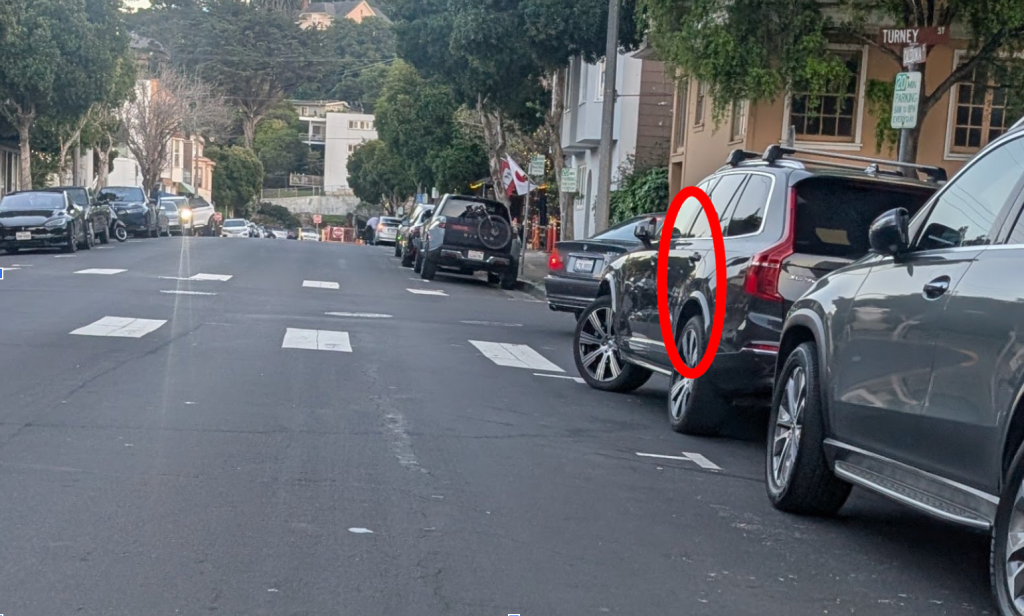
Note: the Sausalito City Council meets Tuesday, March 17 to discuss daylighting. Details here.
I remember hopefully watching the progress of California’s AB 413, the crosswalk daylighting law, as it proceeded through the state legislature in 2023. At the time, I was serving on Sausalito’s Pedestrian and Bicycle Advisory Committee. We had spent hours advocating for daylighting, the practice of removing parked cars directly adjacent to crosswalks, but we had made zero progress at the local level even on critical school walking routes. When the governor finally signed the statewide mandate into law, I breathed a sigh of relief.
The premise of AB 413 is not a magic fix, but it is a straightforward safety improvement for a deadly problem: visibility. By keeping the 20 feet of curb directly in front of a crosswalk clear of parked cars, it physically opens up the sightlines. It enables an approaching driver to actually see a pedestrian waiting to cross, rather than having that person completely hidden behind a wall of metal. With SUVs and trucks getting taller and wider every year, this visual buffer is basic, life-saving geometry. Given how simple and effective it is, it is no surprise that over 40 other states and many countries have had similar daylighting laws on the books for decades.
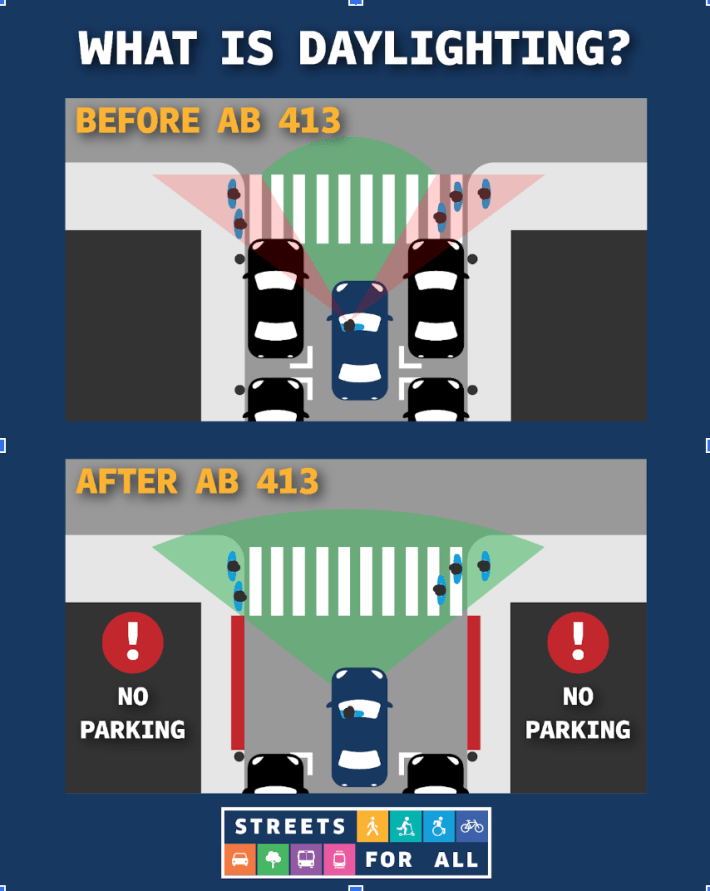
The state law went into full effect on January 1, 2025. Yet 14 months later, if you walk down Bridgeway or Caledonia Street, known as the locals’ commercial corridor in Sausalito, you wouldn’t know this mandate exists. Vehicles are still permitted to park right up to the crosswalk lines, completely obscuring anyone stepping off the curb.
Instead of getting out a bucket of red paint, the Sausalito City Council is getting out its checkbook. Next Tuesday, March 17, the City Council is set to vote on a $63,000 consultant contract which will further delay implementation and will even consider ways to evade the core 20-foot visibility requirement.
What makes this delay so frustrating is the seemingly deliberate stalling. Back in December 2023, city staff presented a report on AB 413 and explicitly recommended against changing the standard 20-foot safety distance. Then, during a July 2025 meeting, the City Council explicitly directed staff to halt daylighting implementation on Caledonia Street and Bridgeway to look for exemptions. Now, eight months after that pause, and well past the state’s enforcement deadline, the city is taking the next step to embark on a costly, time-consuming review.
One specific goal of this contract is to study a “different distance” exemption. The consultant’s proposal includes looking at lowering the street’s speed limit to 15 mph, with the idea that then a traffic engineer can claim the stopping distance is shorter, thus giving Sausalito the latitude to shrink the daylighting buffer from 20 feet down to 15 feet. That’s traffic engineering optimized around parking, not safety.
But a quick assessment of the streetscape makes it clear that this study doesn’t accomplish much other than to delay implementation. Reducing the daylighting buffer by five feet does not retain a full parking space. Since most existing spaces are already only 20 feet long (close to the acceptable minimum), the City would have to shrink every other parking space on the block by more than a foot just to restore one space. If there is a driveway or a fire hydrant on the block, the math to add back parking becomes even more impossible. It is a hollow paper exercise designed to accomplish exactly one thing: kick the can down the road.
While Sausalito stalls, other jurisdictions are getting it done. Berkeley is proactively red-curbing almost all of its eligible intersections. Locally, Marin County is doing targeted red curb installations near Miller Creek Elementary, and neighboring Mill Valley began active enforcement at the January 2025 deadline.
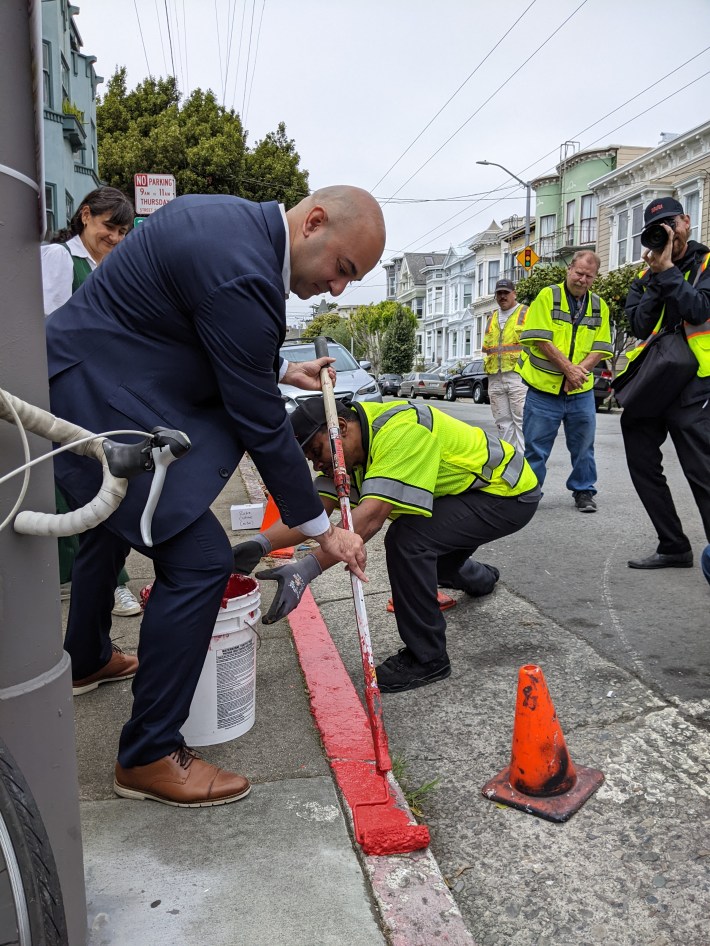
Even cities with identical parking crunches have realized fighting this is a mistake. Carmel recently explored pursuing a similar loophole to save downtown parking. Last month, their city council stopped the effort, with one council member noting that rolling back safety changes for parking is harmful to the community.
Nobody wants to lose parking spots unnecessarily, and we all support our local businesses. But vibrant commercial districts thrive when residents, visitors, seniors, adults, and kids feel safe walking and biking to them.
The City Council needs to stop paying consultants to find workarounds and delay safety improvements. Paint the full 20-foot daylighting standard today to make pedestrians visible and keep our kids safe, then figure out the long-term parking alternatives tomorrow.
***
Kieran Culligan is a Sausalito resident, former Chair of the Sausalito Pedestrian and Bicycle Advisory Committee, organizer of the Sausalito Bike Bus, and parent of two young children.
Streetsblog has migrated to a new comment system. New commenters can register directly in the comments section of any article. Returning commenters: your previous comments and display name have been preserved, but you'll need to reclaim your account by clicking "Forgot your password?" on the sign-in form, entering your email, and following the verification link to set a new password — this is required because passwords could not be carried over during the migration. For questions, contact tips@streetsblog.org.