Commentary: A Bay Area Public Transit Renaissance is Underway
For years, Bay Area residents have grown accustomed to dire headlines about public transportation. Remote work and concerns about personal safety led to a drop off in ridership, devastating transit agency budgets and raising the prospect of permanent service cuts.
But after a period of unprecedented challenges, Bay Area transit has undoubtedly turned a corner.
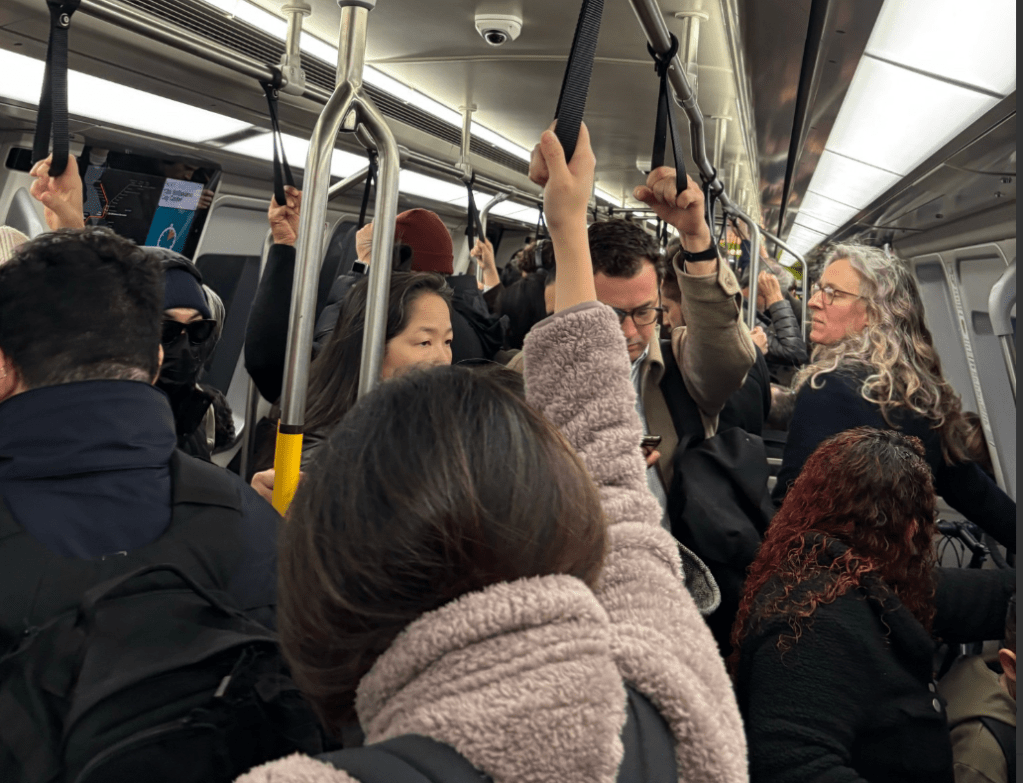
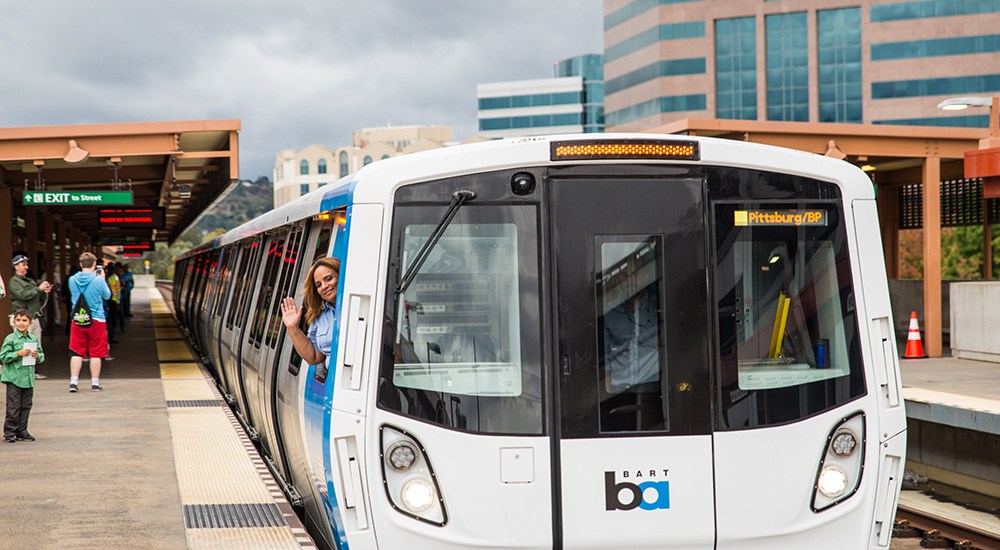
If you’ve been riding transit lately, you know it’s better today than it has been in years. Caltrain now runs every 30 minutes, all day, seven days a week, on new electric trains. BART has adjusted schedules to provide more frequent evening and weekend service, achieved record on-time performance of over 95%, and has seen big decreases in crime. Muni has increased travel speeds by more than 35% on key bus routes over the past decade – lines like the 22 Fillmore and 49 Van Ness carry more passengers now, more reliably, than before the pandemic. Muni, BART, Caltrain, AC Transit, and SamTrans are all posting their highest customer satisfaction rates in years.
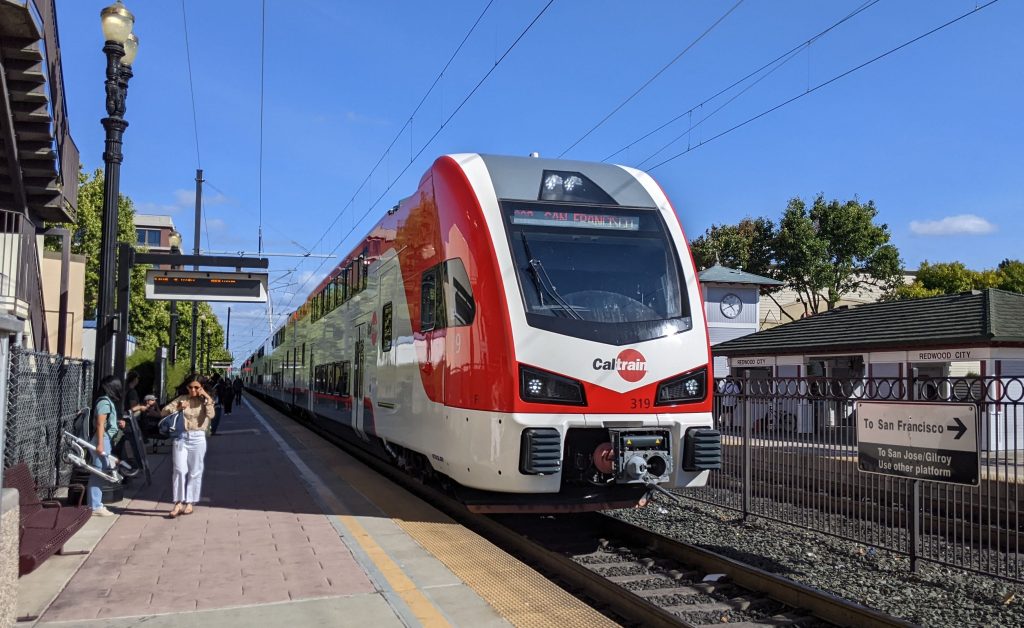
Transit agencies are increasingly getting the basics right, but also, after years of advocacy, undergoing a long-overdue cultural shift and embracing regional integration. The region’s 27 transit agencies are increasingly working together on delivering a seamless network rather than operating siloed systems, with coordination led by the Metropolitan Transportation Commission (MTC).

Riders are finally getting to see real results from improved coordination. You can now tap a credit or debit card to pay fares and receive free transfers when traveling across multiple operators. A regionally consistent transit mapping and signage system is being rolled out to make navigation easier – A Bay Area ‘golden yellow’ stripe is unifying Muni Red, BART Blue, and AC Transit green. Low-income riders can receive a 50% discount through Clipper START, while a growing number of college students are riding transit up to 30% more often thanks to Clipper BayPass, the region’s first all-agency unlimited transit pass.
These common-sense improvements are helping attract riders back. The latest national ridership data shows BART, Caltrain, Golden Gate Transit, and VTA are among the country’s strongest performers, each reporting year-over-year ridership growth of more than 15%.

Despite this progress, Bay Area transit agencies still face a combined structural funding deficit of more than $800 million annually. This deficit is not due to financial mismanagement or ineffective service. An independent Efficiency Review completed earlier this year found that AC Transit, BART, Muni and Caltrain — the four agencies with the largest deficits — have implemented cost-saving measures totaling more than $1 billion since 2020. Rather, the funding gap is largely an outcome of the collapse in fare revenue caused by the pandemic.
Measure RTM, if approved by voters, would provide roughly $1 billion annually in new sales-tax revenue to prevent service cuts, keeping our region on its current path of improving service and growing ridership. It would also expand the successful seamless transit integration programs like free transfers, Clipper BayPass, and the regional mapping and wayfinding program. Passing the measure would also require the launching of a second phase of the Efficiency Review, aimed at identifying further opportunities to improve efficiency and coordination among core agencies.
Bay Area transit is not perfect. As a transit advocate, I know there is plenty of additional work to do to make it more efficient, integrated and innovative. While MTC has created its Regional Network Management Division to integrate the region’s many transit services, a recent review after two years of the new structure found that progress is still held back by limited staff capacity, complex governance and a lack of long-term vision.
This is an argument for doing more, not less.
The hard-fought reform of Bay Area transit is well underway and producing results. The question before voters is whether to provide the resources needed to sustain and speed up that progress — or greatly undermine it by slashing funding.
The vision of a seamless Bay Area transit system has, in fact, never been closer. More reforms are needed but will only be possible if public transit continues to provide consistent, reliable service. Passing Measure RTM can ensure the renaissance of Bay Area transit not only continues, but accelerates. The opportunity now is to build on our progress so we can realize the world-class system our region deserves.
***
Ian Griffiths is Co-Founder and a board member of Seamless Bay Area and a Principal Consultant for CPCS, a global transportation advisory services firm.
Streetsblog has migrated to a new comment system. New commenters can register directly in the comments section of any article. Returning commenters: your previous comments and display name have been preserved, but you'll need to reclaim your account by clicking "Forgot your password?" on the sign-in form, entering your email, and following the verification link to set a new password — this is required because passwords could not be carried over during the migration. For questions, contact tips@streetsblog.org.