Skip to content

Posts from the "Berlin" Category

21 Comments

Berlin’s Striking Cycling Renaissance

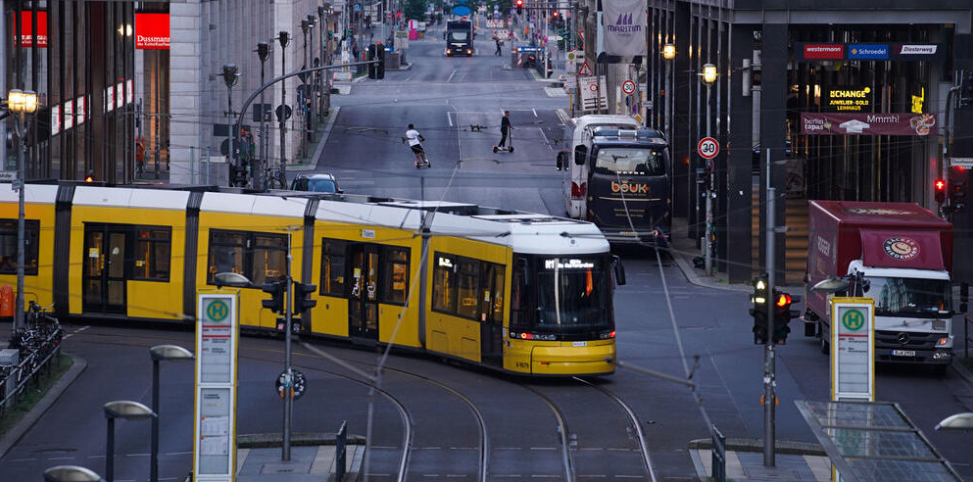
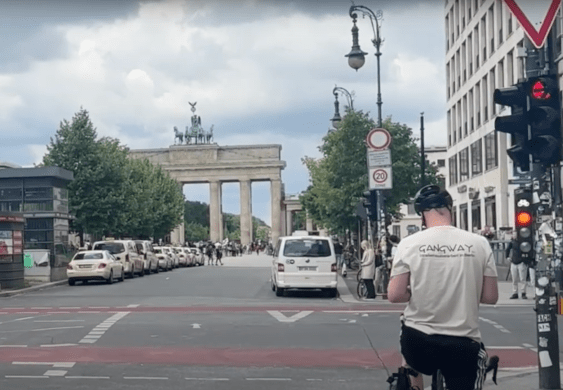
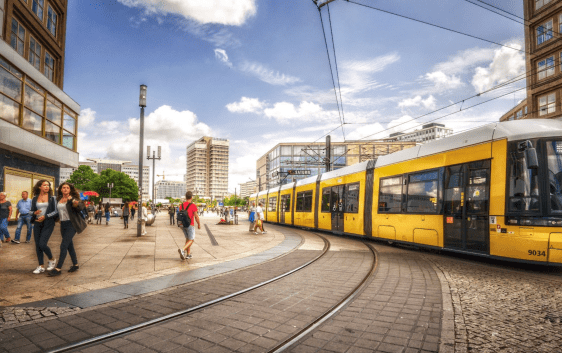
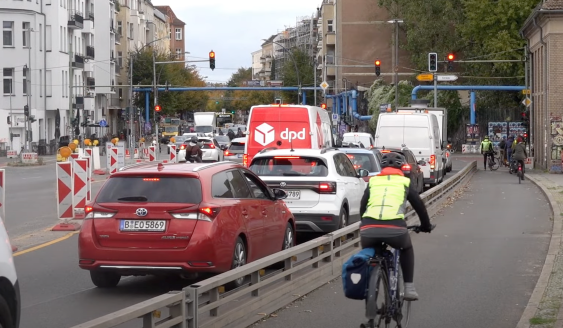
Berlin is a hugely under-appreciated cycling city. Often overshadowed by the accomplishments of Amsterdam and Copenhagen, over the past two decades Berlin has quietly experienced what is perhaps the most striking cycling renaissance in the world. On any given day, more trips are now made by bicycle in Berlin than any other European city.

Berlin does not fit the mold of a typical bicycling paradise. The metropolis of 3.5 million people is as populous and expansive as Los Angeles. In contrast to Amsterdam and Copenhagen, Berlin boasts abundant road supply, minimal traffic congestion, and an extensive Metro system. Summers are hot and humid and winters are long and cold. In the capital of the nation that produced Mercedes, Volkswagen, BMW, and autobahns, one would not expect bicycling to flourish; yet, since German reunification in 1990, Berlin has undergone a cycling revolution.

According to Berlin’s 2010 Mobility Report, Berliners made approximately 1.4 million trips by bicycle every day in 2008, amounting to 13 percent of all trips citywide (and 14 percent of commute trips). This figure has more than doubled since 1990, yet it is likely already outdated, given rising gas prices ($8/gallon in Berlin) and an aggressive city initiative to raise cycling mode share to 15 percent by 2015.

While mode share figures are an imperfect measure of cycling rates, they allow for rough comparisons between cities. In Amsterdam and Copenhagen, about 35 percent of all trips are made by bicycle. In Portland, cycling captures 6-8 percent of commute trips, the largest total of any major American city. For a city the scale of Berlin, 13 percent mode-share is substantial — especially considering 30 percent of trips are already made by walking and 26 percent by public transportation.

Read more…

No Comments

The Political Climate That Makes Transportation Reform Run

When House transportation committee chairman Jim Oberstar (D-MN) recently accused
his colleagues of lacking the "political will" to pursue long-term
reform of infrastructure policy, he wasn’t simply employing a D.C.
rhetorical flourish. To understand what Oberstar meant, let’s travel to
Berlin for a moment.

image_17118_panoV9free_eppl.jpgA German-made high-speed rail car. (Photo: Spiegel)

Colby
Itkowitz, CQ’s crack transportation reporter, headed to the German
capital for a story about the nation’s thriving high-speed rail network
– and what the White House can learn as it pursues its own bullet-train vision.

What she found was a political system that funds highways and inter-city rail equally and treats mobility as a "basic right":

The government views access to transportation, no matter one’s social or economic situation, as a "major
basis of prosperity and quality of life," says Engelbert Lutke Daldrup,
state secretary at the German Federal Ministry for Transport, Building
and Urban Affairs. The goal, he says, is that transportation not be a
hindrance in people’s lives. Germany’s 60-year-old constitution
references the "establishment of equal living conditions" as an area
where the government can legislate.

Not
that Germany has provided a perfect example of a high-speed rail
rollout. Itkowitz found that German lawmakers, much like members of the
U.S. Congress, have succumbed to parochial concerns and clashed over
putting rail stations in their individual districts. Moreover, the
German rail network has not seen "a consistent trend" of development
near rail stations, according to CQ’s report.

But compare the
German experience to infrastructure policy-making in America, where a
sizable contingent of conservatives continues to push for
the right to wholly opt out of the federal transportation system.
High-speed rail has so far been a bright spot for bipartisanship,
attracting legitimate support from both sides of the aisle, but much
depends on how effectively the Obama administration distributes its
first $8 billion for rail this winter.

CQ articles are normally available only to subscribers, but you can check out Itkowitz’s full report from Berlin after the jump.

Read more…