Op-Ed: Let’s Make Transit Work for Marin
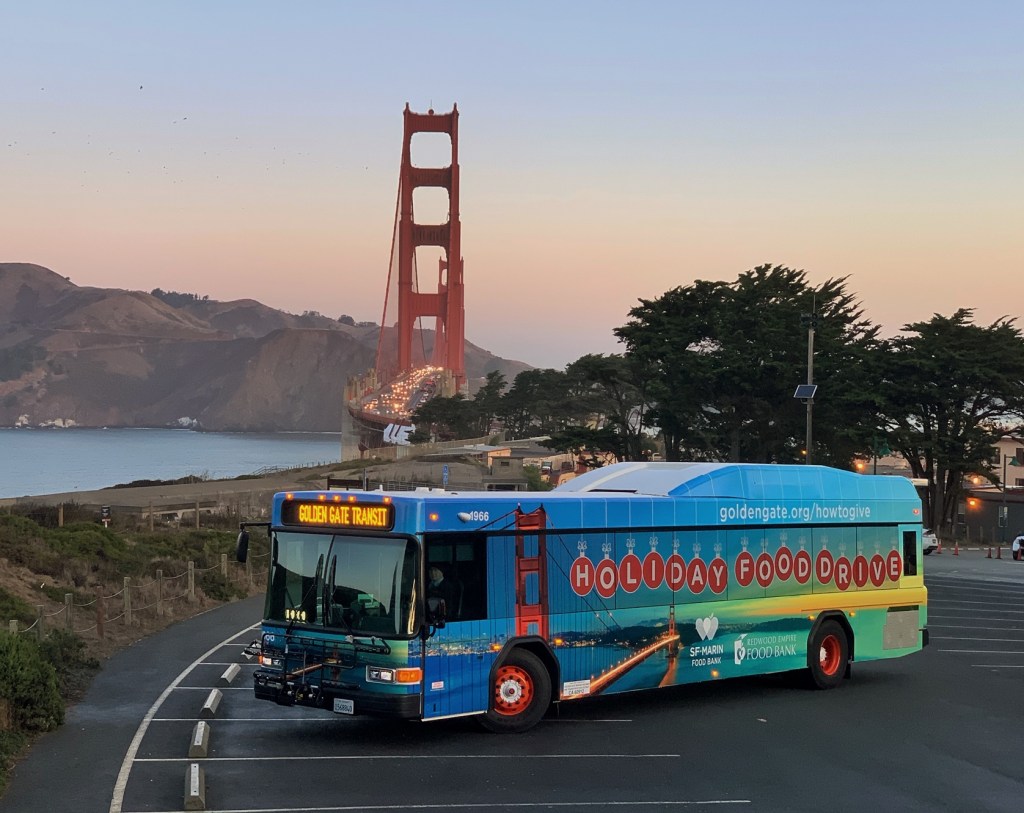
After over 45 years of daily service, Golden Gate Transit will be massively cutting service to Marin County’s southernmost Highway 101 bus pad stops effective April 12, as part of the inter-agency MASCOTS plan that overhauls public transit in Marin and Sonoma counties. Weekday commute-only service will remain available between ~ 6-9 am into the City and ~ 4-7 pm from the City. At the Spencer Avenue bus pad stops, there will be no bus service at all other times. What had been a fairly transit rich location, with all day service seven days a week, will become a transit desert.
There’s much to like about the MASCOTS service changes, such as more frequent service on select routes, inter-agency cooperation with some timed transfers, and the objective to grow ridership. However, with the service cuts to the Spencer Avenue bus pads, a rather transit oriented suburban neighborhood will be no more. A far more car-dependent neighborhood will remain. Dozens of daily riders will not be served.
This service cut is of regional concern, as public transit access to the Marin Headlands will be greatly reduced. (The Morning Sun Trail trailhead is directly adjacent to the southbound Spencer Avenue bus pad.) As about 30% of San Francisco households do not have an automobile, eliminating daily public transit service at Spencer Avenue is a step backwards for equitable access to our public parks.
Of note, MASCOTS will impact other Highway 101 adjacent neighborhoods in southern Marin, including Marin City, with loss of fast, daily (non-commute) transit service to San Francisco that operates via Waldo Grade on Highway 101. Unlike the Spencer Avenue bus pads though, slower transit options will remain for these other neighborhoods.
As I was impressed by what seemed to be strong and growing ridership at the Spencer Avenue bus pads stops (especially on weekends and holidays when hikers and tourists access this area for its trails, views and walkways to downtown Sausalito), I advocated that Golden Gate Transit maintain daily service, however minimal (and over 300 people signed an online petition in support). I was unsuccessful.
Fortunately, creation of a new bus stop on Alexander Avenue at Conzelman Road (just north of the Golden Gate Bridge) would help capture some of Spencer Avenue’s weekend and holiday ridership and grow overall Golden Gate Transit ridership. Such a stop (for their new southbound route 120) would arguably improve access to Marin Headlands trailheads, while making Fort Baker and the bridge itself easier to reach with public transit. (Muni previously had a stop at this exact location. Since the pandemic, Muni no longer travels to the Headlands or anywhere in Marin.) Encouragingly, Golden Gate Transit is looking into adding a southbound stop on Alexander at Conzelman (or, less ideally from my perspective, on Alexander Avenue just east of Highway 101).
A new bus stop on Alexander Avenue at Conzelman Road/closer to the bridge should be an easy fix. I appreciate the support of local officials and politicians and ideally hope to see a ribbon-cutting ceremony in time for Earth Day 2026.
Beyond Sausalito, there is an additional, attainable improvement that would help MASCOTS achieve its ridership growth and efficiency improvement objectives: increasing carpool criteria for the northbound Highway 101 HOV lane, between Marin County’s Highway 1 exit and San Rafael, to 3 or more passengers per vehicle. This would help ensure that Golden Gate Transit’s route 101 (and other express routes) aren’t slowed by the frequent afternoon congestion that causes the HOV lane to be a similarly slow crawl as the other northbound lanes. This would help grow transit ridership in the North Bay, while simultaneously lowering Golden Gate Transit’s operating costs. Time savings from Van Ness BRT lanes, which noticeably sped up buses a few years ago, are too often negated by worsened congestion on northbound 101. San Francisco sped up Golden Gate Transit while Marin County slows it down.
To recap, for Golden Gate Transit and MASCOTS to achieve transit ridership growth while improving cost efficiency, service to the Marin Headlands should be maintained and improved upon and the northbound 101 HOV lane should have a boost to its carpool criteria to a minimum of 3 passengers per vehicle.
This time of change is an opportunity to make Marin County more transit oriented in new ways.
***
Sprague Terplan is a member of the San Francisco Transit Riders (SFTR) and a long-time transit rider in San Francisco and the North Bay.
Streetsblog has migrated to a new comment system. New commenters can register directly in the comments section of any article. Returning commenters: your previous comments and display name have been preserved, but you'll need to reclaim your account by clicking "Forgot your password?" on the sign-in form, entering your email, and following the verification link to set a new password — this is required because passwords could not be carried over during the migration. For questions, contact tips@streetsblog.org.