Caltrans and Alameda Officials Celebrate Launch of Nimitz Freeway Widening Project Through Oakland’s Chinatown

Record temperatures. A bloodbath of traffic violence on our streets. Another war over oil is raging. And Monday afternoon, officials from Caltrans, Alameda County, Oakland, and the city of Alameda, held a groundbreaking ceremony for the so-called Oakland-Alameda Access Project, a $175 million freeway widening* through Chinatown.
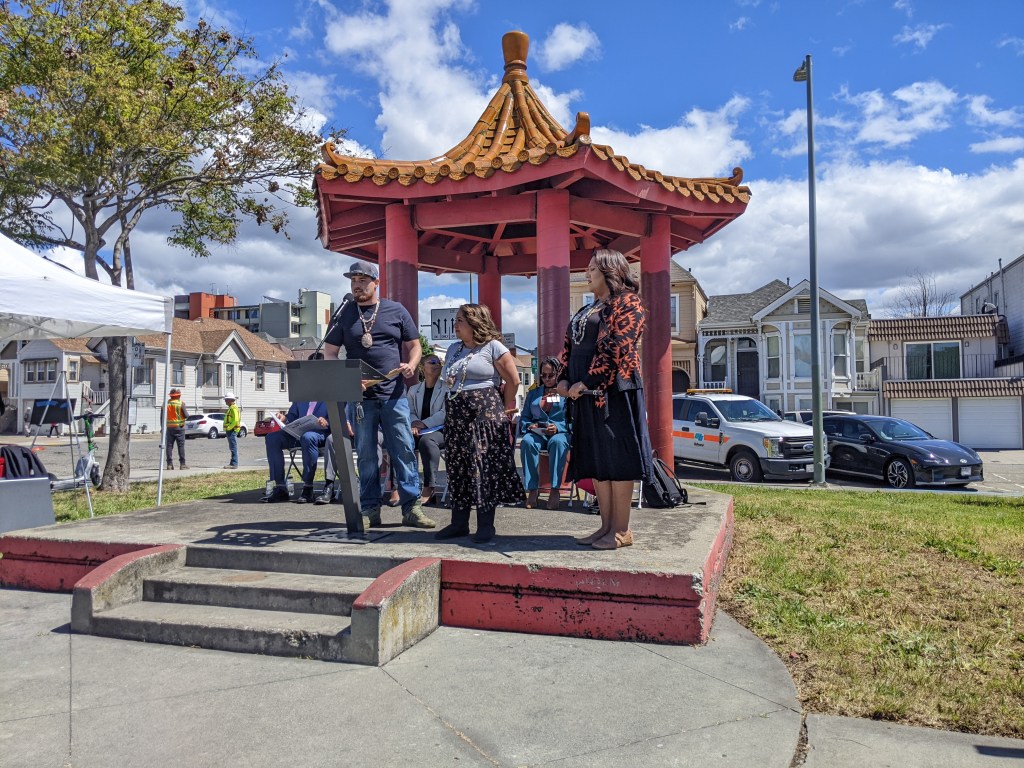
“People breath emission from idling cars,” Alameda Mayor Marilyn Ezzy Ashcraft told the crowd, in support of the project, repeating the Caltrans, car-brain lie that adding lanes and road capacity somehow reduces traffic and, thereby, emissions.
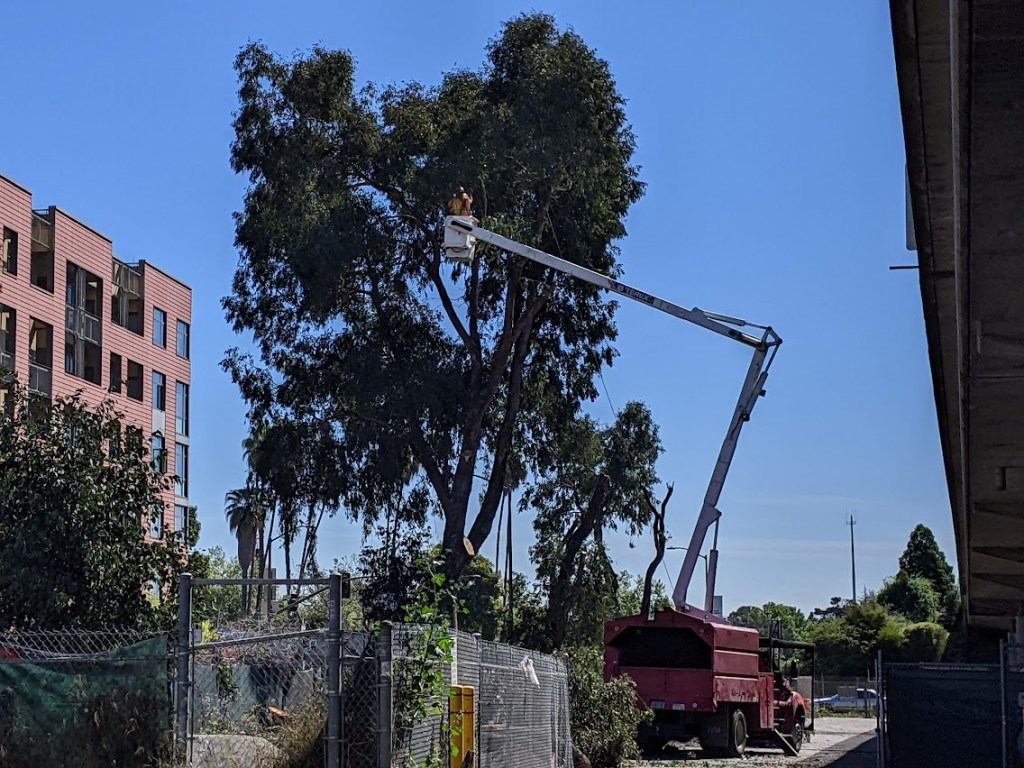
This comes a couple of weeks after I watched Caltrans tear down carbon-storing, oxygen-producing trees along 6th Street in Chinatown to make way for the wider ramp on Oak. The trees in the lead image are gone now, ground to pulp, with more to go.
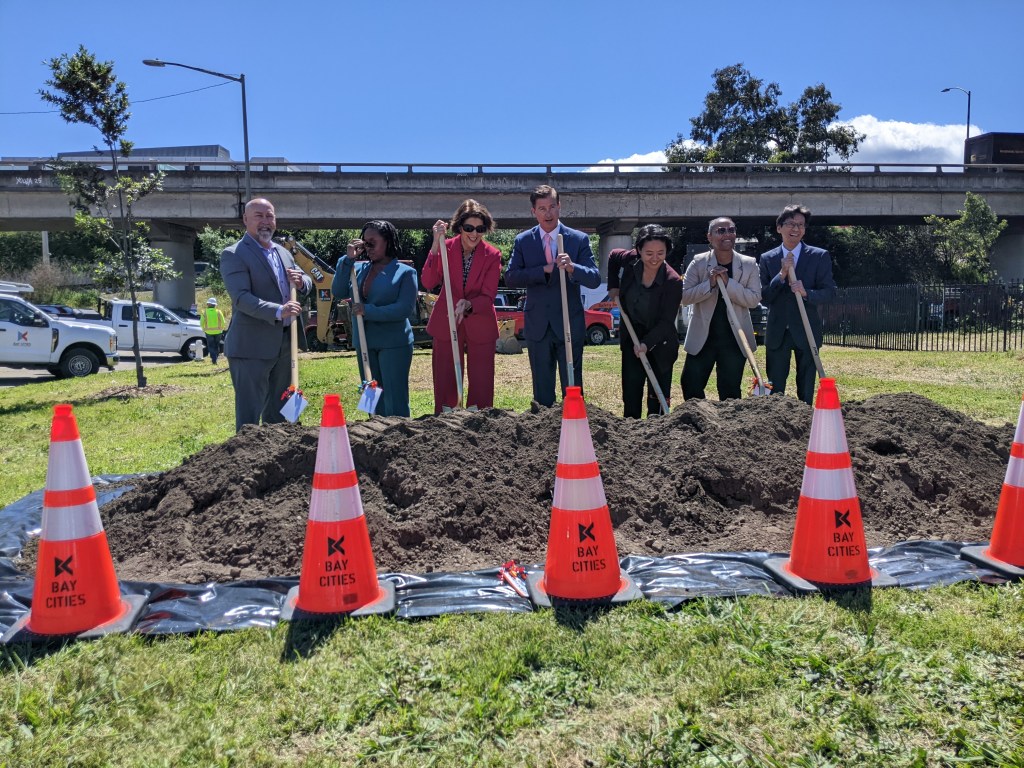
Officials spoke at length about how the construction of the original freeway divided Chinatown. The Chinese Chamber of Commerce’s Carl Chan spoke about how he used to play on the trains once displayed at Chinese Garden Park and how the traffic in the area makes the park inaccessible. Removing the slip lane at Harrison and 7th, he opined, will improve pedestrian access and safety.
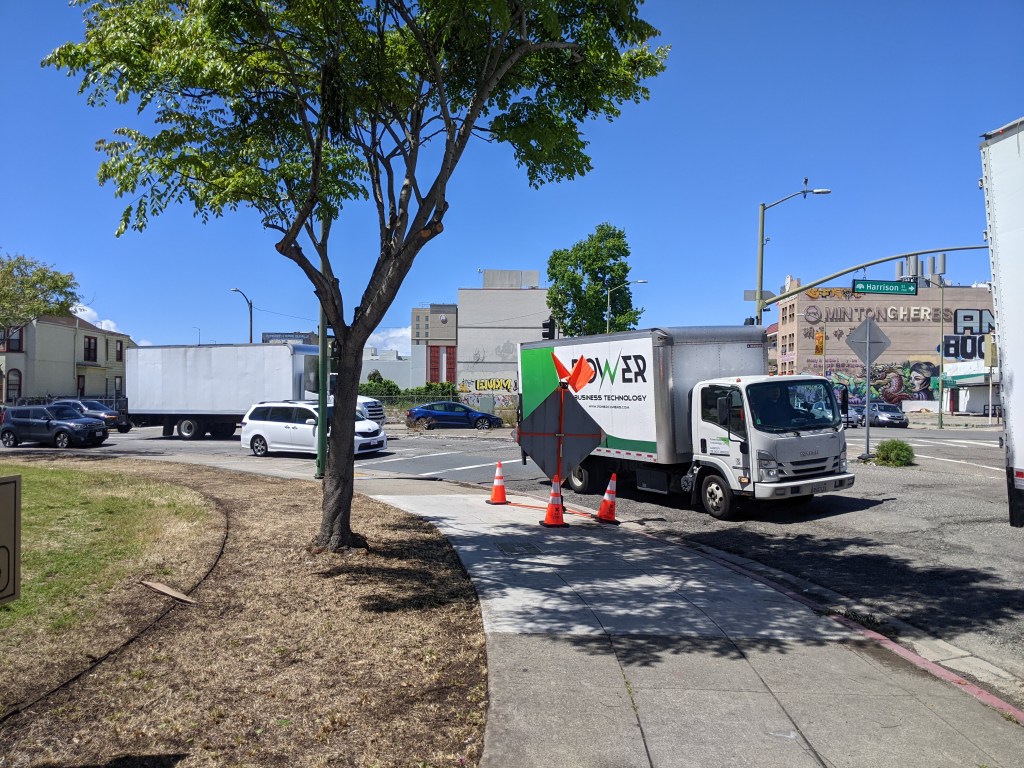
It might, except that the project also involves creating a wider freeway on 6th by turning it into a frontage road instead of the albeit neglected local-access street it is today. That will drive even more surface-level traffic past the park. In addition, further complicating access to the park, a sidewalk will be removed on Jackson—to make way for a brand new ramp built to directly connect the Posey Tube to I-880. That might reduce cut-through traffic through Chinatown from Alameda, but more traffic will come from the south instead on 6th. Either way, Caltrans is clearly building this to increase freeway capacity, not to make Chinatown safer.
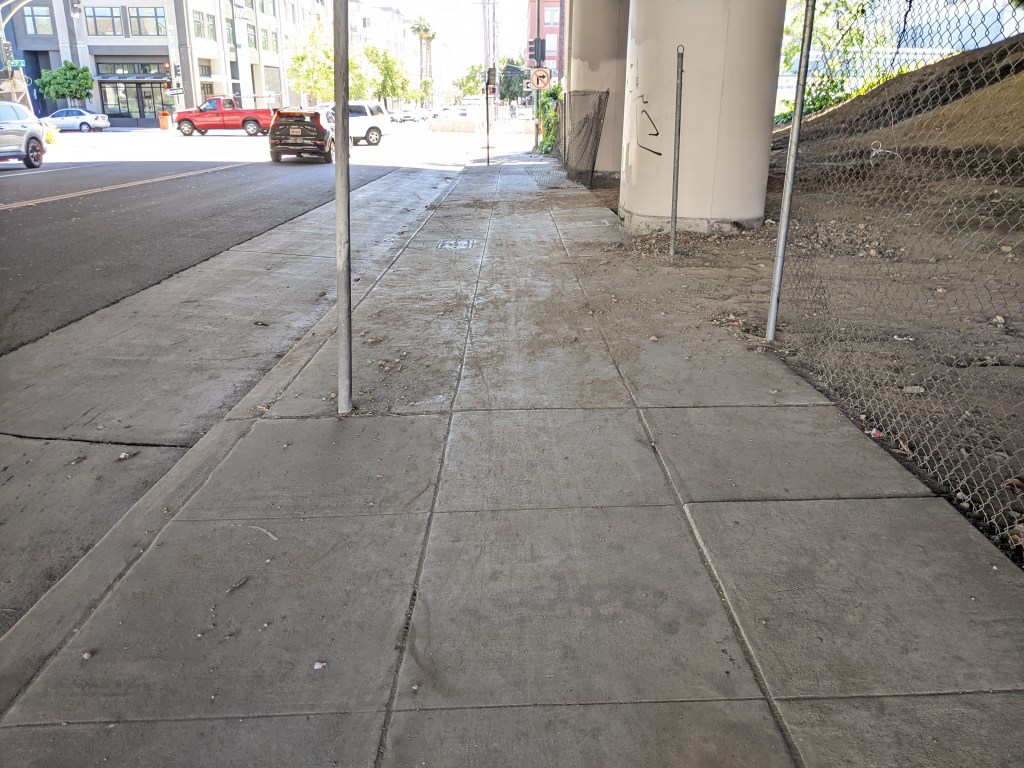
“Caltrans has promised pedestrian safety. It doesn’t look like it will deliver,” said Bryan Culbertson, a member of the advocacy group Traffic Violence Rapid Response. Culbertson and Bike East Bay’s Dani Lanis came to the event to protest the closure of the Oak Street bike lane, one of the first things that was done as construction began. This is despite the fact that project leaders promised to retain and improve bike access, even during construction.
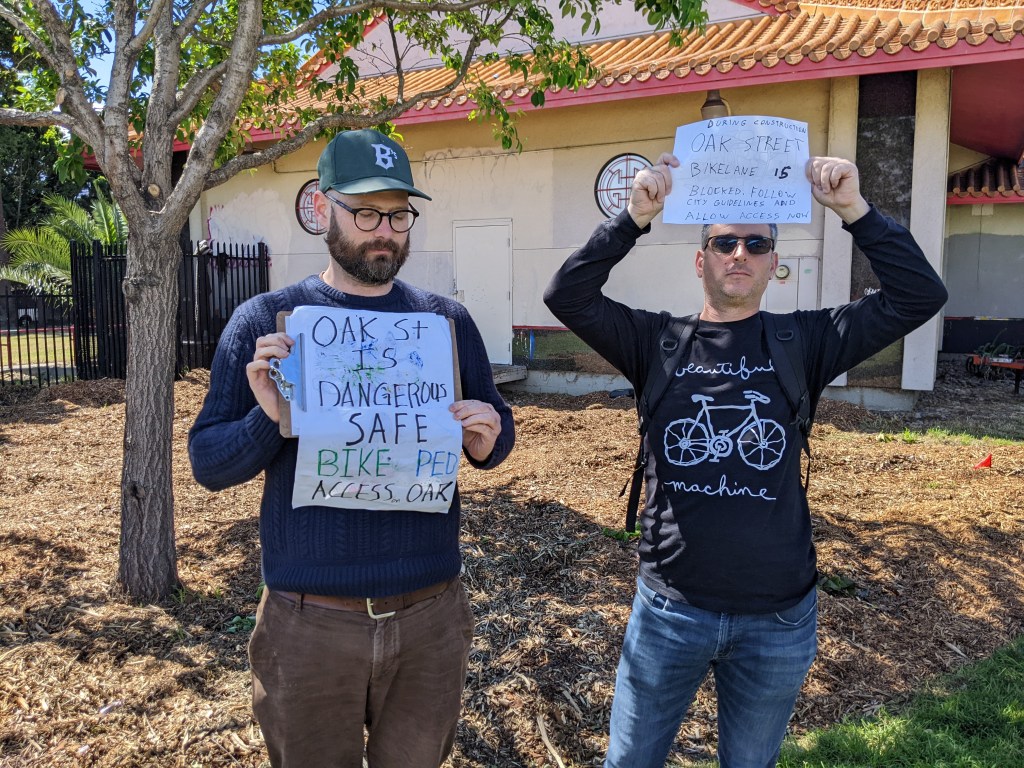
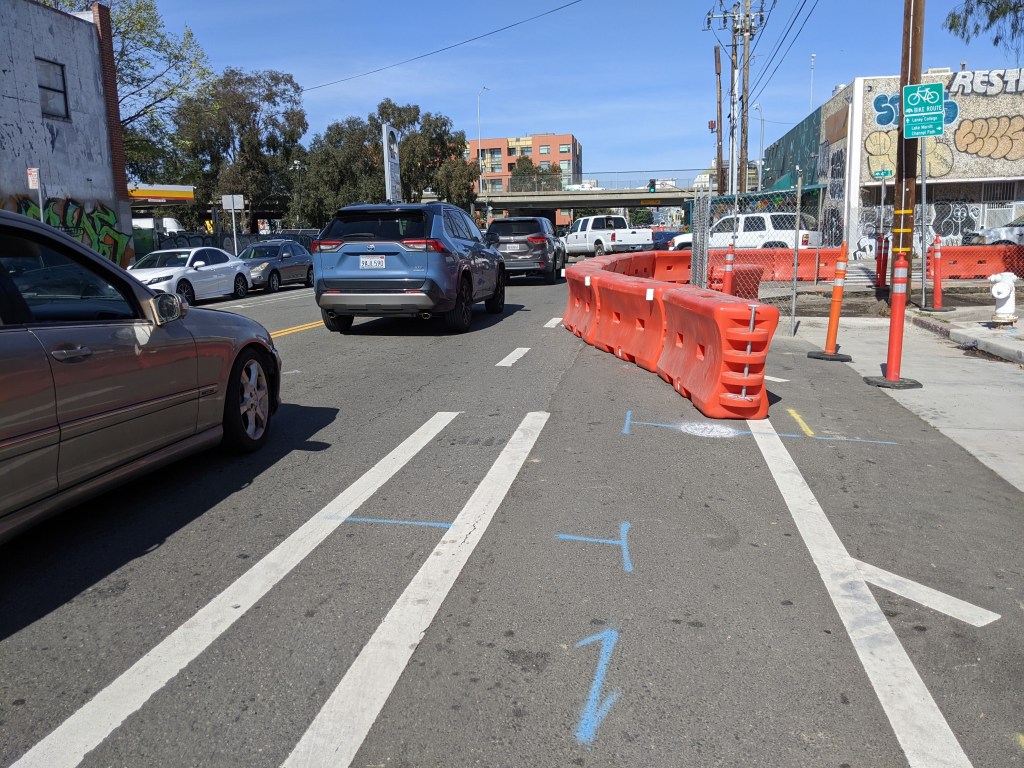
The project used to be called the “I-880/Broadway-Jackson Interchange Improvement Project” (also know as freeway widening). It’s doing exactly what officials keep claiming they’re trying to reverse: further dividing Chinatown and the waterfront and Alameda for anyone not in a car. Moreover, there are immense opportunity costs. For $175 million, they could have built a bike-ped bridge across the estuary with safe, inviting bike-and-pedestrian connections under the freeway. They could have constructed a real ferry service, with two boats designed for this purpose, to join Alameda and Oakland. They could have converted one of the tubes into a bike-ped-bus tunnel, as they did in Lyon. Hell, they could have just improved the crosswalks and lit and activated the space under the freeway so people could walk and bike between Chinatown, BART and Jack London Square safely.
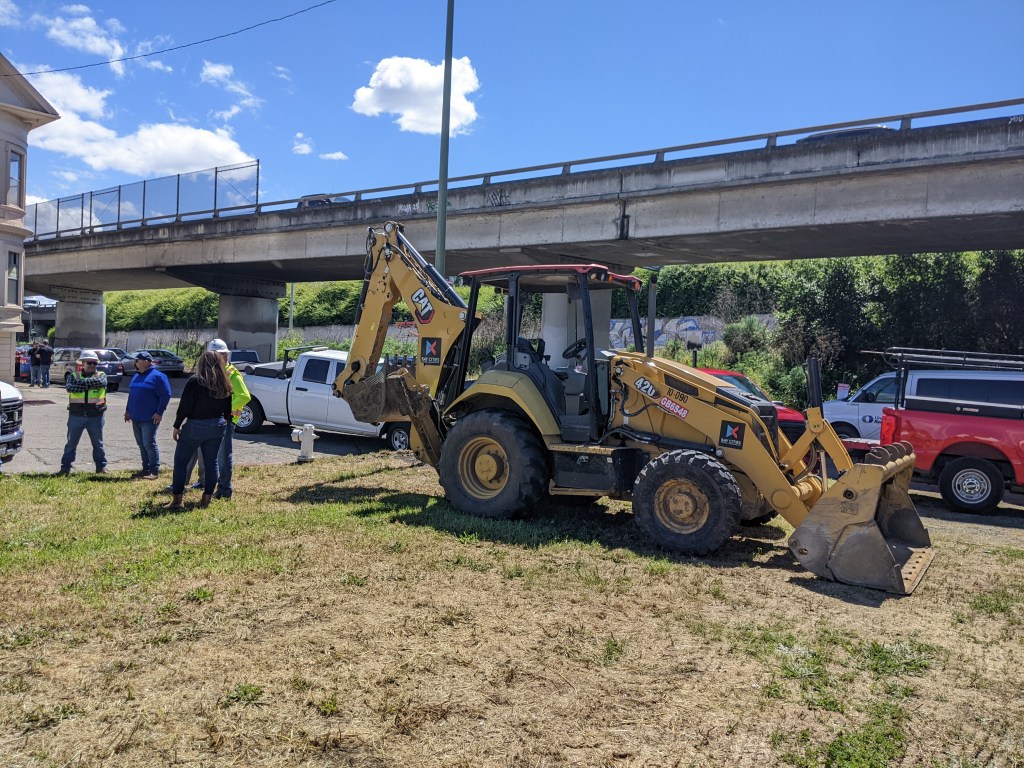
And yes, they could just close that slip lane on Harrison and 7th too for a lot less than $175 million. But Caltrans even had representatives from the Ohlone community at their event to try and show how progressive they are (I spoke with some of them, and they weren’t familiar with the project). In reality, Caltrans is the same regressive agency it’s always been; it simply refuses to change.
*the figure of $175 million is the most recent cost estimate, provided by Caltrans’s District 4 PIO Hector Chinchilla

Streetsblog has migrated to a new comment system. New commenters can register directly in the comments section of any article. Returning commenters: your previous comments and display name have been preserved, but you'll need to reclaim your account by clicking "Forgot your password?" on the sign-in form, entering your email, and following the verification link to set a new password — this is required because passwords could not be carried over during the migration. For questions, contact tips@streetsblog.org.