Commentary: Is a Transporter Bridge the 100-Year-Old Solution for the Estuary Crossing We’ve all been Looking for?

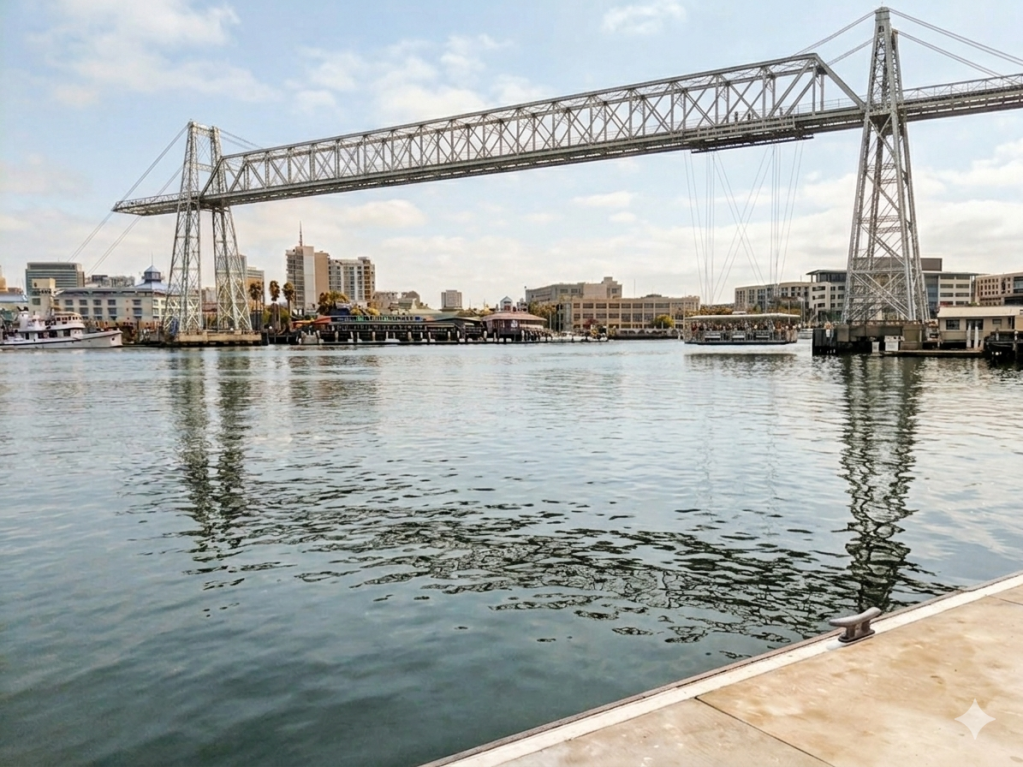
Gondolas, giant bridges, and water shuttles have all been proposed as a safe, inviting way for pedestrians and cyclists to get between Western Alameda and Jack London Square. The popularity of the existing Woodstock water shuttle pilot is proof that the demand is real. Ultimately, some kind of bridge is needed, but current proposals—with a deck high enough to allow the largest ships to clear and massive ramps going up and down—will be incredibly expensive. And a normal drawbridge is out of the question because of Coast Guard requirements about not blocking the channel in the event of a mechanical failure.
One night, while scrolling more than I should, my feed sent me a link to the Vizcaya transporter bridge near the port of Bilbao, Spain. I’d never heard of them before, but here’s the video it sent me:
Here’s a still shot of the bridge, for those who don’t have time to watch the video:
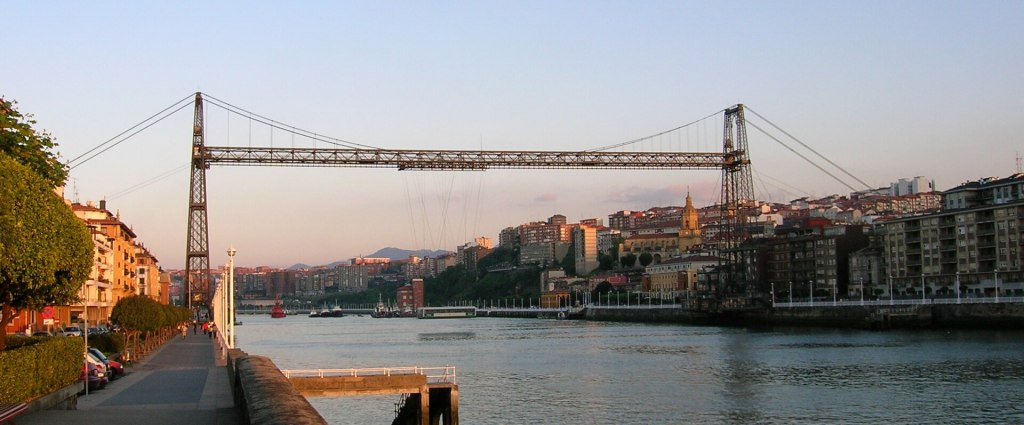
The transporter bridge was invented over 100 years ago. Try to imagine if a high bridge and a gondola had a baby. There are towers on either bank and a deck across the top high enough for any ship to clear. A gondola is suspended by cables just over the water from a track below the deck. The gondola glides just above the water, back and forth from dock to dock to transport cars, pedestrians, and cyclists.
They were rendered more-or-less obsolete with advances in engineering that made draw bridges and tunnels easier to build and maintain. But they still operate in a few places with unique circumstances. In addition to Spain, there are a couple in the UK and at least one I could find in France.
In 2023, planner Kenya Wheeler and I proposed a bridge like the kind normally used at a train station to get over the tracks, with a tower and an elevator on either side and a deck across the Oakland-Alameda estuary. Under that scheme, you go straight up on one side, walk across the deck, go straight down on the other. That eliminates the need for the ramps, which, in the case of the Oakland-Alameda proposals, involve huge land acquisitions and additional costs.
However, advocates I spoke with wanted the ramps, primarily because they didn’t like the idea of taking elevators on either side. A transporter bridge, obviously, addresses that issue. If you don’t want to ride the elevators and can’t climb the stairs, take the gondola directly across from shore to shore.
Extrapolating from the existing transporter bridges, the crossing should take less than two minutes from boarding to stepping off. It’s guided directly into its dock, so there’s no time wasted by a deck hand tying up ropes and lowering a ramp, like there is with the existing water shuttle, which takes about seven minutes for each crossing. The transporter bridge gondola also isn’t subservient to wake currents (the water shuttle often bounces around and has to delay docking when large ships are plying the estuary). It should also be much more tolerant of bad weather.
This also works for people with a fear of heights, since if the gondola cables break, you “plummet” a few feet onto the water (obviously, the gondola would be designed to float). Unlike a conventional, aerial gondola, if it breaks down, rescues can be done from boats. And unlike with a drawbridge, a mechanical failure won’t jam up the estuary. It also won’t leave someone stuck on the wrong side during a mechanical failure, as has happened with the water shuttle, since the bridge deck and elevators provide an alternative route.
And there’s no issue with burning fuels or charging batteries, since the power comes from motors on the bridge that are plugged into the grid. I’d imagine it could even be automated.
It also just fits. Imagine if the bridge were designed to emulate the look of Oakland’s iconic cargo cranes. You know, the ones that supposedly inspired the walkers in Star Wars:

In other words, it’s just freakin’ cool. Imagine the list of tourist attractions for the Bay Area: cable cars, Fisherman’s Wharf, the Golden Gate Bridge, Chinatown, and North Beach. Now add the Oakland-Alameda transporter bridge, especially considering it’s a short walk from BART, Amtrak, the ferry terminal, plus a bunch of entertainment venues in Jack London Square
“This is so beautiful, it would be a destination in and of itself,” opined Savlan Hauser of the Jack London Improvement District, after I showed her the video of the bridge in Spain.
For residents, the gondola would be the choice if it happens to line up with your trip. But the elevators and catwalk crossing is an always-available backup if the gondola’s on the wrong side and you’re in a hurry to connect to a ferry or Amtrak.
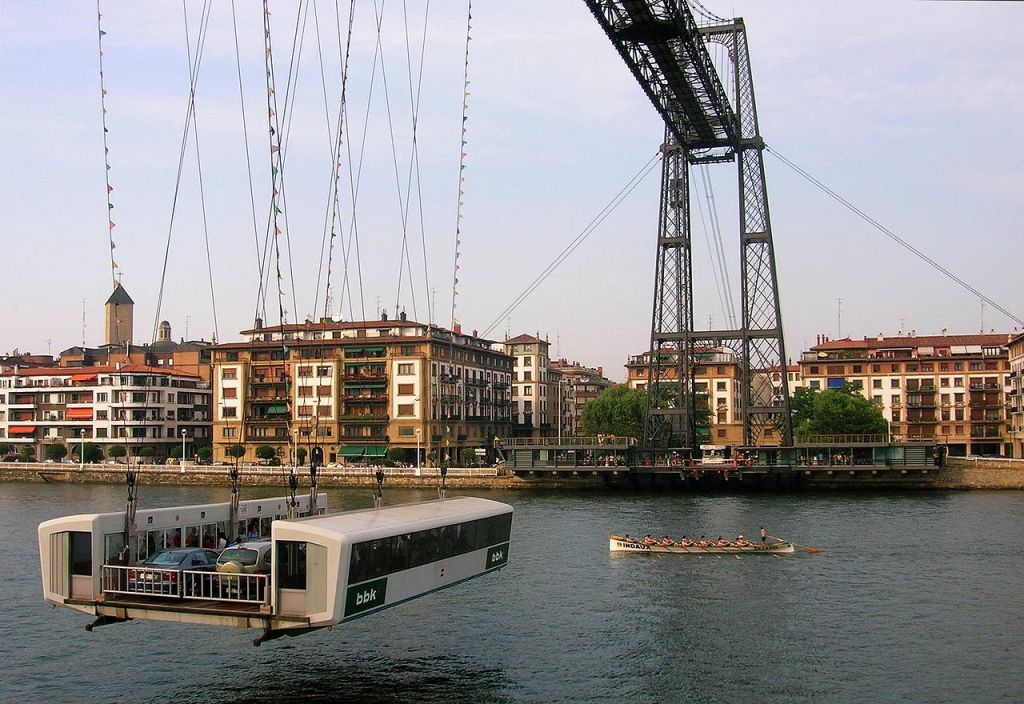
Transporter bridges are a weird, all-but-forgotten, wonderful niche piece of technology, kind of like cable cars for water. There are a few places where they still make sense. With the unique constraints of the Oakland-Alameda estuary, it may be just such a place.

Streetsblog has migrated to a new comment system. New commenters can register directly in the comments section of any article. Returning commenters: your previous comments and display name have been preserved, but you'll need to reclaim your account by clicking "Forgot your password?" on the sign-in form, entering your email, and following the verification link to set a new password — this is required because passwords could not be carried over during the migration. For questions, contact tips@streetsblog.org.