Transform Talk: Affordable Housing Leaders Committed to Fight to Save Transit

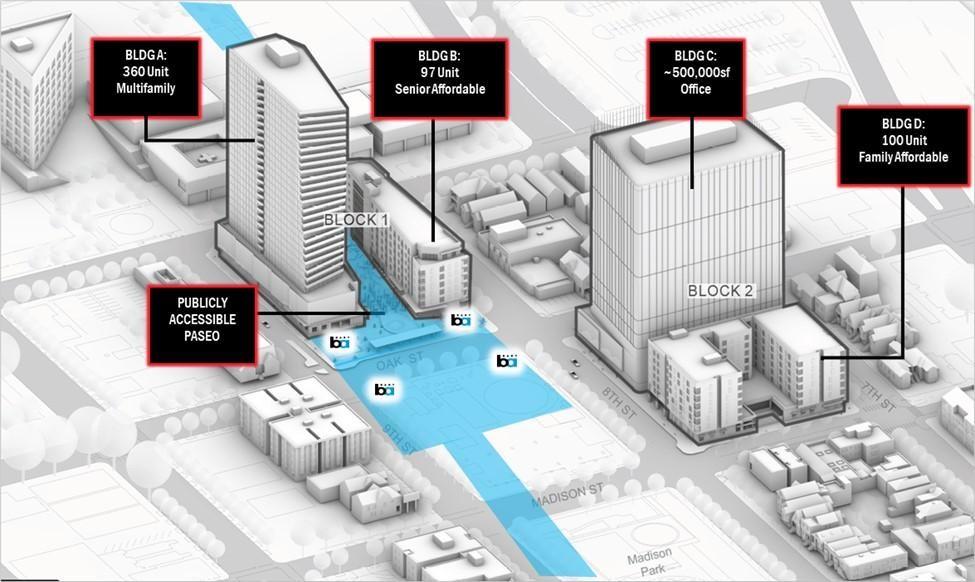
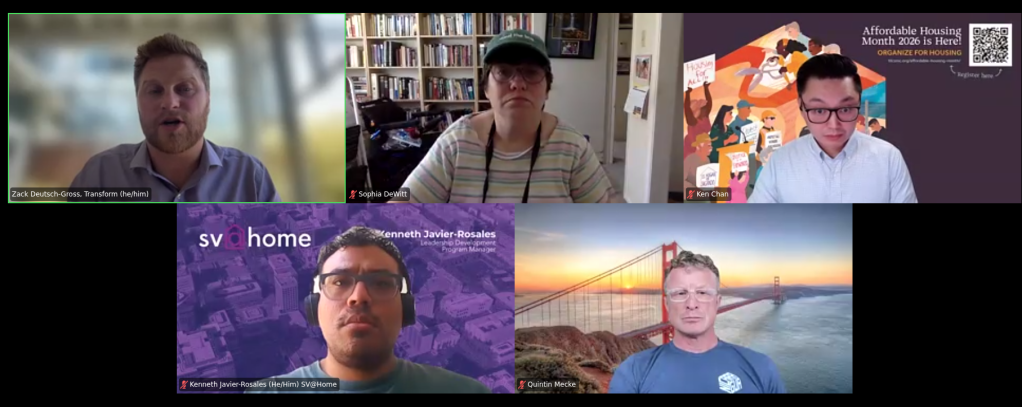
“Transit is the foundation of how affordable housing works,” said Quintin Mecke, Executive Director of the Council of Community Housing Organizations, during a panel discussion Monday afternoon hosted by the advocates at Transform and aligned groups about why housing and transit are joined at the proverbial hip. In fact, with state laws now in effect that override local jurisdictions and allow higher density around quality transit, projects to build affordable housing are in direct jeopardy if BART, Muni, and Caltrain aren’t funded. “Affordable housing relies on a stable funding source,” said Mecke.
That’s a big part of why affordable housing advocates are joining transit advocates and working hard to get signatures to qualify the regional measure for the November ballot. “We’ve been helping out with getting more signatures,” said Kenneth Javier-Rosales with Silicon Valley at Home (SV@home). “People are eager to support the measure. The most common response is Yes!’ or ‘I’ve already signed!'”
Transform’s Zack Deutsch-Gross explained the fundamentals of why the measure, which would implement a half-cent sales tax to fund transit, is so important. Without it, there will be drastic cuts at “Muni, BART, Caltrain, and AC Transit, which together represent 80 percent of all transit ridership in the Bay Area.” He explained how Caltrain would reduce to hourly weekday service only. Muni would cut entire lines, “AC transit would see over one-third of all lines cut in the East Bay,” he said, and BART would cut entire stations from the system.
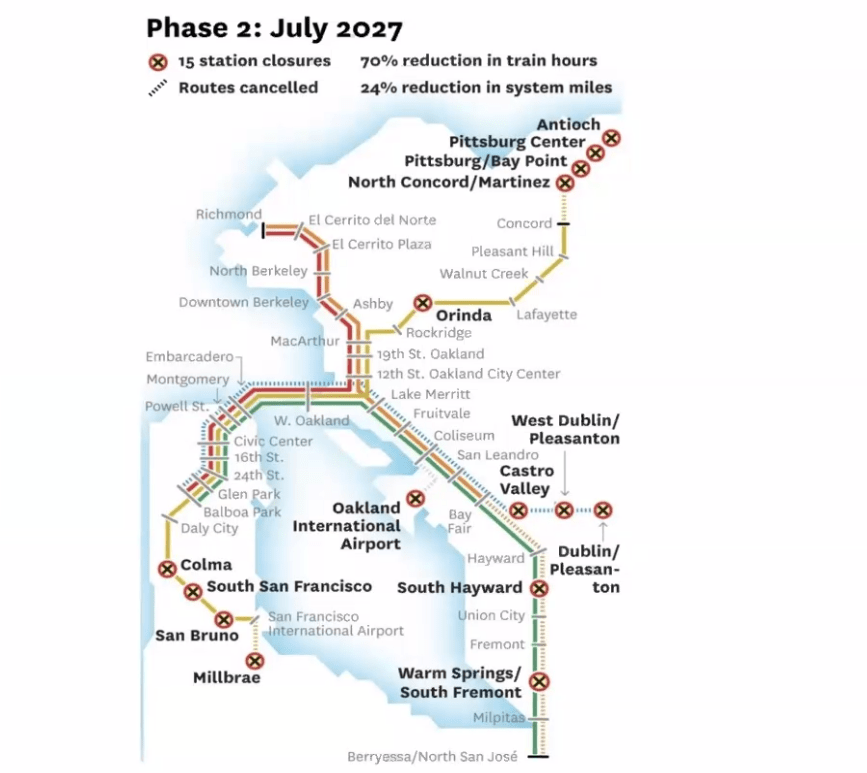
Basically, people throughout the region would lose access to jobs and services. But nobody would be harder hit than low-income, working-class folks who absolutely depend on transit to get around.
“70 percent of us use public transit,” said Sophia DeWitt of East Bay Housing Organizations. For affordable housing residents, the situation is truly dire, because transit is the most economical way to get around, “particularly right now with gas prices where they are.”
“Cuts to Caltrain would put that many more cars on our streets and highways,” explained the Housing Leadership Council of San Mateo County’s Ken Chan. “But about 77 percent of Sam Trans ridership is considered low income. 41 percent of its ridership makes less than $25,000 per year.” So it’s farm workers, service workers who will suffer the most, he said.
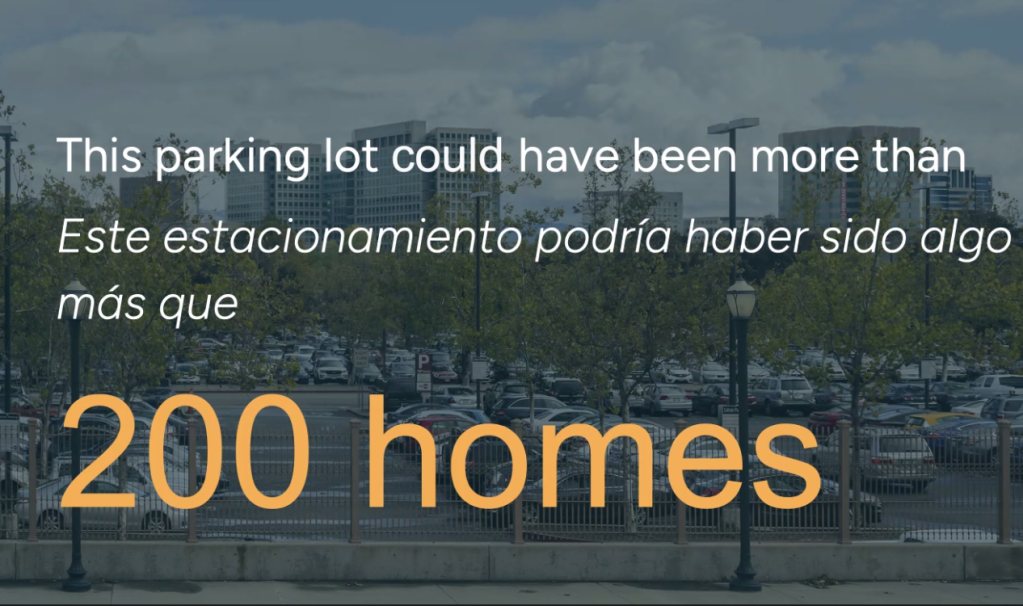
But even if the regional measure ultimately receives enough signatures, gets on the ballot, and passes in November, housing advocates say they need to keep fighting for a vision of how they want the Bay Area to look in the future. Is it going to be a place where the working class drives long hours from the only housing they can afford, to leave their cars in big parking lots for a long ride to work or school? Or is it a place with dense housing around transit stops that are affordable to all, so people aren’t forced into exurbia?
“The key is to get more housing near transit, for folks of low income and the working class,” said Javier-Rosales.
The panelists also agreed that a way has to be found to fund transit and housing in the future in a more progressive way. “Sales taxes are regressive,” said Deutsch-Gross. “So while we support the transit measure, we have to ask and think about how we can make the Bay Area more equitable.”
All the panelists agreed with so much wealth in the Bay Area, especially in San Francisco and the Peninsula, at some point a wealth tax or some kind of more progressive tax is needed to fund transit and housing.
But for now, given the disaster that would unfold if transit is defunded, the housing and transit advocates realized a sales tax (and a parcel tax in San Francisco) is the most politically feasible and the only way to avoid a cataclysm for the working class. “A half-cent sales tax is doable,” said Javier-Rosales. “Losing our transit is not.”
“The wealth disparity is so deep here in the city,” said Mecke. After transit is saved, “we’ll have more strategic conversations in the future,” concluded Javier-Rosales.
To help gather signatures for the regional measure sign up here.

Read More:
Streetsblog has migrated to a new comment system. New commenters can register directly in the comments section of any article. Returning commenters: your previous comments and display name have been preserved, but you'll need to reclaim your account by clicking "Forgot your password?" on the sign-in form, entering your email, and following the verification link to set a new password — this is required because passwords could not be carried over during the migration. For questions, contact tips@streetsblog.org.