Commentary: E-Bikes are NOT the Problem
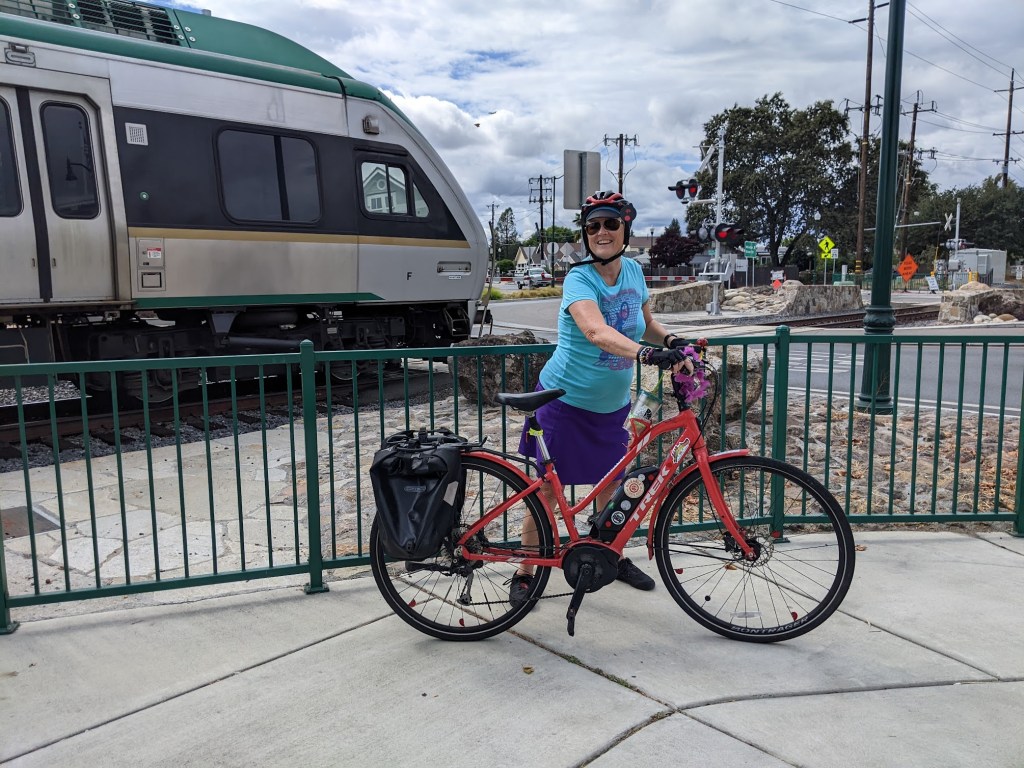
E-bikes allow riders to travel farther with less effort, which is great for commuters who must arrive at work non-sweaty. They allow folks with declining strength or fitness to continue cycling. Research has also shown that folks with e-bikes ride more often than those with conventional bikes.
But as more people ride e-bikes and similar devices, injuries have increased; since many of these devices are capable of faster speeds, the severity of injuries has also increased.
To put this in perspective: data from the Consumer Product Safety Commission shows there were about 7,000 injuries associated with electric bikes, scooters, and other devices nationwide in 2025. In the same year, two and a half million people were injured in motor vehicle crashes. So why all the ruckus about e-bikes?
Yes, there is a growing number of (mostly young, mostly male) individuals zooming around at high speeds and causing collisions with other road users and pedestrians. What should we do about it?
First, let’s just acknowledge that teens are gonna teen—give them a high-speed ride; they’re going to ride at high speed. But in the majority of problematic incidents, the vehicle in question isn’t an e-bike but a much faster and more powerful e-moto. Double whammy!
The California Vehicle Code recognizes three classes of e-bike. All must have operable pedals and a motor that doesn’t exceed 750 watts and is not capable of reaching more than 20 mph on throttle alone.
- Class 1 e-bikes have a maximum assisted speed of 20 mph and no throttle.
- Class 2 e-bikes have a maximum assisted speed of 20 mph and a throttle.
- Class 3 e-bikes have a maximum assisted speed of 28 mph and no throttle. Riders must be at least 16 years old and wear a helmet.
The laws are somewhat different for e-scooters. Riders must have a driver’s license or learner’s permit. The maximum allowable speed is 15 mph. Riding on sidewalks or with a passenger is not allowed. Ride in the bike lane and follow all vehicle laws.
While our local bike shops sell street-legal e-bikes, many unscrupulous online manufacturers and marketers are selling much faster and more powerful devices but calling them e-bikes. (We call the imposters e-motos.) We’ve spoken with parents who purchased these for their kids, unaware that they weren’t legal until the riders were cited by local law enforcement. SB 1167, currently wending its way through the California legislature, would impose penalties on these marketers.
Sonoma County Bicycle Coalition has been working with local law enforcement and other organizations to educate the public about safe and responsible use of e-bikes. Our recommendations:
- We don’t recommend e-bikes for children; there’s a reason you’re not allowed to drive a car until your teens! Kids don’t yet have the physical, mental, or emotional maturity to handle an electric bike. Plus, our kids need increased exercise more than they need speed.
- Purchase your e-bike from a local bike shop; if you must shop online, read the specs carefully! If the ads brag about power and speed; if the motor is over 750 watts; if the maximum assisted speed is over 20 mph – don’t buy it!
- All cyclists are required to follow the same laws as motorists: ride on the right, stop for lights, etc. Be visible and predictable: wear bright clothing, don’t weave in and out of parked cars, use hand signals, use lights when it’s dark out. When riding an e-bike on a multiuse path, remember that the speed limit is 15 mph; call out when approaching pedestrians and give them plenty of space. Stay off the sidewalks. Those under 18 are required to wear helmets; we recommend them for everyone.
- We don’t support legislation requiring bike registration or limiting who or where legal e-bikes can be ridden; it does nothing to reduce the problematic activity and disincentivizes cycling. We do support law enforcement in citing and impounding illegal e-motos. If you see illegal activity, report it! (Hint: if they’re going over 20 mph and not pedaling, it’s NOT an e-bike!)
Reducing injuries from e-bikes and other devices is possible if parents, educators, law enforcement, and community organizations work together.
***
Eris Weaver, MPH, is Executive Director of the Sonoma County Bicycle Coalition. Learn more at https://www.bikesonoma.org/ebikes.
A version of this post first appeared in The Press Democrat and is used here with the author’s permission.
Streetsblog has migrated to a new comment system. New commenters can register directly in the comments section of any article. Returning commenters: your previous comments and display name have been preserved, but you'll need to reclaim your account by clicking "Forgot your password?" on the sign-in form, entering your email, and following the verification link to set a new password — this is required because passwords could not be carried over during the migration. For questions, contact tips@streetsblog.org.