California Rail Safety Month Kicks off With Freight Train Press Ride-Along

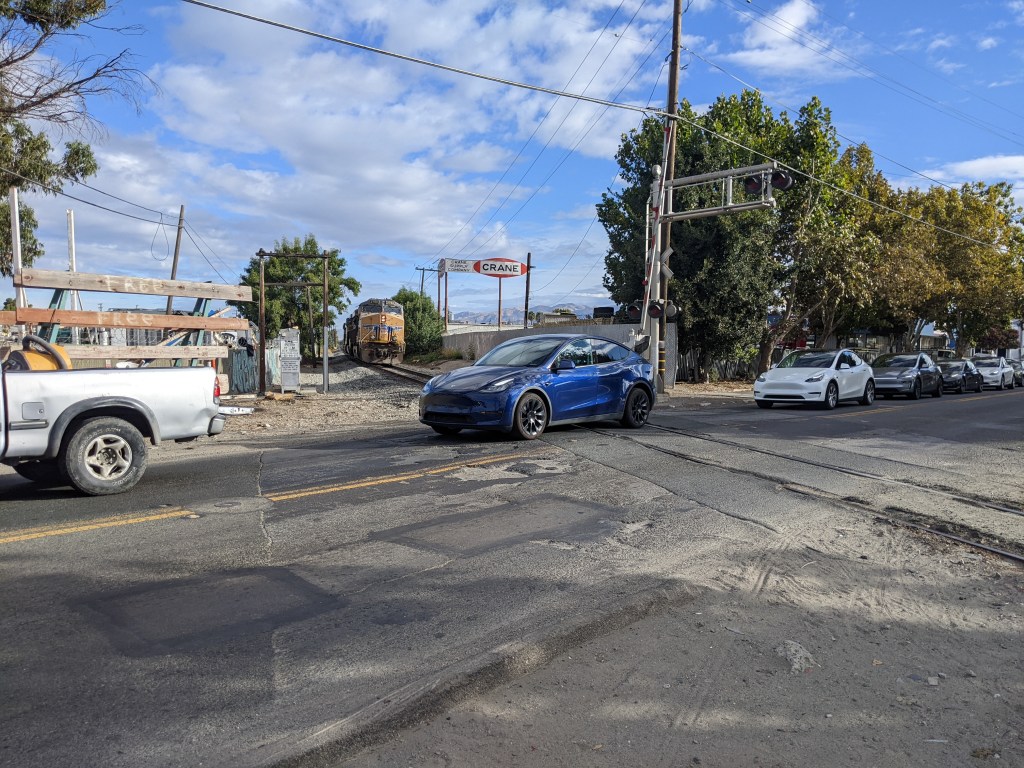
The lead photo is just another driver who decided it would be a good idea to stop on a train track at a grade crossing in San Jose, instead of waiting for space to clear to get fully across.
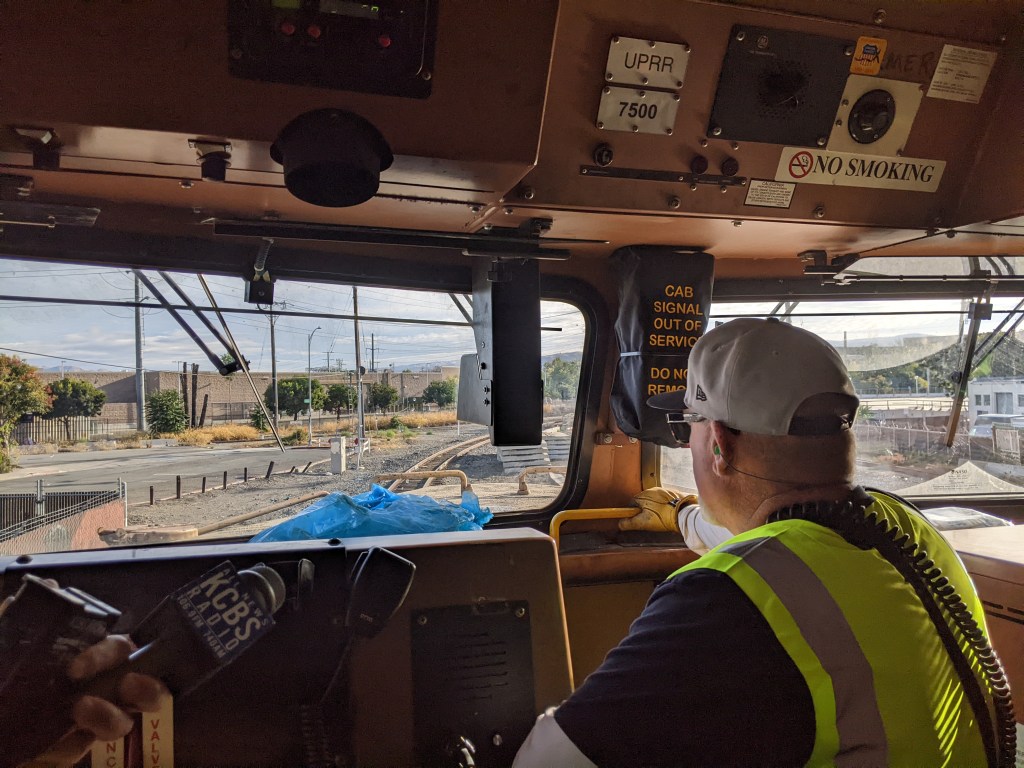
One would think it was staged, since that train was on a special run Wednesday with journalists on board to get a sense of what locomotive engineers and train conductors deal with as they carry freight and passengers around the Bay Area.
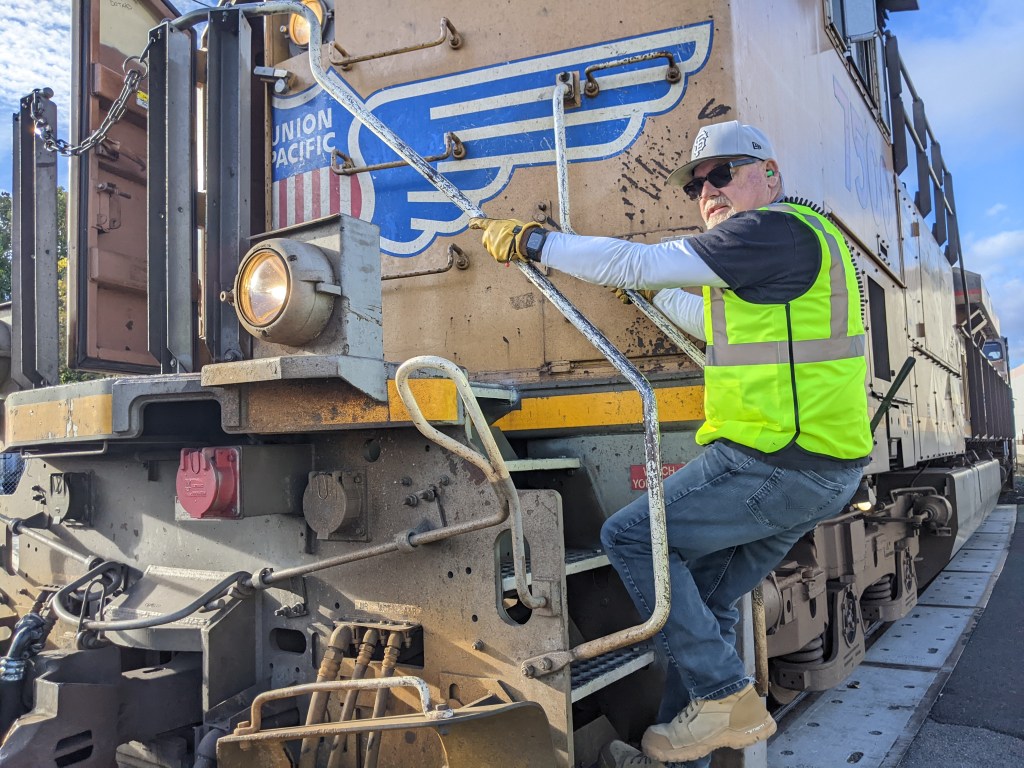
“Unsafe motorists go around the gates; they try to beat the gates,” explained Union Pacific Conductor Jeff Spencer, part of the two-person crew running the locomotive on an isolated section of freight-train-only track near San Jose’s Diridon Station.
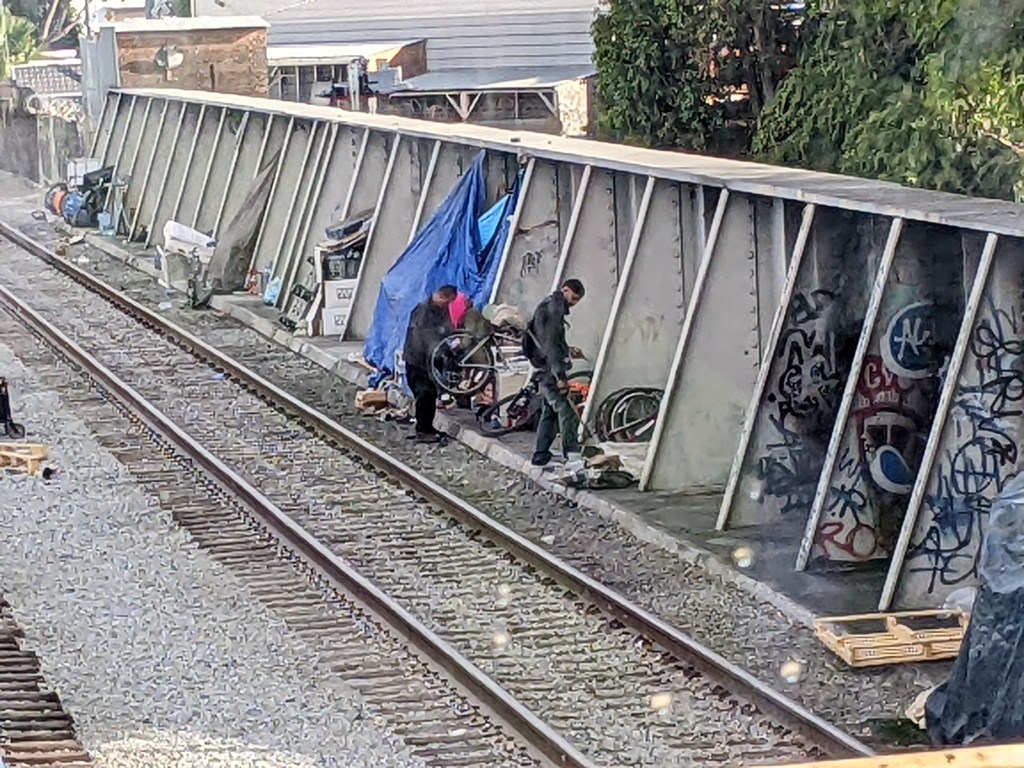
The run, which took place on the Union Pacific’s Warm Springs Subdivision track, also highlighted the sad state of mental health and homelessness in the Bay Area. Sections of the track are lined with tents and people walking dangerously close to the moving locomotives. A spokesperson for the railroad explained that the tracks were recently cleared out, but the homeless keep coming back in an inhuman game of Whack-A-Mole played between railroad and city officials. Debris from the encampments frequently delays trains. And sometimes people end up falling on the tracks.
The Union Pacific freight train ride-along was part of the “Partners United for Rail Safety” fair at San Jose Diridon Station. That event is timed to correspond with Transit Month. It includes representatives from Caltrain, Amtrak, and ACE, all of which run on or share tracks with Union Pacific.
“We have 41 grade crossings on our 51-mile right of way,” Caltrain CEO Michelle Bouchard told Streetsblog. Caltrain, which shares tracks with Union Pacific, still regularly collides with motorists who illegally stop on the tracks or attempt to drive down them.
Bouchard said Caltrain is working with local communities to build safer crossings, separate roadways, and in some cases bridge the roads above or below the tracks. “There will be a time when Caltrain is running eight trains an hour in each direction,” she said, explaining that ultimately they want all street crossings closed or separated, at least in the busiest parts of the line. “Safety should be everything.”
But until that is fully built, it still depends on drivers and others behaving safely. According to Operation Lifesaver, which was also involved in Wednesday’s event, there are 2,000 train vs. car or truck collisions in the U.S. every year. And it’s not hard to determine who is at fault when such tragedies occur. “I’ve never seen a train suddenly turn left instead of right,” said Amtrak police captain Doug Calcagno, one of several law enforcement agencies who participated.
Even on a short, low-speed safety demonstration run, with law enforcement at every grade crossing, the driver of the blue Tesla in the lead image still failed to wait until there was space on the other side and stopped on the tracks. In this case, there was no danger of a collision. But the passenger and freight trains that move around the Bay Area don’t always go so slowly. A train going 79 mph, which is typical, takes over a mile to stop. And then if a driver is stopped on the tracks, tragedy results.
Unfortunately, such unsafe behavior from motorists is typical, said the law enforcement officers and railroad officials at the event. “We see it every day,” said Spencer.

Streetsblog has migrated to a new comment system. New commenters can register directly in the comments section of any article. Returning commenters: your previous comments and display name have been preserved, but you'll need to reclaim your account by clicking "Forgot your password?" on the sign-in form, entering your email, and following the verification link to set a new password — this is required because passwords could not be carried over during the migration. For questions, contact tips@streetsblog.org.