


Commentary: State Density Bonus Threatens Progressive Parking Policies
At $120,000 per space, using luxury parking to subsidize affordable housing undermines planning for compact development centered on green mobility. It’s tantamount to gentrification by parking.

May 19, 2022

Opinion: Gov. Newsom’s Gas Rebate Won’t Fix Anything
High gas prices should not be seen as just a political crisis. They are also an opportunity to reduce climate pollution, end fossil fuel wars, reduce traffic congestion, and increase public health through active transportation.
April 6, 2022
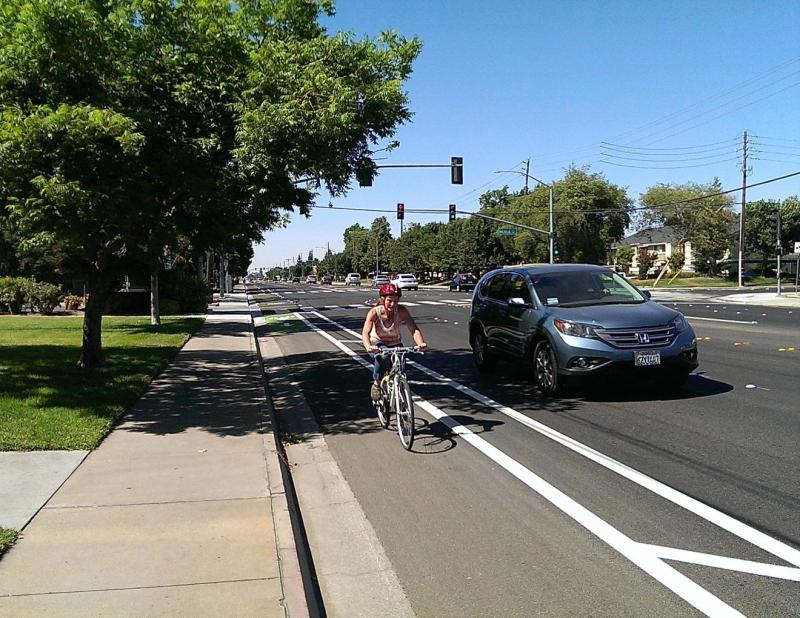
Guest Editorial: Driverless Cars Could Wreck Livable Cities
Over the past year driverless cars have been promoted as a panacea for livable cities. The storyline is that driverless cars will help reduce car ownership, free-up urban space for walking and biking, and help reduce death and injury. The USDOT has joined the parade with its “smart city challenge,” awarding Columbus, Ohio a $40 million prize to implement a demonstration project that includes incorporating driverless cars.
July 5, 2016
How Freeway Removal and Zero Parking Can Fend Off SF’s Triple Threat
There is an urgent triumvirate of crises looming over San Franciscans. With median rents now exceeding $4,200, hyper-gentrification is tearing lives apart. Except for those surviving on rent control, the city is no longer welcoming to teachers, artists, and the entire middle class. Things are looking difficult in the East Bay, as speculators and realtors spread their tentacles of greed around every BART station.
May 26, 2015
Commentary: Proposition G and the Vision of the City
Editor's note: Jason Henderson, a geography professor at San Francisco State University who writes about the politics of mobility, explains why he's voting against Proposition G on November 2. We've invited the Yes on G side to write an op-ed and hope to publish it soon.
October 22, 2010
The Moral Imperative of the BP Oil Spill: Drive 20 Percent Less
Editor's note: This is an essay from Jason Henderson, a Geography Professor at San Francisco State
University. He was born and raised in New Orleans and spent many years
exploring Louisiana's wetlands. He is currently writing a book about
the politics of mobility, and frequently advocates for reduced car
parking and improved bicycle space in San Francisco.
June 14, 2010
Commentary: Keep Drilling, Stop Driving, Use Oil Wisely
(Editor's note: This is an Op-Ed from Jason Henderson, Geography Professor at San Francisco State University, who is writing a book on the politics of mobility in cities. He grew up
in New Orleans where he spent much time in the coastal wetlands of
Louisiana while also observing the activity of the oil and gas
industry. He has never owned a car.)
May 3, 2010
Newsom Should Charge Drivers More for Parking Before Cutting Muni
Transportation accounts for one third of US greenhouse gas emissions and is the fastest growing source of emissions globally. Most of this comes from automobiles, and technical fixes like biofuels or hybrid/electric cars will not get us to the 80 percent reductions in CO2 that we must attain to stabilize the climate. We need to reduce driving and re-orient our daily mobility towards transit, bicycling, and walking. Even Ray LaHood, Obama’s Transportation Secretary – and a Republican – made the connection on a recent interview on C-Span. And San Franciscans have demanded that their political leaders get it too. Polling, balloting, and surveying has reified that San Franciscans overwhelmingly support a “transit first” agenda and understand that this includes discouraging driving.
May 8, 2009
John Muir and Livable Cities
Over the holiday I read a new biography of John Muir, the iconic Victorian-era environmentalist and tireless advocate for wilderness conservation who helped establish the Sierra Club. Written by environmental historian Donald Worster, the book narrates Muir’s well-known struggle and political machinations over the damming of Hetch Hetchy. Less widely known was that as a pacifist Muir was a draft dodger during the Civil War (he did abhor slavery), and although he believed America was immoral for allowing the 19th century killing-off of animals, he had to subsume his values to court Teddy Roosevelt, an avid sports hunter, in order to advocate for protecting wilderness. The storylines about Muir included a critical deconstruction of the politics of the early American conservation movement and this led me to reflect on the similarities between that movement and San Francisco’s contemporary livable city movement.
February 11, 2009