It’s Not That Hard to Find People Who Like the JFK Bikeway

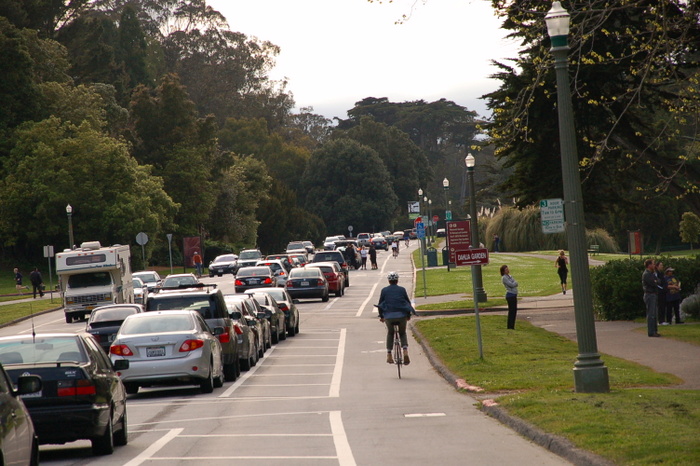
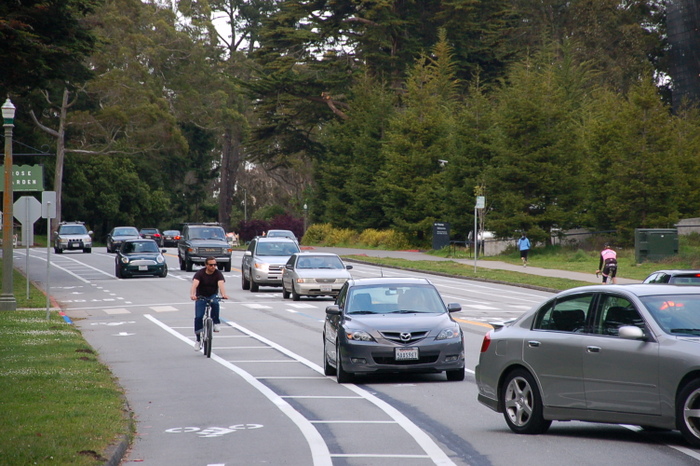
Much has been made about the “strangeness” of San Francisco’s first parking-protected bike lane in Golden Gate Park, which employs the type of design that other American cities are increasingly using to improve safety and raise bicycling rates.
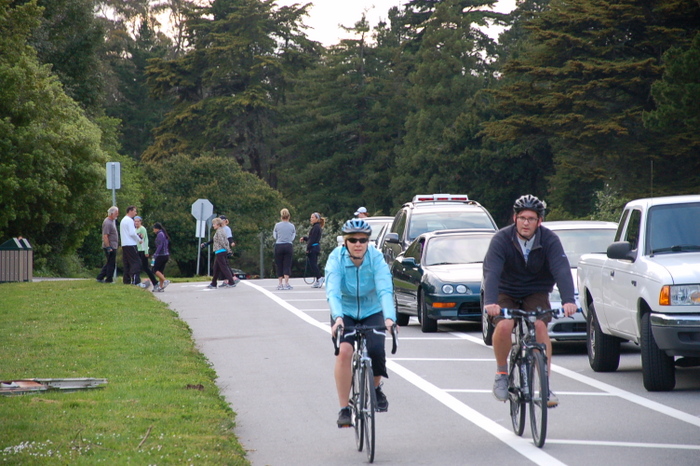
As someone who lives next to Golden Gate Park, I’ve been going out of my way to ride on John F. Kennedy Drive almost every day since the easternmost section was installed a few weeks ago. The sense of safety and dignity that the protected bikeway affords is highly enjoyable. And day by day, as more drivers grow acclimated to the new arrangement and fewer block the bike lane, I’ve watched a growing number of children and casual bicyclists enjoy riding on a calmer, quieter street in a space that truly belongs to them.
There are ample signs that drivers are getting used to it. In fact, after crews striped the second of three sections yesterday between the de Young Museum and Stow Lake Drive, I found all the cars parked where they’re supposed to be.
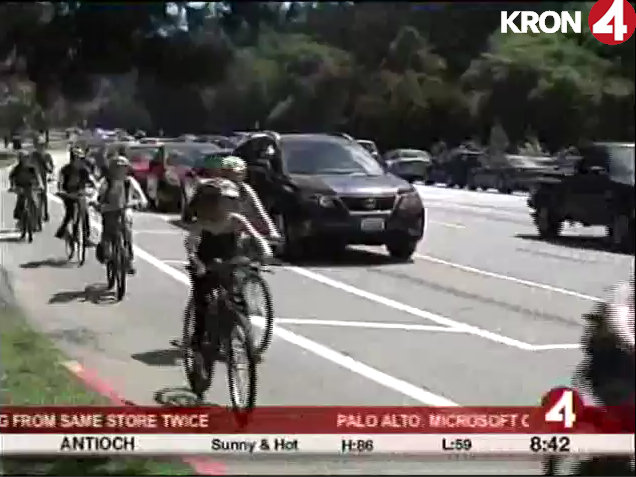
Still, floating parking lanes are new to San Francisco, and some members of our local media just can’t resist sensationalizing this transitional phase, focusing on the initial complaints of a few people who aren’t used to it yet. When KRON’s Stanley Roberts went out to JFK Drive last week, he seemingly ignored the swaths of riders, young and old, who use the reconfigured lane. “It was hard for us to find someone who likes it,” he told viewers.
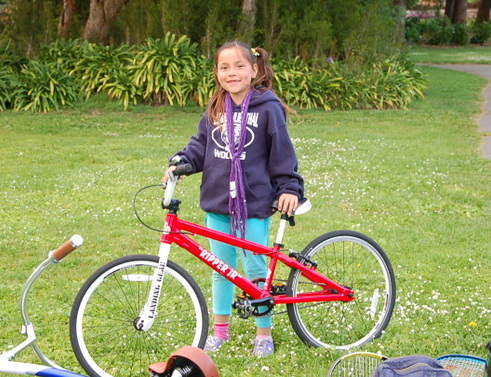
Well, it wasn’t hard for me as I made my way along JFK Drive yesterday. Pretty quickly, I found Colleen and her 7-year-old daughter Callie, who live in the Inner Richmond and regularly bike in the park twice a day. They said the new separation from cars makes them feel safer.
“I think that once the car drivers get used to it, it’ll be easier,” Colleen said. “Right now, they’re confused, and once they understand they’re not supposed to park in the bike lane, it’ll be good.”
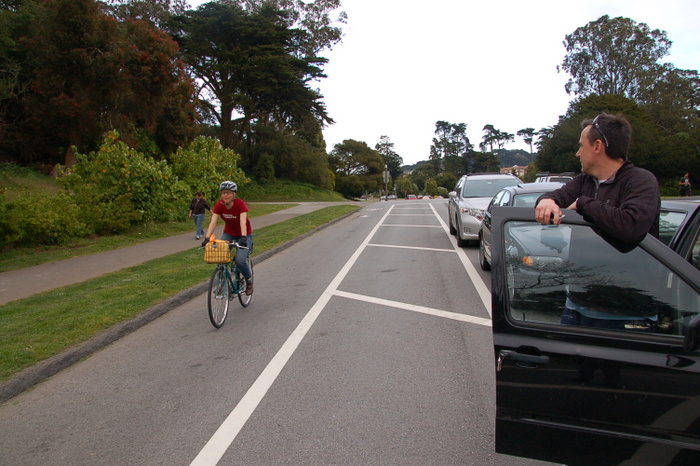
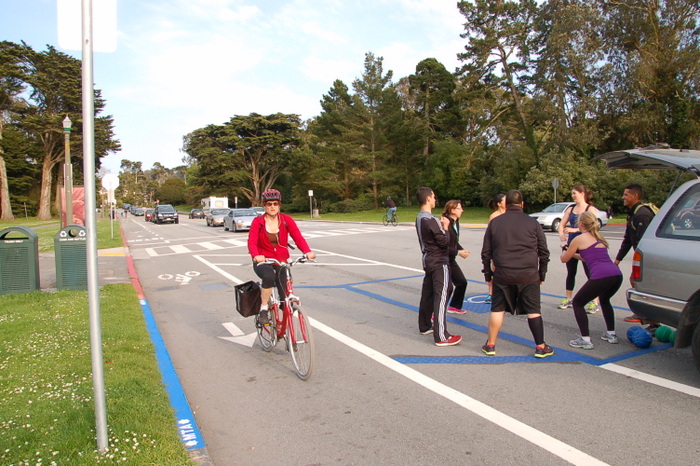
I also spoke to Jesse, a father who regularly parks his car on JFK when he coaches his son’s little league baseball team. Standing in the new buffer zone, which keeps bicyclists and motor vehicle passengers out of each other’s way as people get in and out of their cars, he told me he likes it. The only concern he noted was the need to remind kids to watch for bike traffic as they cross the lane.
“From the driving experience, it’s better,” he said. “If you’re on the road, the bikes are safer, and there’s separation between the motorists and the bicyclists.”
As in cities like New York, Portland, Chicago, and Long Beach, where these kinds of bikeways have been successfully implemented, there’s an adjustment period, but people seem to be getting used to it fairly quickly.
The real story that Roberts missed is that JFK Drive represents the future: a street design that helps a broader segment of San Francisco feel comfortable biking around the city.

Read More:
Streetsblog has migrated to a new comment system. New commenters can register directly in the comments section of any article. Returning commenters: your previous comments and display name have been preserved, but you'll need to reclaim your account by clicking "Forgot your password?" on the sign-in form, entering your email, and following the verification link to set a new password — this is required because passwords could not be carried over during the migration. For questions, contact tips@streetsblog.org.