Eyes on the Street: Reason #291 to Build Physically Separated Transit Lanes

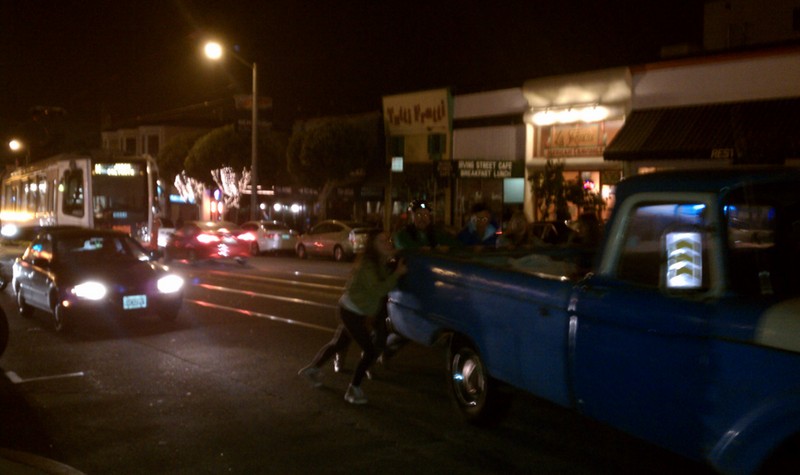
Last night, I stumbled across a confusing scene on Irving Street at Eighth Avenue: An abandoned pick-up truck on the N-Judah tracks, with two trains and a line of cars stuck waiting behind. There were a few onlookers near the truck, but nobody I asked knew what was going on.
Suddenly, six people gathered behind the truck, shifted it into neutral, and pushed it around the corner. Four of them were actually planning to catch the train and rushed off to board it. The other two, who gave their names as Mitchell and Elizabeth, told me they felt compelled to help out the hundreds of people who likely had no idea why they weren’t moving. “Obviously, it would suck to be on that train,” said Mitchell.
So, what’s the story with the truck? When the driver returned, he told me he’d had a fight with his ex-girlfriend while driving down Irving. She apparently grabbed his keys out of the ignition, ran down the street and threw them down a sewer drain. He’d run out to find them.
Obviously, there’s not much a transit agency can do about people stealing keys from private vehicles in the middle of the street. But implementing more physically separated transit lanes would certainly reduce the chances that they’ll jam Muni’s busiest metro line when it happens.
We’re on a light publishing schedule today. See you Monday.

Streetsblog has migrated to a new comment system. New commenters can register directly in the comments section of any article. Returning commenters: your previous comments and display name have been preserved, but you'll need to reclaim your account by clicking "Forgot your password?" on the sign-in form, entering your email, and following the verification link to set a new password — this is required because passwords could not be carried over during the migration. For questions, contact tips@streetsblog.org.