A Dutch Bicycle Engineer’s Perspective on the Sharrow

Sharrows: the consolation prize of bike infrastructure.

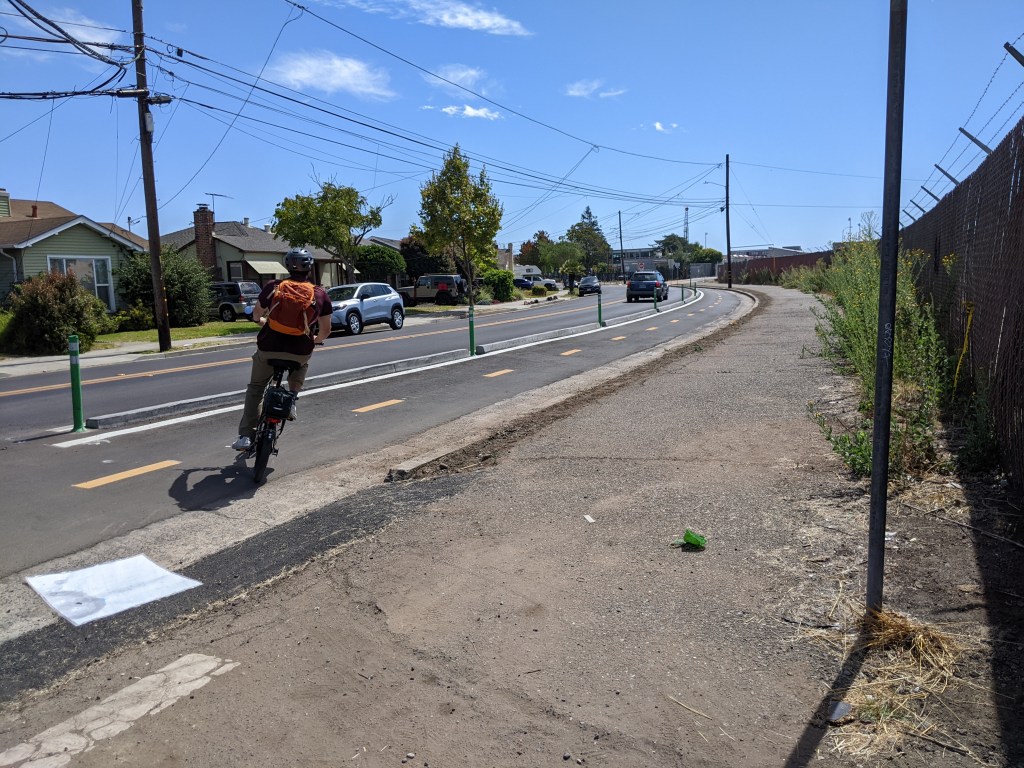
Dick van Veen, a Dutch bike engineer who is currently working in Ottawa, says cyclists often ask him about this symbolic gesture toward bike safety. He says in America, sharrows are often painted on an otherwise inhospitable road. The Dutch use them too, but they have a very different approach, he explains at Urban Commuter:
The thing is, sharrows are not all bad. The fact that they highlight the position and possibility of bicycles on the road is a major benefit. In fact, in the Netherlands, often seen as the paradise for cycling, 80% of the urban roads are shared use, mixing bicyclists and cars. So there must be something good about sharing the road.
In the Netherlands however, mixing traffic modes is always viewed from a traffic safety perspective. The 30 km/h limit [about 19 miles per hour] — mixing modes with higher speeds is deemed too unsafe and thus unethical — is key to shared space. With speed limits higher than that, separation is a must (at least a bike lane, preferably a protected cycle path).
Besides a lower speed limit being a necessity for shared space, another aspect comes into play. The design speed of roads must be in accordance with the speed limit. So a wide road is unsuitable for a 30 km/h (20 mph) limit. In fact, a 30 km/h road must be so narrow that a car driver cannot overtake a cyclist when someone is coming from the opposite direction. The design stimulates the correct behavior.
So are sharrows bad? Not always. Using sharrows to accentuate the position of cyclists on the road can be recommendable, especially when the main culture is still car dominated. But using sharrows on a wide, high-speed route is not advisable. It is not making anything safer or easier. So if you use sharrows, be sure to include a road diet, lower the speed limit and make overtaking difficult. Than you create a bike space where car drivers must learn to behave like guests.
Elsewhere on the Network today: Streets.mn reports on the obstacles to college students who want to serve on Minneapolis neighborhood boards. Bike Portland says a survey of local cyclists found that plantings are the preferred buffer material for bike lanes. And Pedestrian Observations takes a critical look at the evolving Hyperloop plan, asking whether the physics as well as the cost estimates are reasonable.

Read More:
Streetsblog has migrated to a new comment system. New commenters can register directly in the comments section of any article. Returning commenters: your previous comments and display name have been preserved, but you'll need to reclaim your account by clicking "Forgot your password?" on the sign-in form, entering your email, and following the verification link to set a new password — this is required because passwords could not be carried over during the migration. For questions, contact tips@streetsblog.org.