Hot Take: People Sometimes Bump Into Bike Lane Separators, and That’s OK

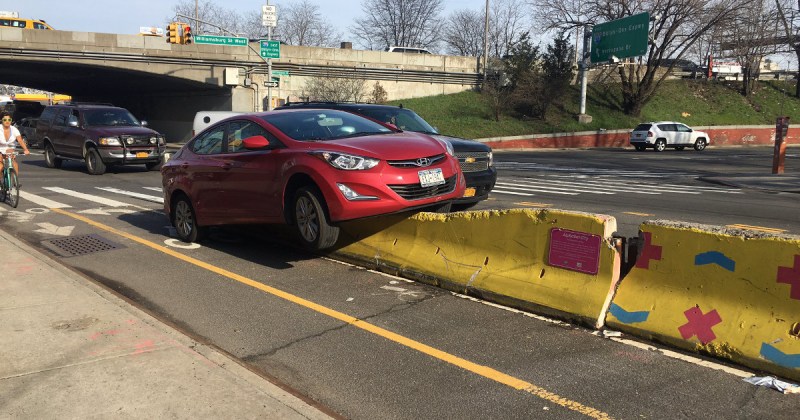
The basic point of a protected bike lane is that sometimes, vehicles bump into the objects that are doing the protecting.
I’m working on a post about the effects of the huge quick-build protected bike lane network installed by Seville, Spain, in 2007-2008. A new study of those outcomes by R. Marqués and V. Hernández-Herrador turns up this side note: Protected bike lanes tend to reduce bike-versus-car collisions, but they also seem to increase bike-versus-stationary-object collisions.
Here’s a relevant table from the study, published last month in the journal Accident Analysis and Prevention:

“The relative number of bicycle accidents other than collisions with motor vehicles increased after 2006,” the authors write. “This change seems natural, due to the concentration of cyclists in the cycle paths and the location of many cycle paths on or next the sidewalks.”
It’s also likely that some reporting error is involved here. But as American street designers look for the ideal form of bike lane separation, they frequently hear complaints that people are colliding with stationary objects, both while driving and while biking. The well-established practice of “traffic calming” could also be described as “placing large objects in locations where cars might hit them.” This strikes some people as unsafe, because it seems to invite collision. But the truth is that in general, well-designed traffic calming increases safety because people prefer to avoid hitting objects with their car, so on average people drive more slowly and carefully.
Similarly, it’s not unusual for some people who ride bikes to complain about narrow protected bike lanes, because they force slower speeds and seem to invite collision.
But though wide bike lanes generally make for better biking, slower biking isn’t always a bad thing, either.
Reasonable people will disagree over how and when to apply these ideas. But before we criticize a particular bike lane separator — whether we’re doing so from a driving or biking perspective — we should remember that there are worse situations on the road than colliding with a stationary object.
PlacesForBikes is a PeopleForBikes program to help U.S. communities build better biking, faster. You can follow them on Twitter or Facebook or sign up for their weekly news digest about building all-ages biking networks.

Read More:
Streetsblog has migrated to a new comment system. New commenters can register directly in the comments section of any article. Returning commenters: your previous comments and display name have been preserved, but you'll need to reclaim your account by clicking "Forgot your password?" on the sign-in form, entering your email, and following the verification link to set a new password — this is required because passwords could not be carried over during the migration. For questions, contact tips@streetsblog.org.