CalBike Survey: Californians Don’t Want to Always Have to Drive

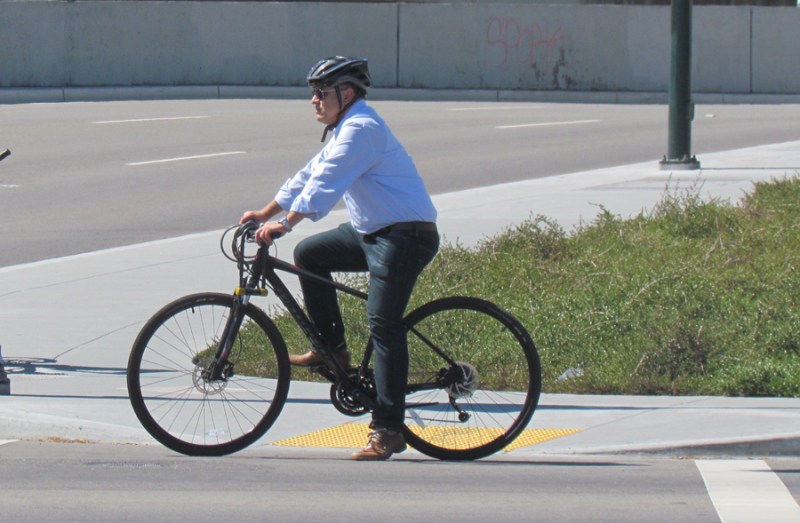
A recent survey commissioned by the California Bicycle Coalition found the California voters favor investments in a multi-modal, inclusive transportation system. More than two thirds of the California voters surveyed said they support investing in “complete streets” that are safe for all users, not just people in cars. And nearly half said they believe such investments should be a priority equal to or higher than improving freeways and roads.
These results seem to defy the notion that Californians want to drive everywhere.
The poll surveyed registered voters by phone in May, soon after the passage of the transportation funding bill. S.B. 1 is set to bring in billions of dollars to invest in California transportation over the next ten years, but how that money is invested will determine the shape of California’s transportation system for many more years after that.
“Our survey shows that California families want to be able to safely walk and bike in their neighborhoods,” wrote Jeanie Ward-Waller, Policy Director for the California Bicycle Coalition in a statement released by CalBike. “Nearly two-thirds of people said they would bike more often. . . if they had protected bike lanes on streets in their neighborhoods that made them feel less threatened by traffic.”
“Transportation officials are decades behind acknowledging this shifting demand and investing taxpayer dollars as much in alternatives to driving as we have invested in making it easier to drive,” wrote Ward-Waller.
Key findings from the survey include:
- People are split about evenly in terms of whether it’s more important invest in alternatives to driving or in widening roads and freeways—that is, nearly half support investments in public transportation, walking, and biking as equal in priority or higher than roads and freeways.
- The survey found that even among those Californians who rely on driving as their primary mode of travel, many support investing in alternatives to driving. And that support is higher among those people who commute more than twenty miles a day.
- A large majority of California voters support complete streets, with 78 percent of those surveyed saying they believe that state and local transportation departments need to change the way they build streets and roads to make it safe for all users, including people who walk, bicycle, take transit, and drive.
- Voters believe that building complete streets would provide safer streets for children to walk and bike, stimulate local business sales and create jobs, provide affordable transportation options, make people healthier, and help reduce traffic.
- Voters want better bicycling conditions: two-thirds agree that their city government should do more to encourage bicycling.
- Bicycling is commonplace in California: one in five men and thirteen percent of women bike every week, and a majority have ridden a bike in the past year—while many more say they would like to ride a bike but don’t.
“We wanted to get a deeper look at what people are concerned about, and why they support complete streets investments,” said Ward-Waller about the purpose behind the survey.
The poll asked people to respond to statements in support of investing in complete streets, like this example:
The Complete Streets policy will make biking and walking safer and more appealing to people of all ages, resulting in many fewer trips by automobile for work, shopping and entertainment. This will mean less traffic on the roads for everyone.
It also presented arguments against such policies, such as the ideas that they would cost taxpayers money and mandate removing traffic lanes. However, even after introducing skeptical statements, the survey found that support for investing in complete streets remained high.

Read More:
Streetsblog has migrated to a new comment system. New commenters can register directly in the comments section of any article. Returning commenters: your previous comments and display name have been preserved, but you'll need to reclaim your account by clicking "Forgot your password?" on the sign-in form, entering your email, and following the verification link to set a new password — this is required because passwords could not be carried over during the migration. For questions, contact tips@streetsblog.org.