America Spends $7.3 Billion a Year Paying Affluent People to Drive to Work

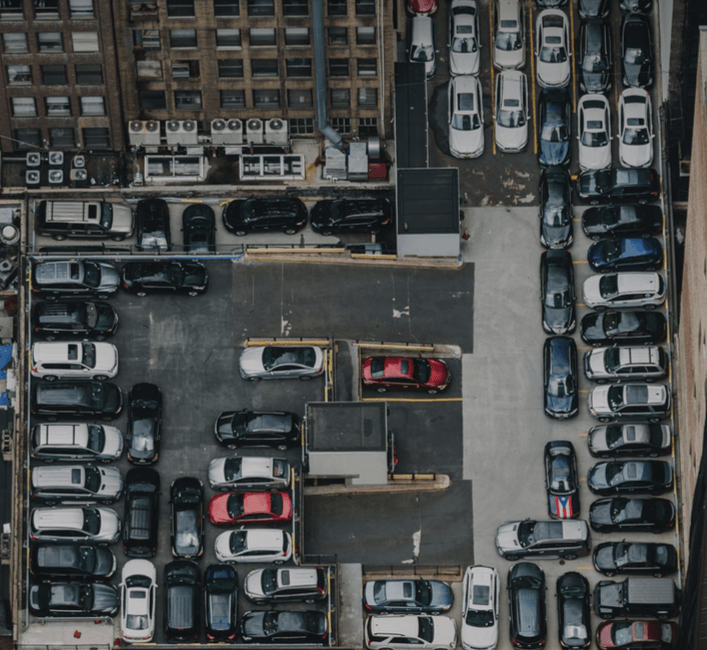
Every day, the streets of American cities are more clogged and polluted at rush hour because the federal government pays people to drive to work.
The culprit is the commuter tax benefit, a $7.3 billion annual subsidy that mainly offsets parking costs for people who drive to work. The people who benefit the most are high earners who drive into the U.S.’s biggest, most congested cities and can write off the maximum $255 per month in tax-free income.
The tax break for car commuters is not only regressive, it also generates traffic at exactly the worst time — rush hour — and in exactly the worst places — the central areas of major cities, according to a new study from TransitCenter and the Frontier Group [PDF].

Placing a finger on the scale of people’s commute decisions can have a profound influence on behavior. A model developed by Virginia Tech researcher Andrea Hamre estimates that in five cities — Washington, DC, Baltimore, Philadelphia, Newark, NJ, and New York City — a subsidy solely for parking at work would reduce transit’s share of the commuting pie 25 percent, compared to scenario with no commuter subsidy.
The federal government does allow transit commuters up to $255 a month in pre-tax income to offset the cost of fares. But people can claim it only if their employer offers the benefit. The parking subsidy is much more widely used — the government spends $7.3 billion a year on it, compared to $1.3 billion for transit.
Cities would be better off if both subsidies were eliminated. TransitCenter estimates that without the commuter tax benefit, 66,000 fewer people would drive to work in the 25 largest U.S. cities.
As long as the commuter benefit persists, local governments can at least help even the playing field. A number of cities, including New York, DC, and San Francisco, have ordinances requiring most employers to offer the transit benefit to their workers.

Read More:
Streetsblog has migrated to a new comment system. New commenters can register directly in the comments section of any article. Returning commenters: your previous comments and display name have been preserved, but you'll need to reclaim your account by clicking "Forgot your password?" on the sign-in form, entering your email, and following the verification link to set a new password — this is required because passwords could not be carried over during the migration. For questions, contact tips@streetsblog.org.