No Turn on Red: SFMTA Wins ‘Lamest Excuse Ever’ Award For Not Making Streets Safer

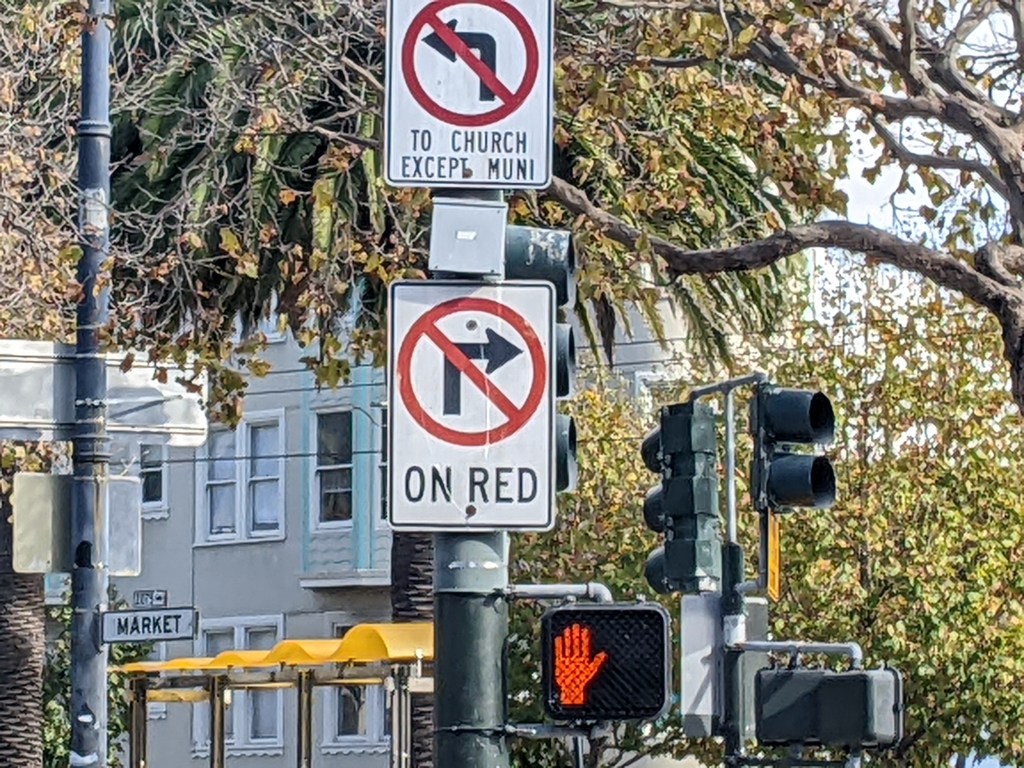
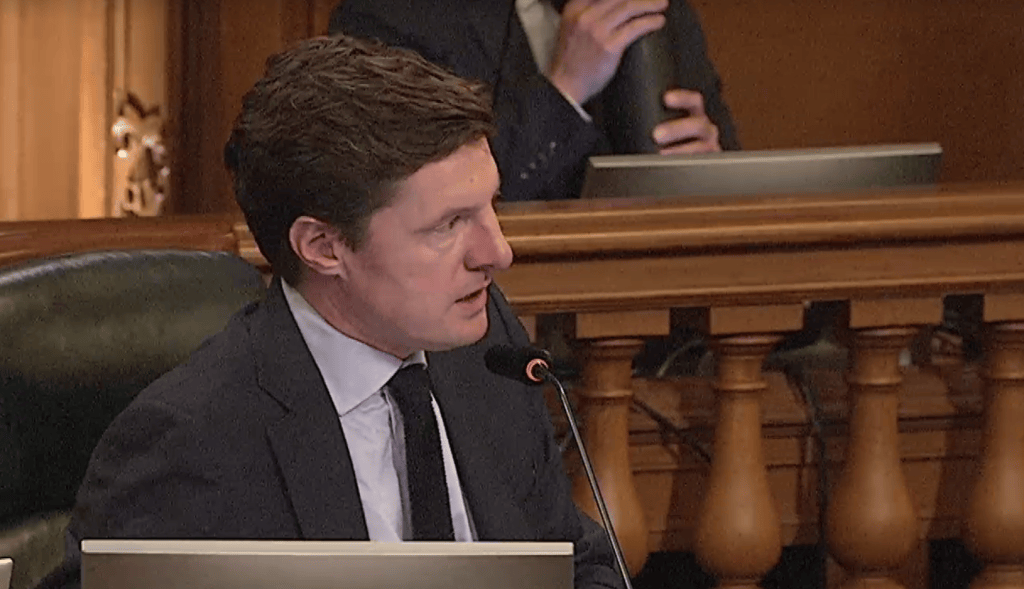
At Tuesday’s San Francisco County Transportation Authority Board meeting, commissioner and District 2 Supervisor Stephen Sherrill asked SFMTA staffers why the city can’t install “No Turn on Red” (NTOR) signs at all signalized intersections. Currently, the city is phasing in NTOR signs over the course of several years according to various criteria, including traffic and pedestrian density. SFMTA is resisting calls to ban turns on red citywide.
“I’ve been told I shouldn’t say that I grew up in New York City, but I did,” said Sherrill at Tuesday’s meeting. “But they’ve had [citywide] no right on red for a long time and people have gotten used to it.”
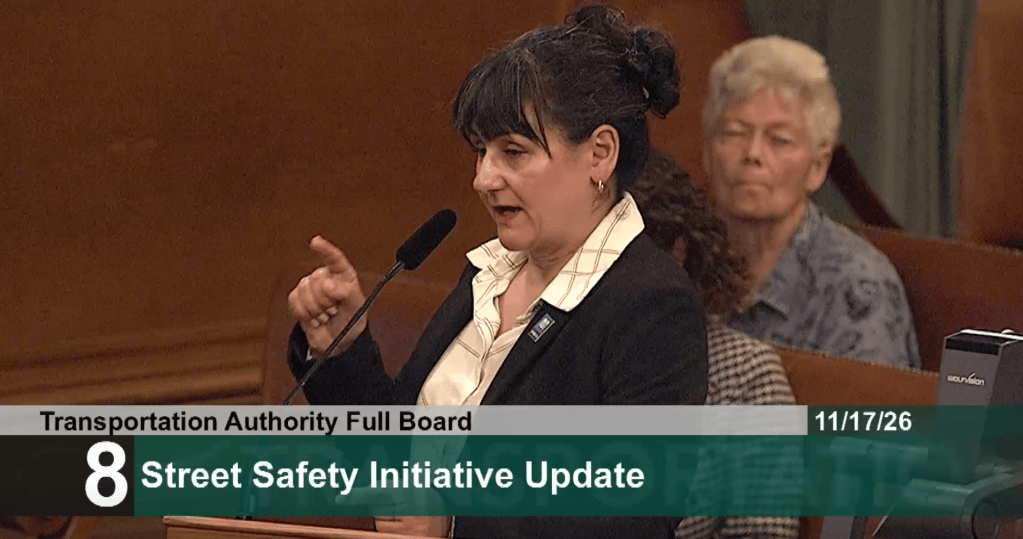
SFMTA’s Viktoriya Wise repeated a claim Streetsblog has heard before from the agency that a citywide rollout would reduce compliance. She told Sherrill that when San Francisco drivers approach less-used intersections in more suburban parts of the city with NTOR, they would ask themselves:
Why can’t I make a right turn on red? I don’t see anybody here. And you start violating it. So what we see is that people when it’s not properly placed in an area where it’s not needed, they begin to violate it in those areas and then that behavior carries over to other portions of the city where it is needed. So I’m a little bit nervous about that dynamic.
(That’s at about one hour and 53 minutes into the city’s video recording of Tuesday’s hearing).
If Streetsblog readers are asking how Wise reached the strange conclusion that a citywide ban would reduce compliance, they’re not alone. “Having a consistent citywide policy takes the guesswork out of signaled intersections and decreases the risk that pedestrians in crosswalks will be hit by drivers looking in the other direction for oncoming car traffic,” said Christopher White, Executive Director of the San Francisco Bicycle Coalition.
Sherrill said in the meeting that people in, for example, the Outer Sunset also want to cross the street safely, even at intersections that don’t meet the SFMTA’s “thresholds” for NTOR. “I don’t see any less of a desire to see traffic safety in those neighborhoods as in SoMa or the Mission or anywhere else.”
Streetsblog asked SFMTA for data to back up Wise’s position and will update this post if it’s provided.
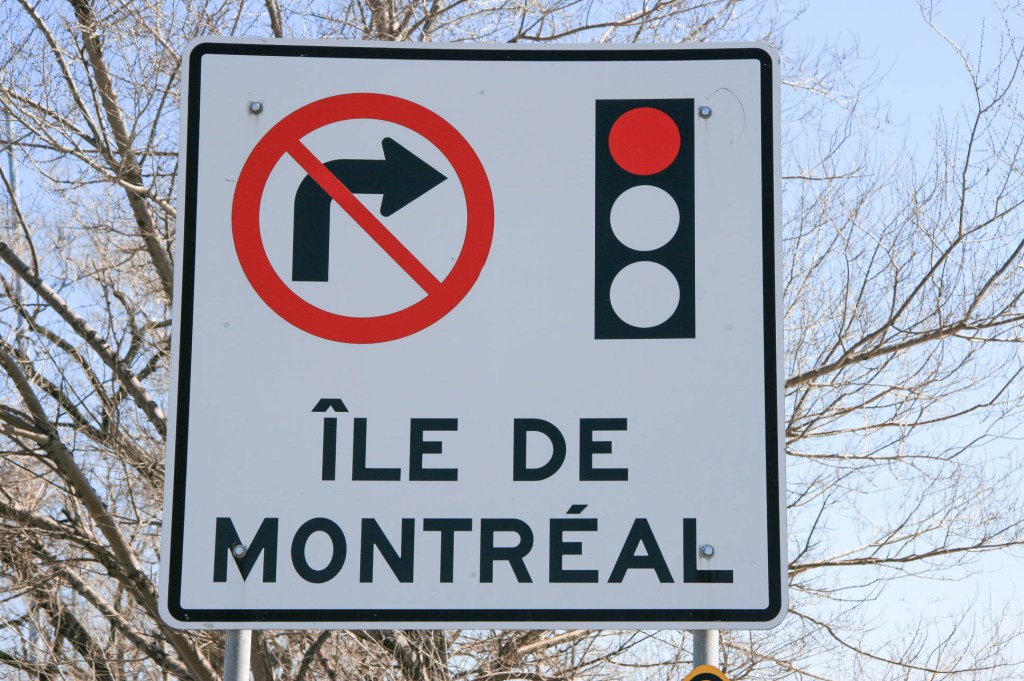
Of course, New York isn’t the only city in North America that has a citywide ban. In addition to Montreal, Cambridge, MA rolled it out in 2023. And Washington D.C. started its ban last year. “What a ridiculous idea, that in the city people disobey more than in the suburbs or in the suburbs more than in the city,” said Elizabeth Kiker, Executive Director of the Washington Area Bicyclists Association, which is following her city’s ban closely. “What data are they using?” she asked of SFMTA’s claim about compliance on NTOR. “We have not seen or heard anything to back that up in any way.”
On the other hand, the data on NTOR and its universal importance for safety is clear. Here’s the breakdown from Streets Forward’s NTOR campaign:
No Turn on Red signs are a proven safety measure that decreases injuries by up to 50 percent for all people, including those in cars (United States Department of Transportation). No Turn on Reds also increase safety during green lights (Institute of Transportation Engineers Journal). Greater than 90 percent of people driving comply with No Turn on Red signs without enforcement, while “close calls” and cars blocking the crosswalk decreased by greater than 70 percent (SFMTA).
“Prohibiting turns while facing a red traffic signal is a tried and proven method for reducing traffic collisions and keeping crosswalks clear of vehicles so that pedestrians may safely cross,” writes SFMTA on its web page about the 2021 NTOR pilot in the Tenderloin.
The Board of Supervisors is fully behind a citywide ban too; it resolved as much in 2023.
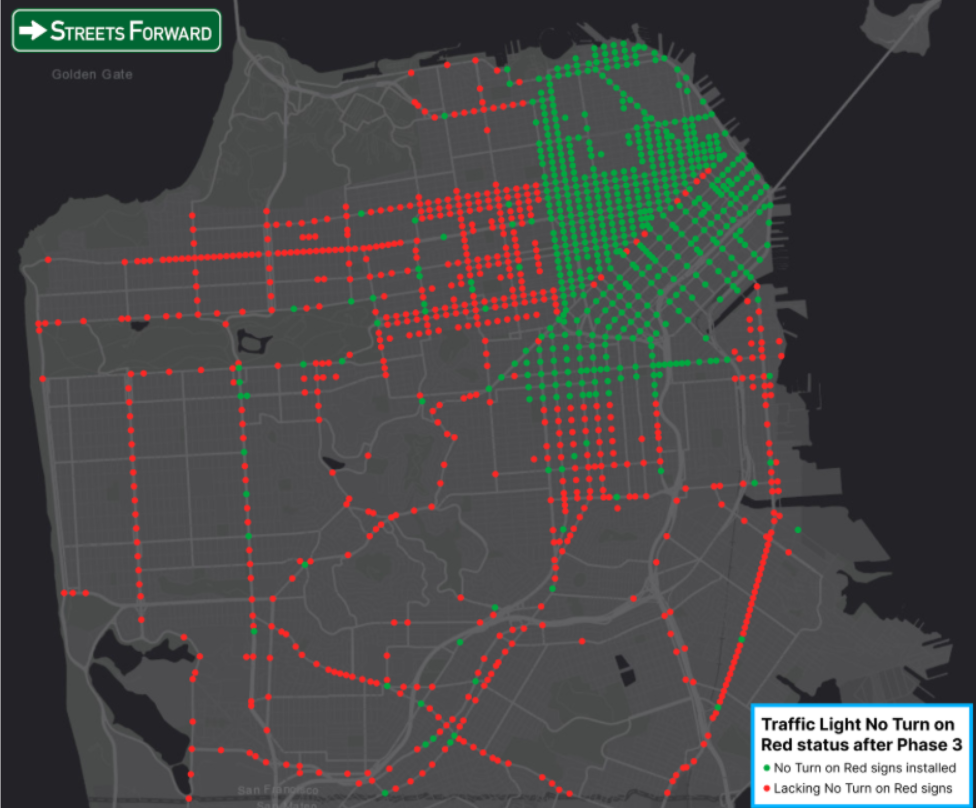
But for some reason, SFMTA continues phasing in NTOR at select locations according to traffic and pedestrian density. In its next phase, which should be complete by the summer of 2027, SFMTA will install NTOR signs at 200 more intersections, bringing the total to 600 intersections where the practice is banned. That will leave another 600 or so signalized intersections where turning on red will remain legal for the foreseeable future.
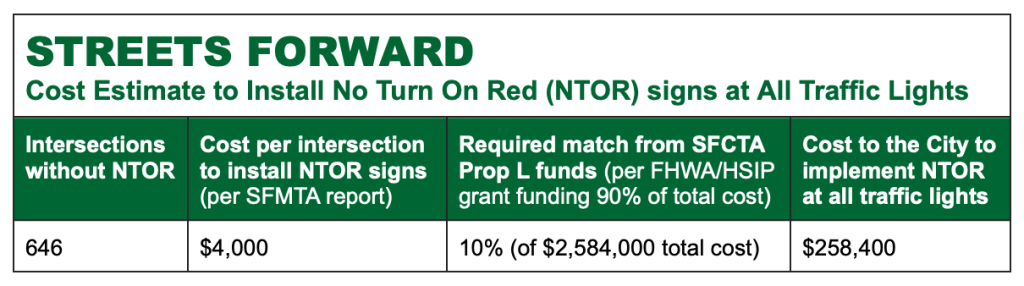
Streets Forward’s Luke Bornheimer points out that thanks to a matching grant from the Federal Highway Administration, SFMTA’s total costs if it simply went forward with installing NTOR signs citywide, would be about $260,000 (see cost matrix below).
In Streetsblog’s view, this is another example of the SFMTA’s traffic-engineer-driven culture, where anything that might threaten car throughput needs to be rolled out over years and years with multiple studies, even if it shows a clear safety benefit.
“The ultimate reason why NTOR hasn’t happened yet is due to a lack of political leadership,” said Bornheimer. “Because the mayor has not supported it.” Streetsblog emailed the mayor’s office and will update this post, but typically he defers to SFMTA.
“Avoiding rational safe turn policies because people might not comply is akin to removing speed limits on all roads because people might not obey them,” added White.
***
Want to get involved? Start by signing the Streets Forward NTOR Petition.