California DMV Adds a Few Words About Greenhouse Gas Emissions to Driver’s Handbook

Note: GJEL Accident Attorneys regularly sponsors coverage on Streetsblog San Francisco and Streetsblog California. Unless noted in the story, GJEL Accident Attorneys is not consulted for the content or editorial direction of the sponsored content.
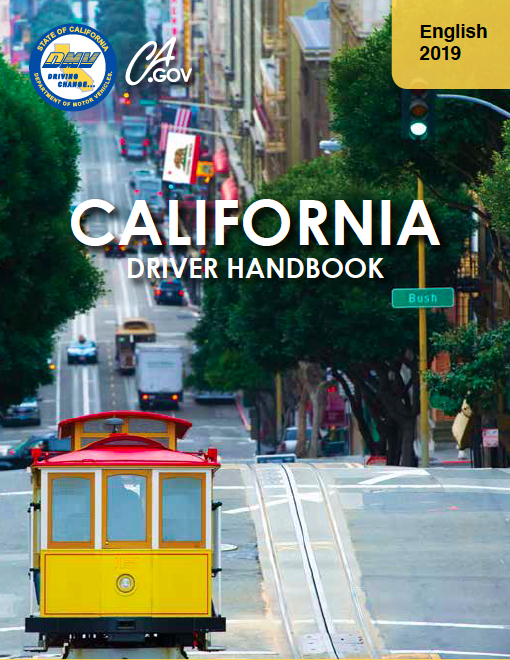
The California Driver Handbook is, for better or worse, one of the main source of information drivers have about how to safely and legally drive a car in this state. At some point, the Department of Motor Vehicles added a short section to it on “green driving” to provide information about driving practices that help “maximize fuel efficiency.”
In it, the handbook advised practicing smooth acceleration, keeping up good maintenance, and avoiding carrying unnecessary weight. That was pretty much it.
Think Beyond the Pump, an advocacy group that has been working to educate the public on the connections between their personal fuel use and climate change, wrote a letter to the DMV last summer urging the department to consider adding more explicit language to the handbook.
James Brooks, advocacy director for the group, wrote to the DMV’s then-director Jean Shiomoto, pointing out that the handbook “makes no explicit connections between operating a gas-powered vehicle, CO2 as a leading greenhouse gas, [nor] how these factors contribute to climate change.”
He argued that drivers need to be better informed. “My own research suggests there is a lot of confusion amongst the public on the relationship between consuming gasoline and climate change,” he wrote.
A key rationale for including clear, consistent and understandable language about climate change in the California Driver Handbook is because it is relevant to the driving public and California’s ambitious goals to reduce greenhouse gases in the transportation sector—the single largest source of GHGs in the state. And emissions from the transportation sector are rising.
The DMV acted on his suggestion–well, part of it. The 2019 Driver Handbook added a few more sentences, urging drivers to “consider” zero-emission vehicles because they “produce no tailpipe emissions, do not require oil changes, have excellent fuel economy, and minimal maintenance.”
It also added this:
According to the U.S. Environmental Protection Agency (EPA), “…the transportation sector generates the largest share of greenhouse gas emissions.”
But the handbook makes no mention of climate change, the reason greenhouse gas emissions are such a problem.
“It’s California’s biggest climate change problem, and it’s behaviorally driven,” Brooks told Streetsblog. “It shouldn’t be controversial to connect driving a gas-powered vehicle and climate change. I argued that they could use the Supreme Court’s endangerment finding, which connects gas consumption and climate change, and names it as a public health danger,” he said.
Think Beyond the Pump’s focus has been on advocating for what they call “warming labels” on fuel pumps. Sweden just passed a law requiring such labels, which remind drivers that their use of fossil fuels contributes to climate extremes. Former California Governor Arnold Schwarzenegger just taped a short video congratulating Sweden on its new law.
You can follow Think Beyond the Pump on Twitter: @BeyondPump.

Read More:
Streetsblog has migrated to a new comment system. New commenters can register directly in the comments section of any article. Returning commenters: your previous comments and display name have been preserved, but you'll need to reclaim your account by clicking "Forgot your password?" on the sign-in form, entering your email, and following the verification link to set a new password — this is required because passwords could not be carried over during the migration. For questions, contact tips@streetsblog.org.