Can’t hurt, might help: Low-speed electric tuk-tuks could reduce traffic injuries, emissions

For years, electrical-assist pedicabs have been a common sight outside Chicago concerts, sports matches, and other special events. (Unfortunately, however, in 2014, City Council prohibited pedicabbers from operating in the Loop during rush hours, as well as Michigan and State, between Oak and Congress, at all times.) These vehicles have been beneficial to our city, since they replace private car, taxi, and ride-hail trips.
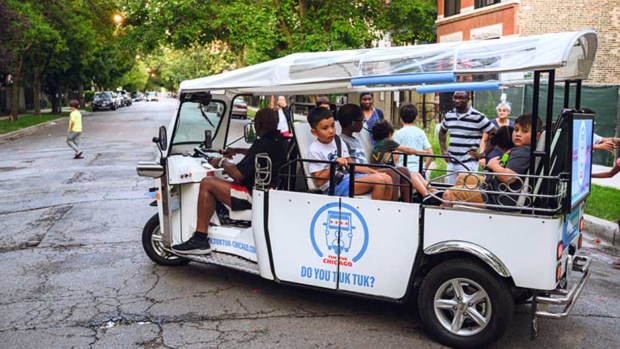
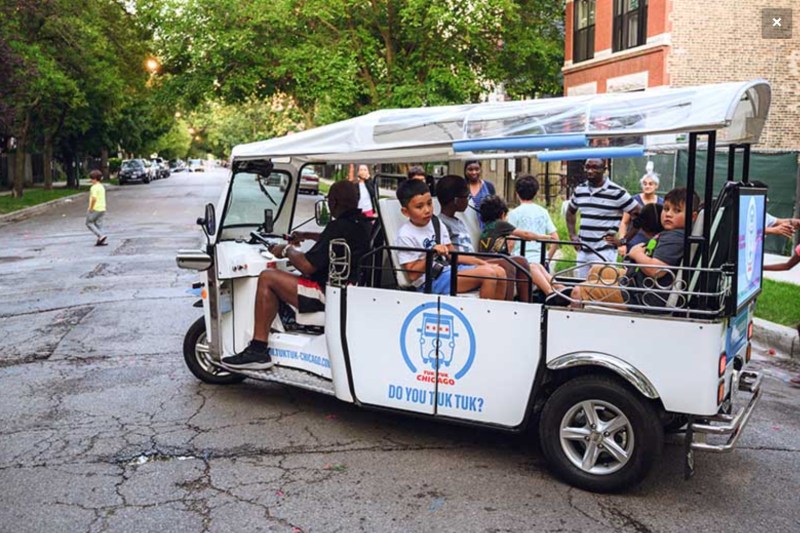
Yesterday Chicago aldermen gave their blessing to a mode that could have similar benefits by replacing trips by high-speed, gas-powered vehicles, and thereby reducing the potential for serious traffic crashes, as well as the amount of carbon emissions in our city. As reported by the Chicago Sun-Times’ Fran Spielman, an ordinance to extend an “Emerging Business Permit” for low-speed, golf cart-like vehicles run by the company Tuk Tuk Chicago passed the License Committee and will likely clear the full Council soon.
The temporary permit was issued in 2018 for the company to have up to 20 of the three-wheeled, battery-powered vehicles, operating at no faster than 30 mph, the default Chicago speed limit. Unlike pedicabs, the tuk-tuk operator does no pedaling.
Originally the idea was to test the devices for two years, and then create a permanent license category for up to 10 tuk-tuks. But since there’s very little tourism happening during the COVID-19 pandemic, city officials decided it would be best to extend the pilot instead. If no action had been taken, Tuk Tuk Chicago would have been required to cease operations at the end of October.
The tuk-tuks offer a “unique transportation option for residents and visitors, primarily operating as a shuttle privately-hired by hotels and the convention industry,” Business Affairs and Consumer Protection commissioner Rosa Escareno said at the hearing, according to the Sun-Times. It’s illegal to flag the vehicles down like taxis, but instead customers must book rides in advance.
Escareno told the aldermen that Tuk Tuk Chicago has demonstrated itself to be a “responsible small bus operator,” and therefore deserves permanent licensing, the Sun-Times reported. However, the commissioner said, in light of the COVID headwinds, it makes more sense to extend the pilot instead.
Tuk Tuk Chicago is currently allowed to operate in city center. During the hearing, aldermen said they’d be interested in trying the concept in other neighborhoods as well.
Any new transportation modes that involve relatively light, low-speed vehicles that are less likely than cars to cause serious injuries in the event of a crash, and are electric, so that they help reduce pollution within the city, have the potential to make cities safer and healthier. As long as they don’t cause any other major logistical problems, I say the more, the merrier.

Read More:
Streetsblog has migrated to a new comment system. New commenters can register directly in the comments section of any article. Returning commenters: your previous comments and display name have been preserved, but you'll need to reclaim your account by clicking "Forgot your password?" on the sign-in form, entering your email, and following the verification link to set a new password — this is required because passwords could not be carried over during the migration. For questions, contact tips@streetsblog.org.