Eyes on the Street Update: Alameda’s Central Avenue Project Nears Completion

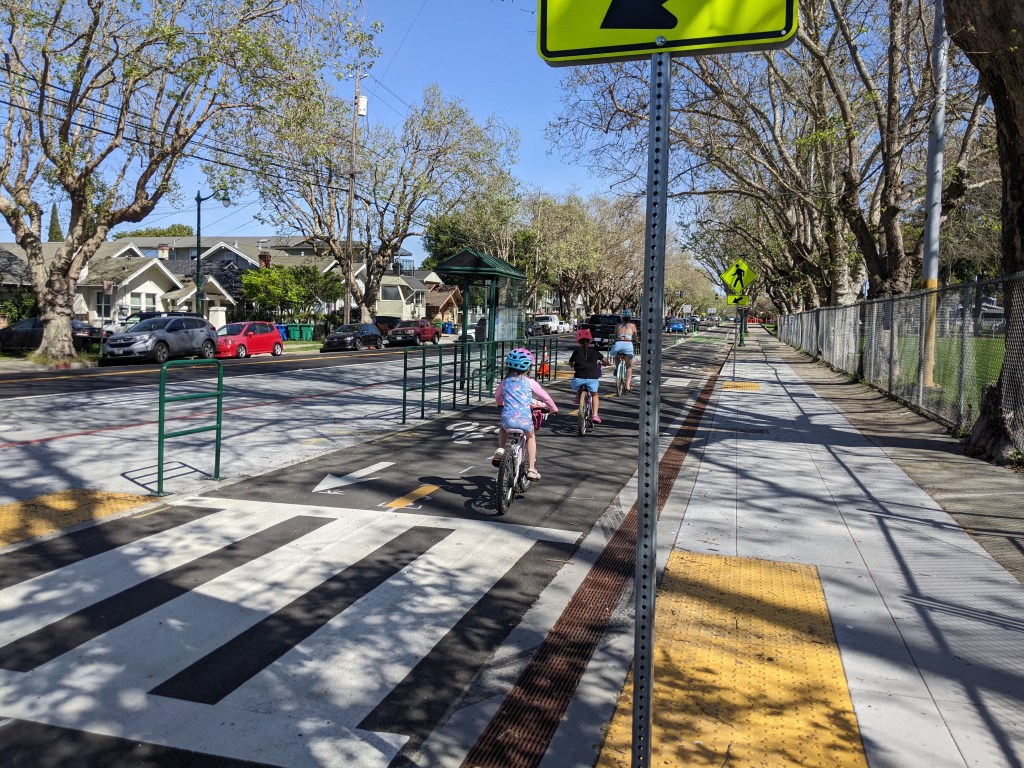
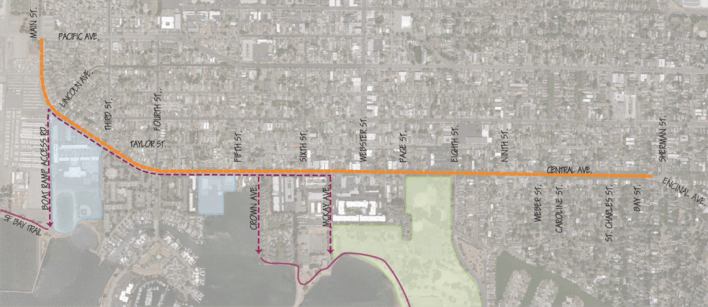
Alameda’s 1.7-mile, $15 million Central Avenue protected bike lane and safety improvement project is nearing completion, and should be finished this spring. From the Alameda project page:
The Central Avenue project is expected to improve safety for all street users and to reduce vehicle delays. The project includes a road diet with two motor vehicle travel lanes, a two-way left-turn lane as a center lane, bikeways, three roundabouts at 1) Main/Pacific/Central; 2) Third/Taylor/Central; 3) Fourth/Ballena/Central, resurfacing, improved bus stops, enhanced pedestrian crossings and street trees/raingardens. It is constructing roundabouts at Main/Pacific/Central, Third/Taylor/Central, Fourth/Ballena/Central. Roundabouts reduce the types of crashes where people are seriously hurt or killed by up to 78 percent when compared to signalized intersections, per federal data.
Streetsblog last took a look at this project in October, when most of the concrete was still wet. Now, with the concrete poured and hardened, all that remains are a few finishing touches.
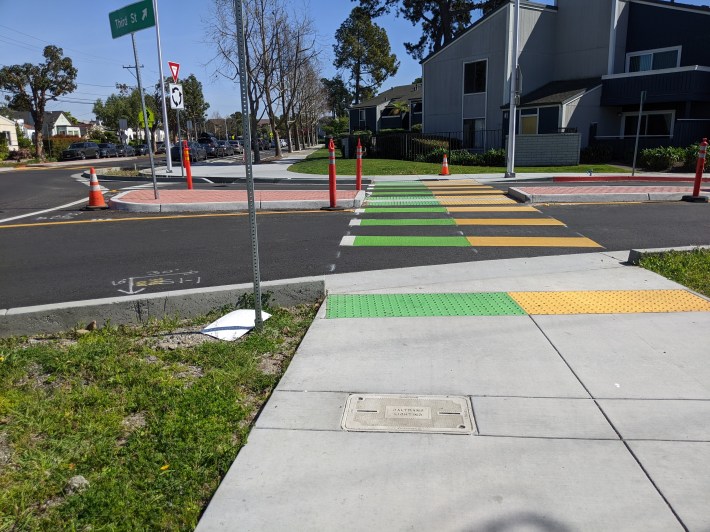
One of the highlights of the project are the bus-boarding islands, as seen in the lead picture near Washington Park. Meanwhile, the three roundabouts, as seen in the picture below of the one at Third/Taylor/Central are nearly complete, with markings delineating the space for pedestrians and cyclists.
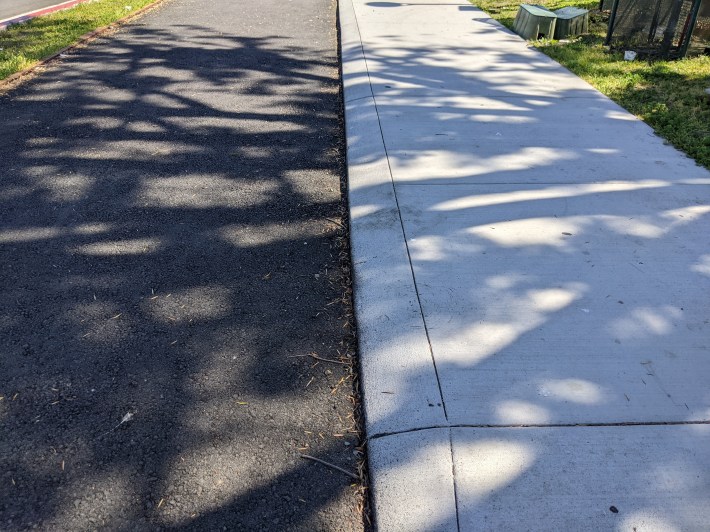
Streetsblog has reached out to the city of Alameda for construction schedule updates, but going from a tour over the weekend, it looks as if all that remains is smoothing out the pavement here and there, as in the photo below. Cyclists are already using it and the ride is far less stressful than when it was a multi-lane surface highway.
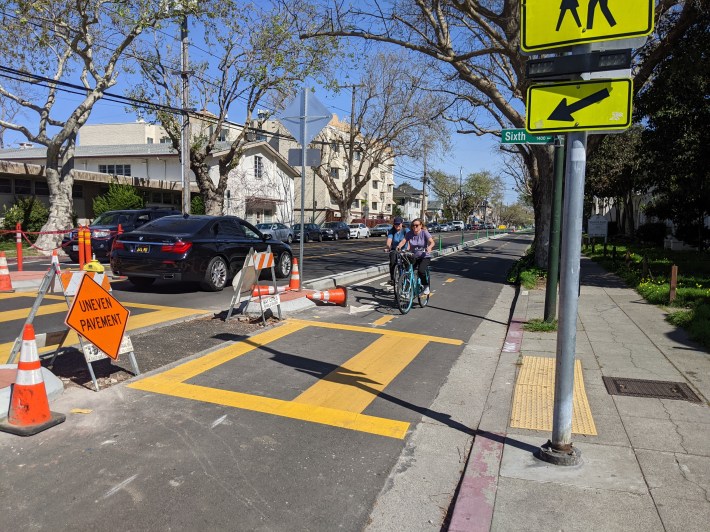
The good news is, unlike during the October tour, the protected sections of bike lane were not blocked by scofflaw parkers. Perhaps enforcement or better markings is behind that—or luck. Alamedians who use this facility are encouraged to comment on their experiences.
The project falls short, however, at the intersections and driveways. Two-way cycle tracks are problematic because drivers, when they’re paying attention at all, look left first as they pull out of a driveway. Likewise, if they’re turning left into a driveway they’re not expecting a bike coming from the counterflow direction. That sets up westbound cyclists for crashes on Central. Unfortunately, some of the stretches from Page to Ballena have so many driveways and intersections they’re barely protected (see image below).
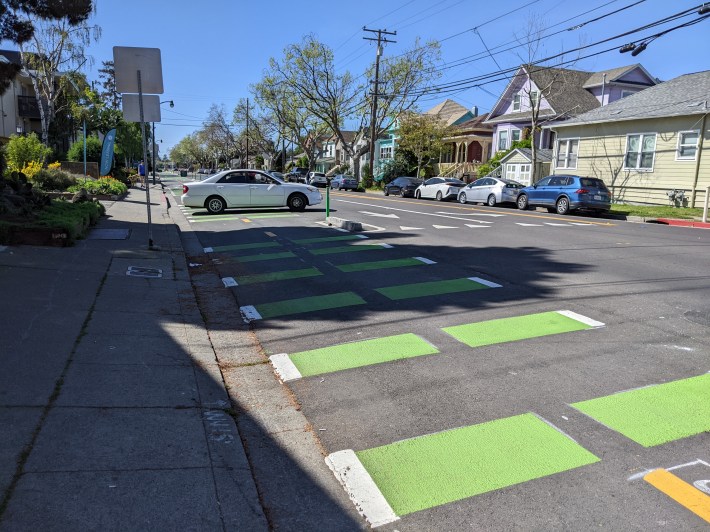
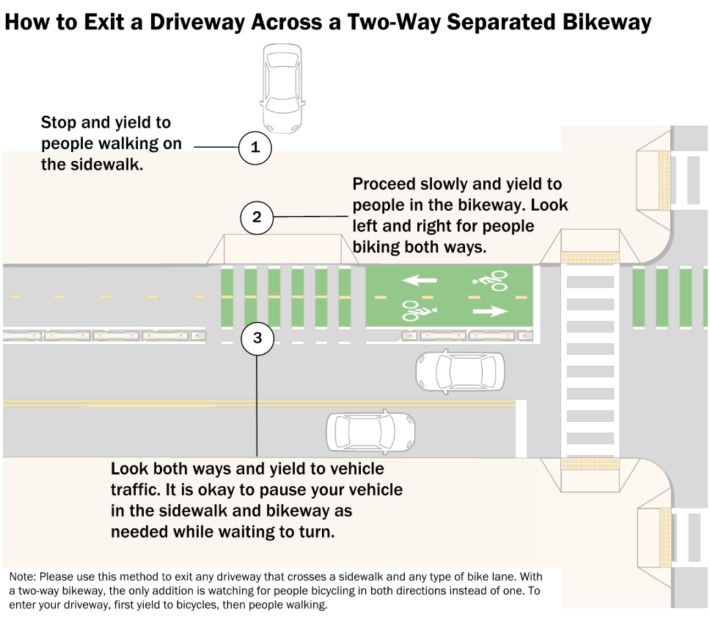
Two-way on-street bike lanes certainly make sense along a waterfront, as is the case on Shoreline Drive, or in other unique situations where there aren’t many driveways and intersections. Even conventional, one-way cycle tracks should be designed with careful consideration around driveways so drivers know they are entering a bike space. The city of Alameda has the following instruction diagram for drivers on its project page (the fact that such involved instructions are needed also highlights that the design is counterintuitive):
The other place the project is disappointing, of course, is on the stretch from 8th to Sherman, where the two-way cycle track splits into standard, door-zone bike lanes. As Streetsblog reported previously, the road diet should make Central safer than it was, but only some of the new infrastructure is really suitable for all ages and abilities.
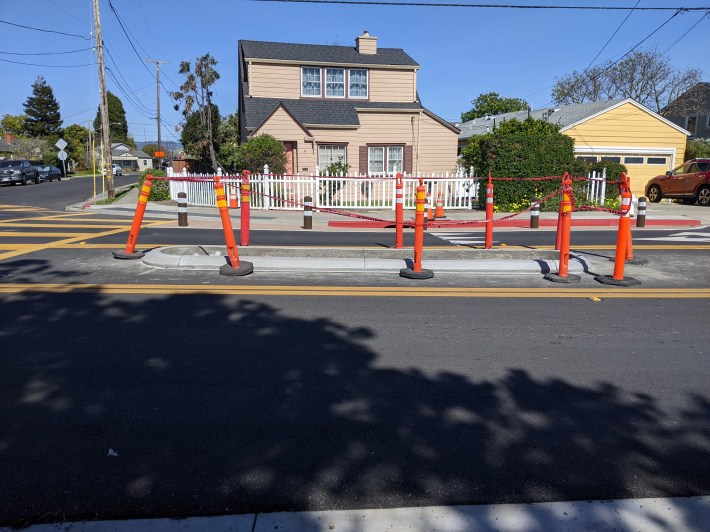
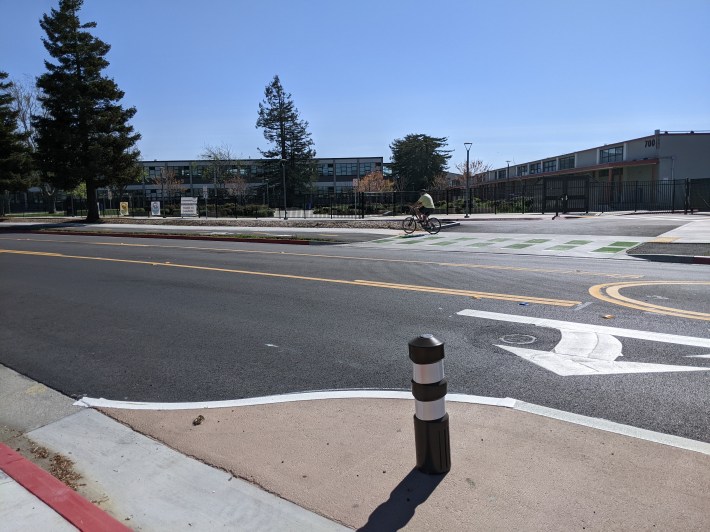
More pictures below:

Streetsblog has migrated to a new comment system. New commenters can register directly in the comments section of any article. Returning commenters: your previous comments and display name have been preserved, but you'll need to reclaim your account by clicking "Forgot your password?" on the sign-in form, entering your email, and following the verification link to set a new password — this is required because passwords could not be carried over during the migration. For questions, contact tips@streetsblog.org.