Op-Ed: Don’t Let Fear Flatten Progress on E-Bikes
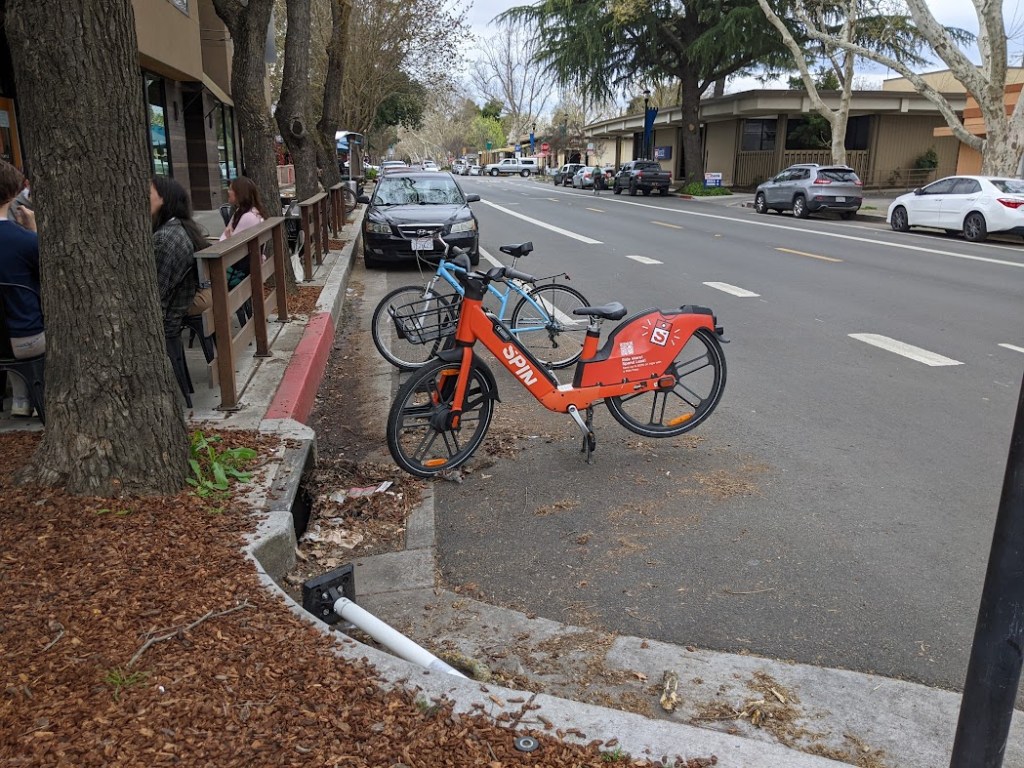
This past January, New Jersey legislators swung a regulatory sledgehammer that threatens the future of sustainable transportation across the country, with State Bill S4834 classifying all e-bikes as motorcycles, a drastic move that would require licenses, registration, and insurance. By conflating legal e-bikes with electric dirt bikes falsely advertised as e-bikes (widely referred to as “e-motos” which are not street legal), this law broadly penalizes active mobility without offering any substantial changes that make it safer for pedestrians, cyclists, or drivers sharing the road.
E-bikes are not the enemy; they are a climate and mobility solution. They allow people to travel further, more frequently, provide an alternative way to navigate errands or drop off kids at school, and help folks with mobility limitations get around with independence. A gas-powered car emits 374 grams of CO2 for every mile driven – the emissions associated with e-bikes are 98% less, only 8 grams.
We need to talk about the ‘e-bike backlash’ vs reality. In 2023, cars killed over 40,000 people across the United States, yet the outcry fixates on e-bikes, which were involved in only 7% of the year’s 1,166 cycling fatalities. Despite headlines around younger riders, youth account for 20% of e-bike crashes, which is proportional to their population share. The research is clear: e-bikes do not have a significantly higher crash rate than traditional bikes.
However, even these figures tell an incomplete story because the underlying data is critically flawed. Nearly half of the recorded fatalities do not specify the e-bike class, likely continuing the trend of “classification chaos” where legal e-bikes, e-motos, and even mopeds are placed into similar categories (Younes, 2025). This failure is particularly misleading, especially regarding youth safety. Recent observational data from several CA schools recorded that only 12% of two-wheeled electrical devices on campuses were legal e-bikes.
While crashes have risen with the e-bike boom, the lack of accurate ridership data makes it impossible to determine if crashes are rising because these devices are dangerous or because they are increasingly ubiquitous. We cannot allow skewed statistics to dictate the future of sustainable transportation. Effective policy must be rooted in evidence, not ambiguity.
E-bike regulation in California
Unfortunately, we are already seeing similar knee-jerk reactions here in California. The “E-Bike Accountability Act,” AB 1942 from Assemblymember Bauer-Kahan (D) proposes license plate and registration requirements for all Class 2 (throttle assist, 20 mph limit) and Class 3 (pedal assist, 28 mph limit, age 16+) e-bikes statewide.
This DMV-style red tape is not just a bureaucratic hurdle; it is a fundamental attack on accessible transportation. It forces hundreds of thousands of California seniors, families, and everyday riders on legal e-bikes to navigate bureaucracy and insurance markets that do not exist yet, while doing little to address the primary dangers on our roads.
Solutions that will actually create safer streets
The Bay Area has the opportunity to shape laws that solve problems rather than create patchwork policies. Instead of punitive measures that discourage healthy ridership, Bike East Bay, San Francisco Bicycle Coalition, Silicon Valley Bicycle Coalition, and Marin County Bicycle Coalition advocate for a path rooted in education and infrastructure.
First, we must close the education gap. Many safety issues stem from companies falsely advertising their products as e-bikes when, in fact, their maximum speed and power exceed legal limits, a deception that would be illegal under the newly introduced SB 1167 by Senator Blakespear. Additionally, the California Attorney General must enforce truth-in-advertising laws to address misleading marketing. This should be paired with investments in community-led programming to foster a healthy, supportive bike culture.
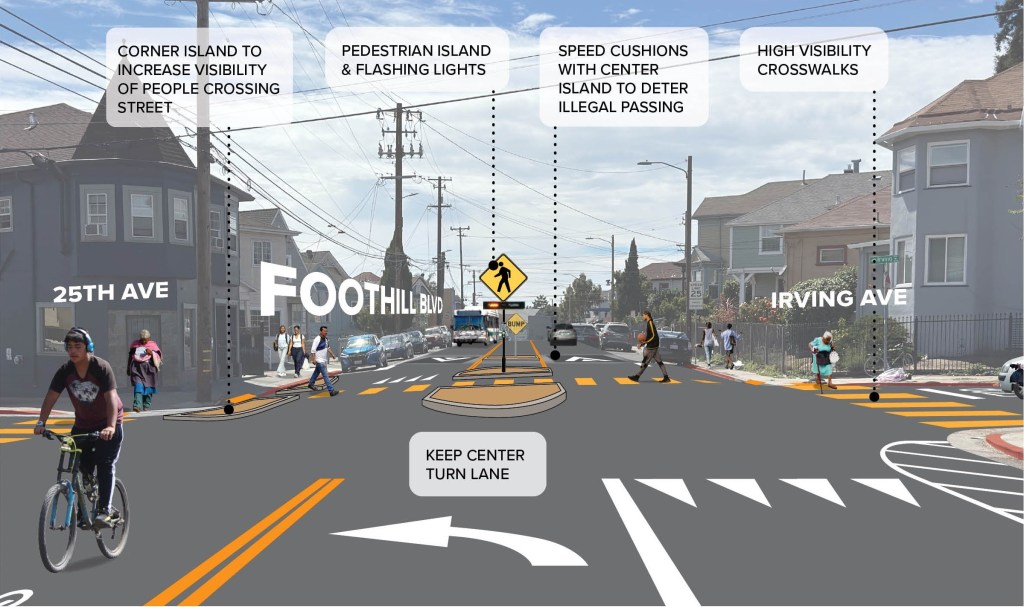
We need to increase funding for active transportation at every level and require jurisdictions implement their existing bike and pedestrian plans. Outdated street design and heavy vehicular traffic are the leading causes of traffic violence, especially for youth and seniors. Progressive design treatments, such as protected bikeways, are proven ways to make our streets safer for everyone. Often, the Bay Area communities expressing the greatest concerns over e-device safety are also those that lack adequate infrastructure, putting bike riders and pedestrians in greater conflict along a limited network of trails. Even with this crowding, 1 in 100 local bike crashes involves a pedestrian (Alameda County SWITRS, 2019-2023). As context, 1 in 11 car crashes involve a pedestrian.
We must protect existing freedoms by building on California’s AB 1909, which prohibits local bike registrations because they have been used as a pretext for biased stops. Bringing back registration and licence plate requirements reintroduces this tool for discriminatory enforcement. California should explicitly ban insurance and registration requirements for legal e-bikes while enforcing the current rules on e-motos. True safety means funding infrastructure, not issuing fines.
To ensure these benefits reach everyone, e-bike incentive programs should be structured to support both equity and local businesses. By requiring that bikes be purchased from local shops, we ensure riders receive safe, legal equipment and reliable maintenance. Simultaneously, the state must restore funding for the state Electric Bicycle Incentive Project (EBIP). This program was defunded last year despite an undeniable demand: over 100,000 people applied for e-bike vouchers in previous rounds, with only a few thousand awarded.
The stakes are too high for us to get this wrong. E-bikes have the potential to make biking a mainstream mode of transportation, reducing our reliance on fossil fuels, and creating more livable, connected, and joyful neighborhoods. This future depends on sensible regulation that encourages, rather than punishes, those choosing to ride. We all want safe streets, and the Bay Area can lead, if we have the courage to choose progress over fear.
***
This piece was co-authored by the advocacy staff across four of the Bay Area’s regional bicycle coalitions:
- Justin Hu-Nguyen is the Co-Executive Director of Mobility Justice of Bike East Bay
- Amy Thomson is the Policy Director of Silicon Valley Bicycle Coalition
- Claire Amable is the Director of Advocacy of San Francisco Bicycle Coalition
- Warren J. Wells is the Policy & Planning Director of Marin County Bicycle Coalition
Streetsblog has migrated to a new comment system. New commenters can register directly in the comments section of any article. Returning commenters: your previous comments and display name have been preserved, but you'll need to reclaim your account by clicking "Forgot your password?" on the sign-in form, entering your email, and following the verification link to set a new password — this is required because passwords could not be carried over during the migration. For questions, contact tips@streetsblog.org.