Old Caltrain Locomotives Find New Life on Capitol Corridor

Some of Caltrain’s old diesel equipment started operating this past May on the east side of the Bay, helping Amtrak supplement service on “Capitol Corridor” trains between San Jose and Sacramento. “It is going to give Caltrain a little bit of funding, and it’s going to give us additional reliability and flexibility,” said Robert Padgette, Managing Director for the Capitol Corridor.
For those unfamiliar with the region, Caltrain operates trains on the San Francisco Peninsula between San Jose and San Francisco. The Amtrak Capitol Corridor service runs from San Jose to Sacramento. The two railroads share alignments on the short segment between San Jose and Santa Clara.
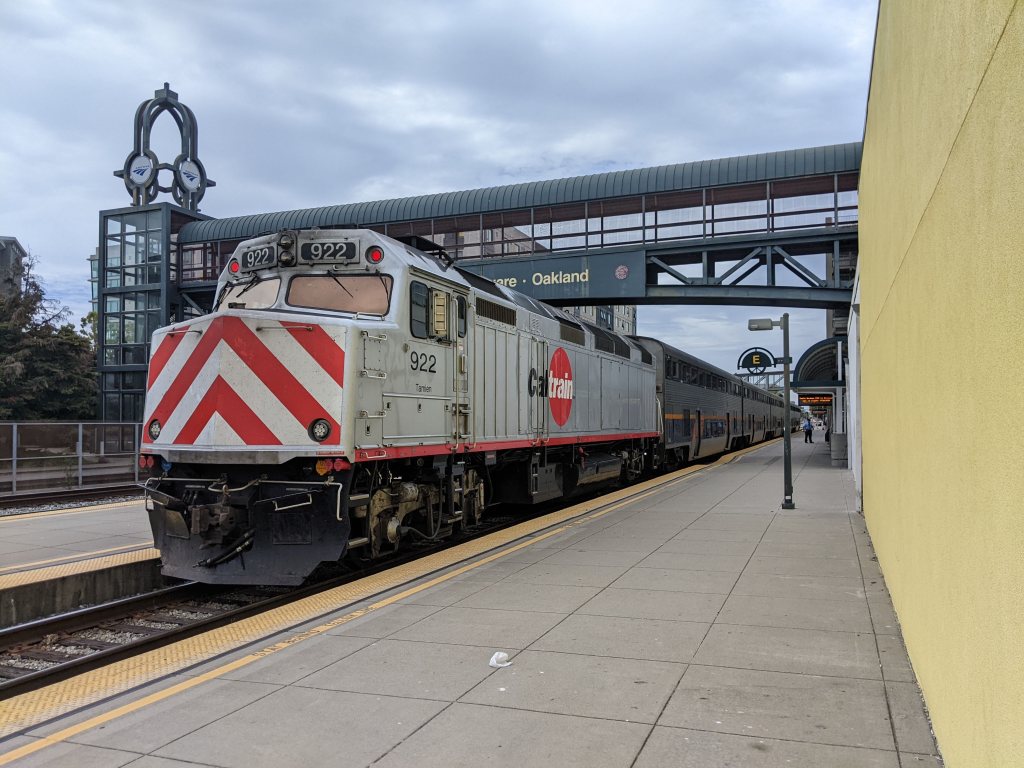
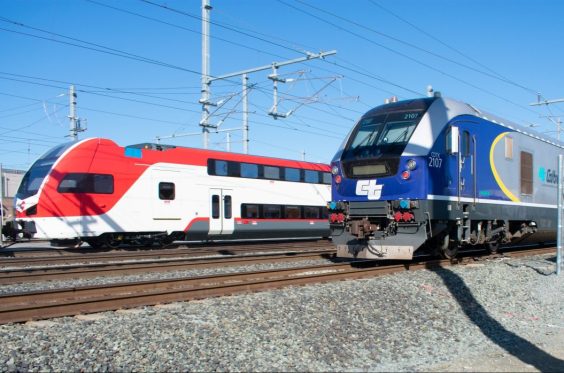
The lease for the Caltrain equipment, signed with the California Department of Transportation, includes three Caltrain F-40PH-2C locomotives (one of which is seen in the lead image), three Bombardier cab cars, and 13 Bombardier coach cars. The agreement provides for the lease of these vehicles at $12,300 per locomotive per month, $10,000 per cab car, and $8,600 per coach car. That will generate $2.14 million annually for Caltrain, which also no longer has to store the equipment.
From Caltrain’s point of view, this is a way to offset its costs a bit now that it’s fully electric between Tamien and San Francisco and no longer needs most of its diesel fleet for daily operations.
It gives the Capitol Corridor the ability to overhaul its own aging fleet.
“We are leasing the three locomotives to give us the flexibility to pull F-59s out of service as they undergo a much-needed midlife overhaul program,” explained Padgette. “Caltrans is managing the mid-life overhaul contract.” This involves replacing virtually all the moving parts on the F-59s, resulting in a locomotive that’s as good as new, confirmed Leo Sanchez, the Capitol Corridor’s Deputy Managing Director.

They also have the option of running the leased Caltrain passenger cars if they need them for a big event or other circumstances where they just don’t have the rolling stock to meet demand. But perhaps most importantly, it means the Capitol Corridor will be able to improve reliability across the board, because they’ll have a decent supply of backup equipment when things break down. “We’re growing like crazy, with ridership up more than 20 percent year over year,” said Padgette. “We need capacity.” He added that because of the World Cup—the Capitol Corridor directly services Levi’s Stadium—they had their first day with more than 6,000 passengers since the pandemic.
From Streetsblog’s view, this deal really underscores the advantage of sticking to standard-gauge, off-the-shelf equipment. Some day, when the Capitol Corridor goes to zero emissions either with fully electric or some kind of hybrid locomotive fleet, its newest diesels may go to aid yet another service. “If we ever do go to zero emissions, I hope we can share our Tier 4 locomotives and help reduce emissions all over the country,” said Padgette.
The old Caltrain equipment will also be available, when needed, for the San Joaquin service (re-branded “Gold Runner”) to Bakersfield. One caveat: as with the Gold Runner, the Bombardier equipment doesn’t include a cafe, so when the Capitol Corridor uses them there won’t be food or beverage services. Padgette said they will probably only use them between Oakland and Sacramento and that they are looking at ways to offer food and drinks.
Either way, “This is a good-news story,” said Padgette. “It’s a win-win for transit and intercity rail in the region.”

Streetsblog has migrated to a new comment system. New commenters can register directly in the comments section of any article. Returning commenters: your previous comments and display name have been preserved, but you'll need to reclaim your account by clicking "Forgot your password?" on the sign-in form, entering your email, and following the verification link to set a new password — this is required because passwords could not be carried over during the migration. For questions, contact tips@streetsblog.org.