Elected Officials and Candidates Try a Week Without Driving in the North Bay

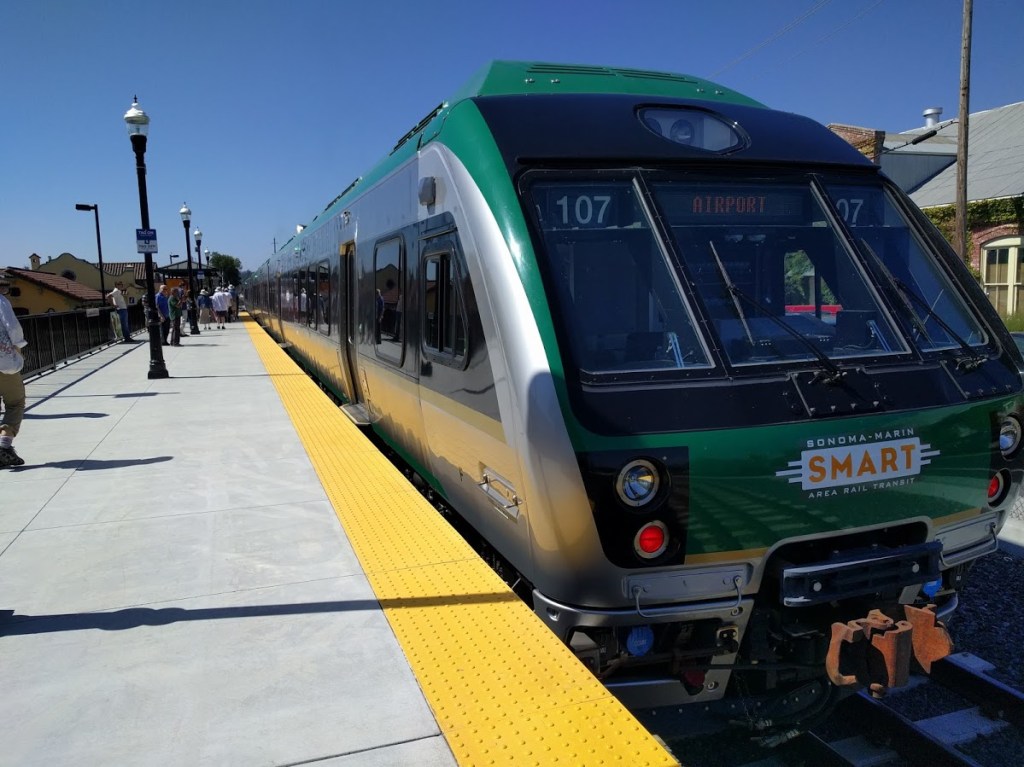
Elected officials and candidates in Sonoma County who answered the national call to go a week without driving found themselves stepping up their environmental practices, building deep empathy with people who rely on public transportation, and creating lists of policy issues that need to be addressed by planners.
North Bay Transit Riders, an affiliate of the Transbay Coalition, recruited 40 local leaders in Sonoma and Marin Counties to take the Week Without Driving challenge and document their experiences. Sonoma County is a suburban/rural county. Much of the population is clustered along Highway 101 in Santa Rosa (pop. 180,000) with other population centers in Petaluma (pop. 60,000); Rohnert Park (pop. 45,000); and Windsor (pop. 26,000). More residents are scattered in small rural west and north county towns and farmlands, joined by two-lane highways.
Transportation in Sonoma County is limited by funding, routes, and ridership. While environmental awareness is high, the transportation infrastructure strives to provide the most service within budgetary constraints. For elected leaders who attend regional meetings or maintain busy schedules during the workday and evening, a week without driving presents challenges that are significantly greater than those faced in dense urban centers.
Here are some of their experiences:
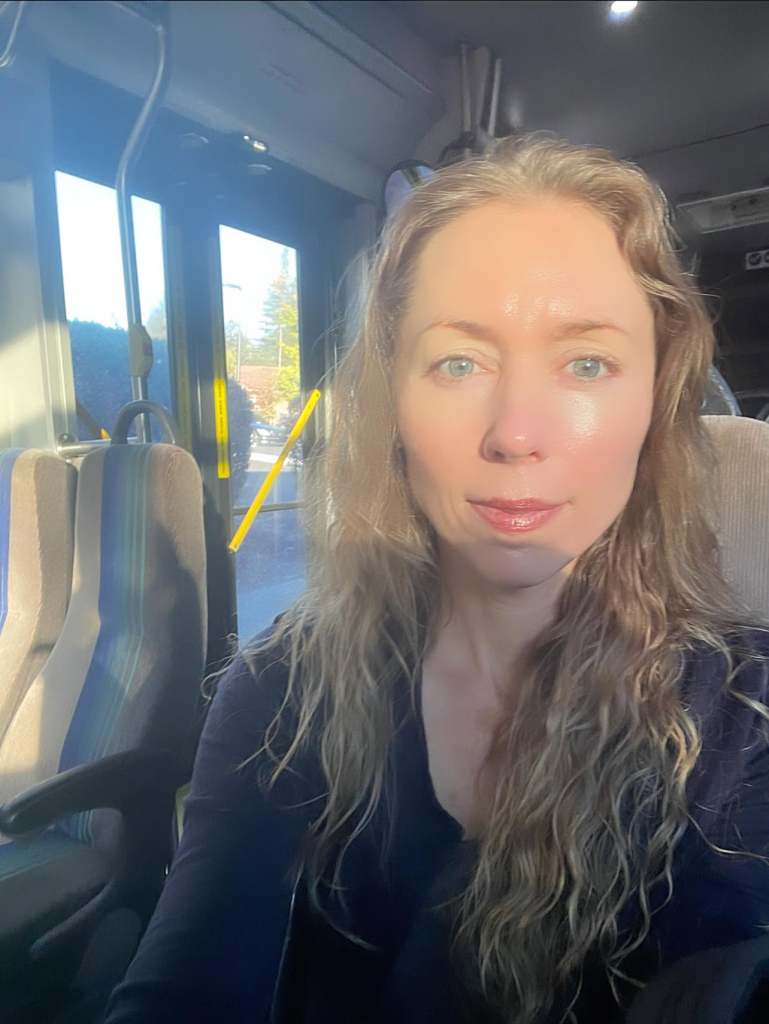
Sonoma County supervisor Lynda Hopkins, who chairs the Bay Area Air District, did not drive to the district board’s meeting in San Francisco on Wednesday, Oct. 7. As she reported on her Facebook page, she spent over 14 hours on the journey after leaving her home in Sebastopol at 5:40 am. She says she spent “7 hours of public transit commute time with some walking and desperate running thrown in for good measure,” arriving back at home at 7:45 pm. Her account on Facebook notes many frustrating details well known to transit riders: the earliest bus did not get her to the train she caught to get to the meeting on time; the tight connections between the SMART train and the Larkspur Ferry to San Francisco; and the difficult walk from the ferry to the train.
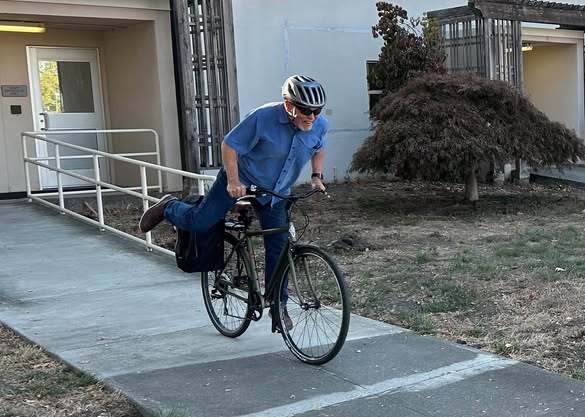
Hopkins’ colleague, Sonoma County Supervisor Chris Coursey, not only used his own bike and a Redwood Bikeshare e-bike to get around Santa Rosa, but he also took Amtrak’s California Zephyr to Truckee for the weekend. That trip began with a two-hour bus ride to Martinez, and then a five-hour train ride to Truckee. Coursey walked the last two miles to his destination. He described it as “not a fast trip, but the train is comfortable, the scenery is spectacular and the price – now that gas is more than $6 a gallon – is definitely cheaper than driving.” Back in Santa Rosa after the weekend, he used his bike, the SMART train, and lots of walking to get to meetings and events during his week without driving. He posted on social media, “I recognize the privilege I have from living close to where I work and having many choices for eschewing driving on any given day. The purpose of this exercise is to shine a light on those options. It doesn’t have to be every day. Every time one of us takes a single alternative trip without our car, we contribute to a better experience for all of our neighbors.”
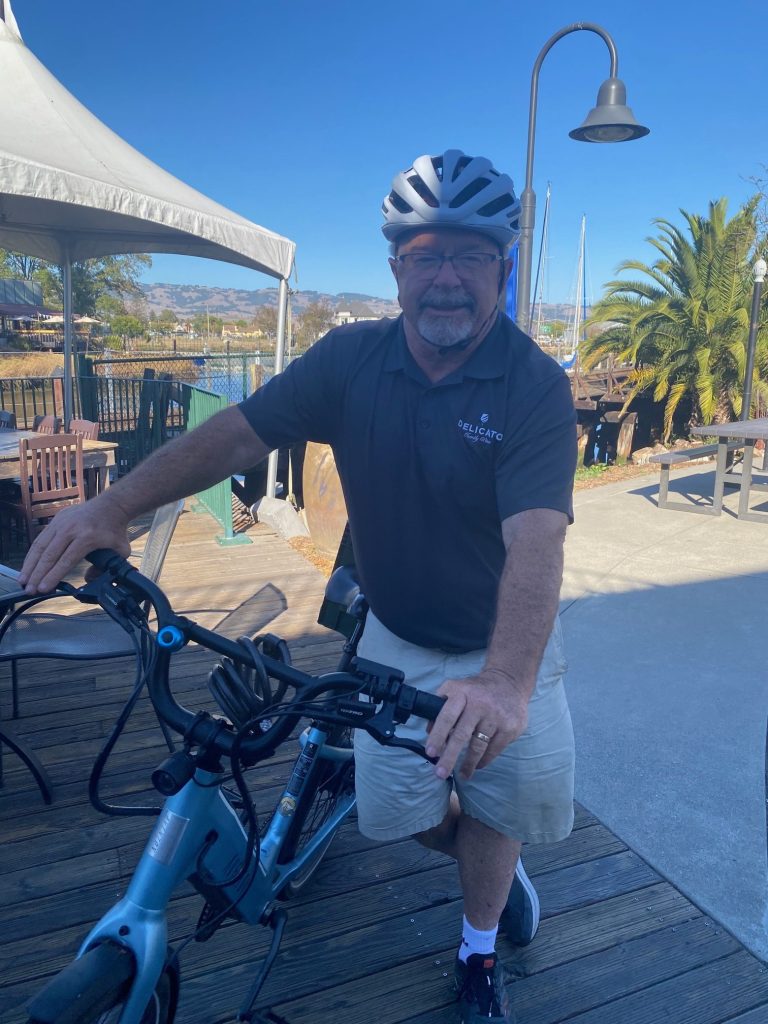
Petaluma Mayor Kevin McDonnell says he “adopted the lifestyle long ago” and now shares a car with his spouse, taking the train to his job in Santa Rosa, using a cargo bike to transport his grandchildren, and riding a bike and the bus around Petaluma. McDonnell places a high priority on bike and pedestrian safety, advocating for road diets and protected bike lanes. The mayor is a fan of roundabouts that he says have one-fourth the risk of collisions as opposed to a four-way stop while decreasing total drive time. He’s on a Bike Streets team that logs rider miles and tracks popular routes. Petaluma has an annual bike holiday parade with over 500 decorated bikes participating last year.
Several candidates said that the Week Without Driving strengthened their resolve to improve non-car transportation for those who rely on it.
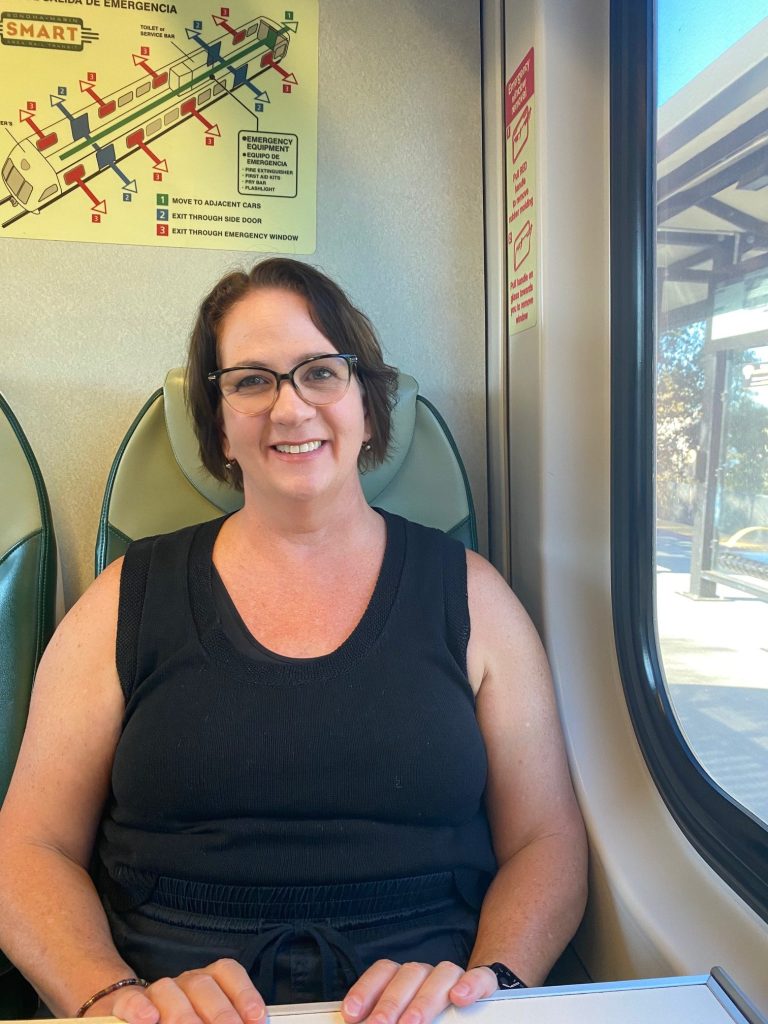
Former Cloverdale Councilmember and former SMART board vice-chair Melanie Bagby, who is running for a vacant seat on the Sonoma County Board of Supervisors, rode the train, bus, bike, and Redwood Bikeshare during the WWD. “When plans change, you have to rethink and adapt quickly,” she said. “It can be challenging for those who don’t have other options.” Bagby thought about people who are doing shift work, or who must coordinate child care while they work. “We need to make the network robust and reliable, and shorten headways,” she said.
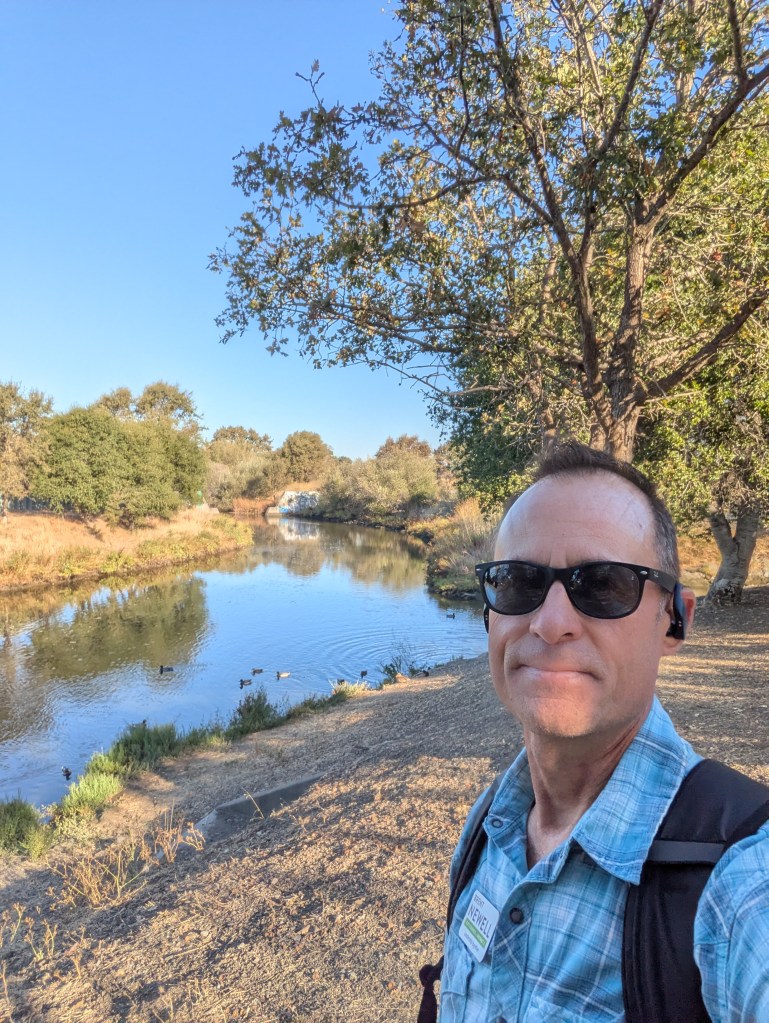
Petaluma Planning Commissioner and Council candidate Brent Newell stressed the importance of the public transit system for equity and justice. “It’s very important for elected officials to understand how transportation deficiencies affect people without the resources to have a car,” he said. “It’s orders of magnitude more difficult to live without a car.” An environmental lawyer, Newell took the Golden Gate bus and then BART to Oakland when he worked in the non-profit sector, sharing a car with his spouse so they could save money for their children to go to college.
He now walks or bikes to his private practice in Petaluma. Newell stresses that the car-free or car-reduction lifestyle is a privilege for some, but a necessity for many, and that “we need a better transportation infrastructure.”
The Transit Club at Santa Rosa Junior College challenged the school community to visit all its five campuses in a single day without driving.
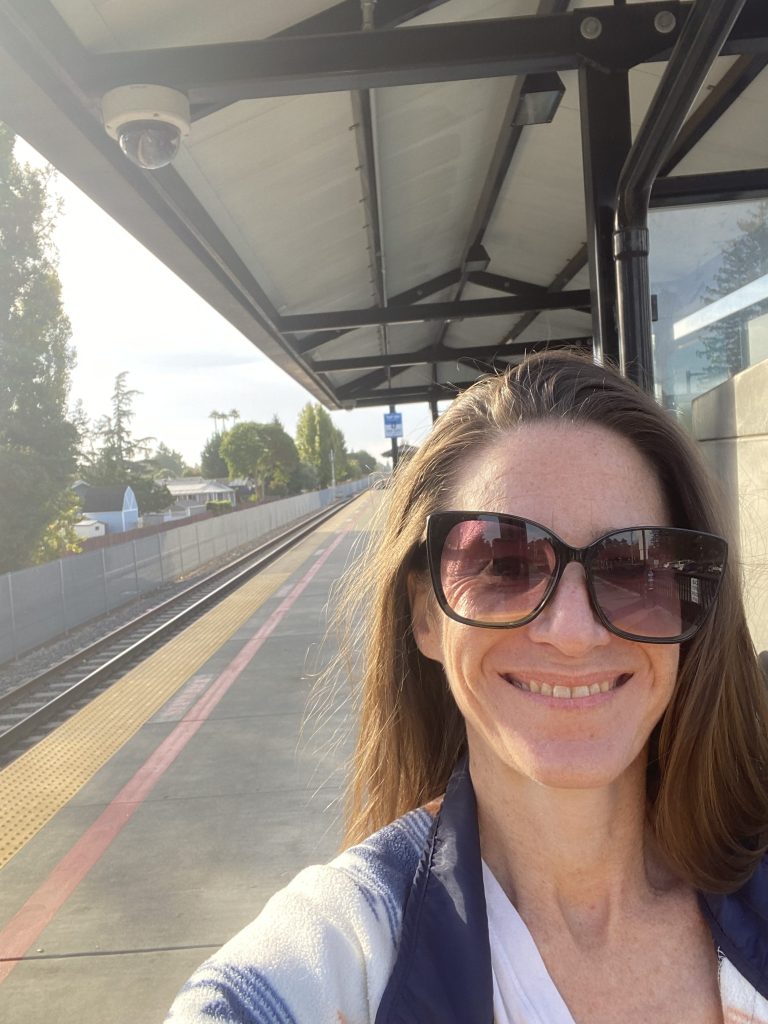
Board of Trustees candidate Katelyn Rutkowski took the challenge, starting at the college’s Roseland campus in southwest Santa Rosa, where she joined over 25 people waiting for a bus in the 100-degree+ heat with no shade and a single small bench. She then took the SMART train to Windsor, where she walked over a mile in the heat to the college’s campus there. Back to Santa Rosa, where she went to the main campus before giving up on trying to reach the Petaluma campus and the college’s Shoen Farm. “The bus drivers serve our community with dignity and kindness,” observed Rutkowski. “They are caregivers, helping people bridge the wealth divide in our county as much as possible.” She noted that buses do not run often enough, and that the early last runs prevent some people from taking classes at SRJC.
With year-round organizing by North Bay Transit Riders, the annual Week With Driving is becoming a part of the annual calendar for candidates and elected officials since it started nationally in 2023.

Streetsblog has migrated to a new comment system. New commenters can register directly in the comments section of any article. Returning commenters: your previous comments and display name have been preserved, but you'll need to reclaim your account by clicking "Forgot your password?" on the sign-in form, entering your email, and following the verification link to set a new password — this is required because passwords could not be carried over during the migration. For questions, contact tips@streetsblog.org.