
In financial reports that publicly traded companies file to their
investors and the Securities and Exchange Commission (SEC), the words
“material adverse effect” are often found.
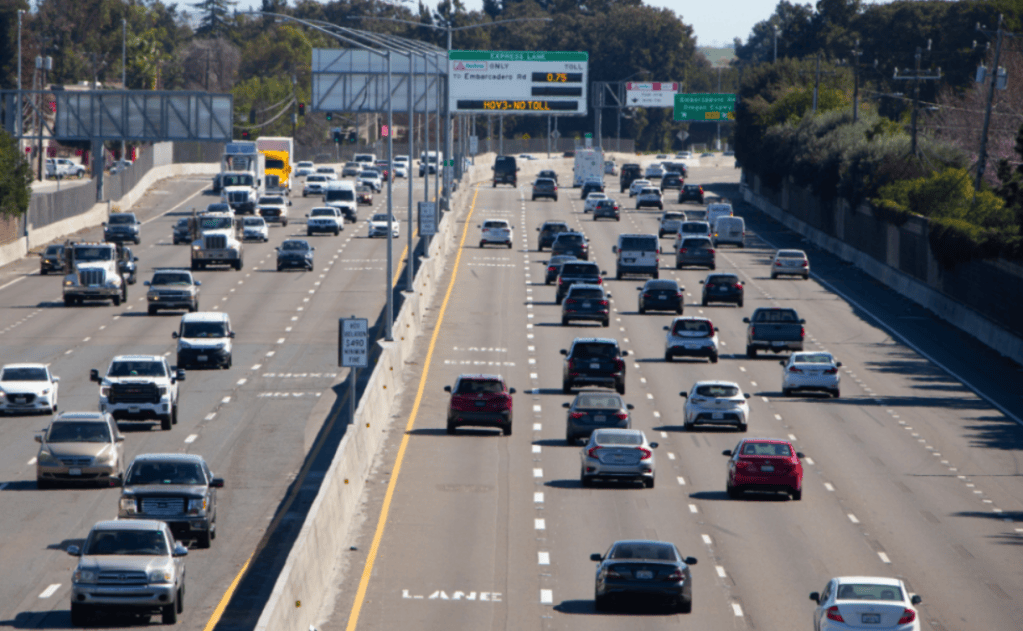
 Automakers
are bracing for new fuel-efficiency standards more than any coming
climate bill. (Photo: TreeHugger)
Put
simply, the phrase is a
red flag for any factor that could significantly hurt a firm’s
profits or condition. But “material adverse change” clauses can also be
written into deals to give businesses an escape hatch if disaster
strikes, as the
public learned during the congressional probe of the Bank of
America-Merrill Lynch merger.
So with Congress weighing national emissions limits — and
potential fuel
taxes — as part of a climate change bill, and the Obama
administration vowing to step in via new regulations if lawmakers do not
act, it’s worth asking which of the country’s top carbon-generating
companies are truly concerned that pollution caps would hurt their
business.
Automakers, for the most part, foresee problems if the
administration’s recent
move to raise U.S. fuel-efficiency standards is not extended beyond
its current 2016 expiration date. Ford’s year-end financial report
openly fretted about the consequences of individual states, such as
California, acting on their own to hike fuel standards in 2017 in
the absence of another national agreement:
Compliance with [multiple fuel-efficiency] regimes
would at best add enormous complexity to our planning processes, and at
worst be
virtually impossible. If any of one these regulatory regimes, or a
combination of them, impose and enforce extreme fuel economy or GHG
standards,
we likely would be forced to take various actions that could have
substantial
adverse effects on our sales volume and profits.
General Motors released its financial report today, declaring itself
“committed to meeting or exceeding” the new fuel-efficiency minimums but
warning that adverse consequences could result if consumers fail to
embrace electric cars:
We expect that
to comply with these standards we will be required to sell a
significant volume of hybrid or electrically powered vehicles
throughout the U.S., as well as implement new
technologies for conventional internal combustion engines, all at
increased cost levels. There is no assurance that we will be able to
produce and sell vehicles that use such technologies at a competitive
price, or that our customers will purchase
such vehicles in the quantities necessary for us to comply with these
regulatory programs.
The auto industry, however, expressed far less concern about the
prospects of a congressional climate bill or federal emissions
regulations, which are expected to focus largely on stationary sources
such as power plants. When carmakers reference climate change in their
communiques to investors, it is often to provide context for the growing
interest in governmental limits on pollution.
Coal companies, by contrast — generators of nearly half of the
nation’s electricity — are warily watching on the “material adverse”
consequences of climate action. Peabody, ranked
No. 1 among U.S. coal producers, wrote in its 2009 annual report that:
The potential financial impact on us
of future [emissions] laws or regulations will depend upon the degree
to
which any such laws or regulations forces electricity generators
to diminish their reliance on coal as a fuel source.
More openly apprehensive of climate legislation was Massey, the
coal company now facing
blowback even on Wall Street after a fatal explosion Monday at one
of its West Virginia mines. From Massey’s annual report:
Further
developments in connection with legislation, regulations or other limits
on
greenhouse gas emissions and other environmental impacts from coal
combustion,
both in the United States and in other countries where we sell coal,
could have
a material adverse effect on our cash flows, results of operations or
financial
condition.