
Seattle’s Bike Gender Gap Among Widest in USA

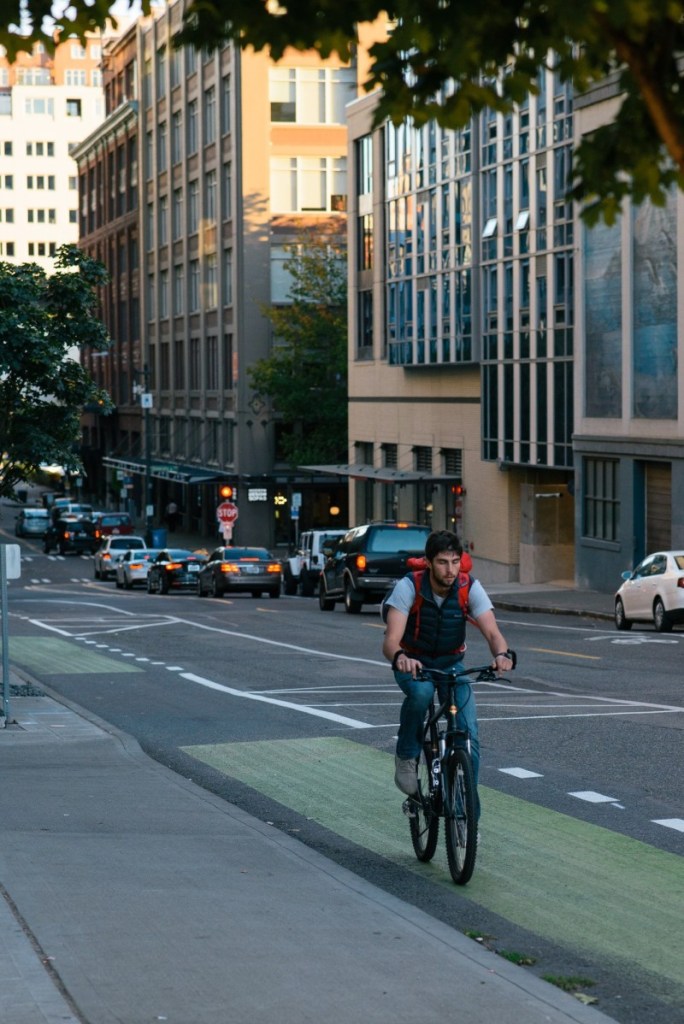
Women cyclists have to deal with unsafe streets, driver harassment, and inflexible workplaces — so it’s no wonder the bike gender gap persists, even in supposedly egalitarian Seattle.
It’s a metropolitan area of nearly 4 million people, yet only 41,000 women ride their bikes for transportation. That’s only 3 percent of the female population — about a third the size of the region’s male ridership, according to data Nielsen collected between 2016 and 2018.
Seattle Times columnist Gene Balk decided this month to ask why women weren’t riding as frequently as men, who comprise 76 percent of the city’s 169,000 cycling population.
Unsurprisingly safety was the top concern, with cyclists blaming the city’s failure to create a truly connected, truly protected bike network.
Others noted that hygiene and grooming were concerns, especially since most workplaces don’t provide showers or locker rooms.
“Absent facilities, women have to use a wet wipe, change their clothes in a tiny bathroom stall, do their hair and makeup in a bathroom that probably doesn’t have counters, then stuff their sweaty clothes in a bag and hide it under the desk,” responded reader Margaret Schroeder. “No thanks. I’ll drive or take the bus.”
Another reader described the harassment women typically receive from motorists just for riding next to them.
“All genders receive harassment from drivers with some frequency, but feminine presenting co-workers get more harassment and worse harassment,” one Seattle Times reader responded in a letter to the editor. “We have enough nonsense — why open ourselves up to new and fun ways to get yelled at on the way to work?”
The gender gap in the Emerald City is larger than the national average, where men are far more likely to ride to work than men, but it not much of an outlier. Nearly three times as many men in New York City commuted to work using a bike as women did in 2017, a figure relatively unchanged since 2006, even as total ridership has gone up.
Yet women cycle at higher rates in Germany (49 percent) and the Netherlands (55 percent), where expansive bike infrastructure has been in place for far longer.
Societal norms play a role in the gender gap. Cycling can become part of a daily routine for workers, retirees, and moms picking up their kids from school if there’s an intricate network of bike lanes connecting residential areas, schools, and workplaces safely across city neighborhoods.
“Picking up kids does not make biking impractical!” said another Seattle Times reader who often bikes to her child’s public school. “The more biking is normalized, the safer it will be, because drivers will be looking out for bikes. We have to be the change we want to see.”

Streetsblog has migrated to a new comment system. New commenters can register directly in the comments section of any article. Returning commenters: your previous comments and display name have been preserved, but you'll need to reclaim your account by clicking "Forgot your password?" on the sign-in form, entering your email, and following the verification link to set a new password — this is required because passwords could not be carried over during the migration. For questions, contact tips@streetsblog.org.