Guest Post: A Grand Avenue Worthy of its Name
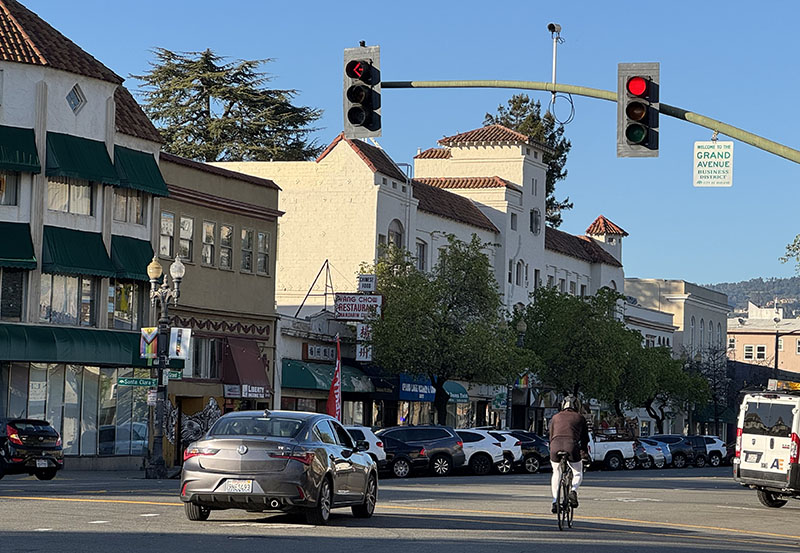
After more than a year of advocacy—writing columns, meeting with neighbors, giving presentations, talking with OakDOT staff, and spending countless hours on Grand—I am thrilled to share the great news that Grand will, in fact, be grand.
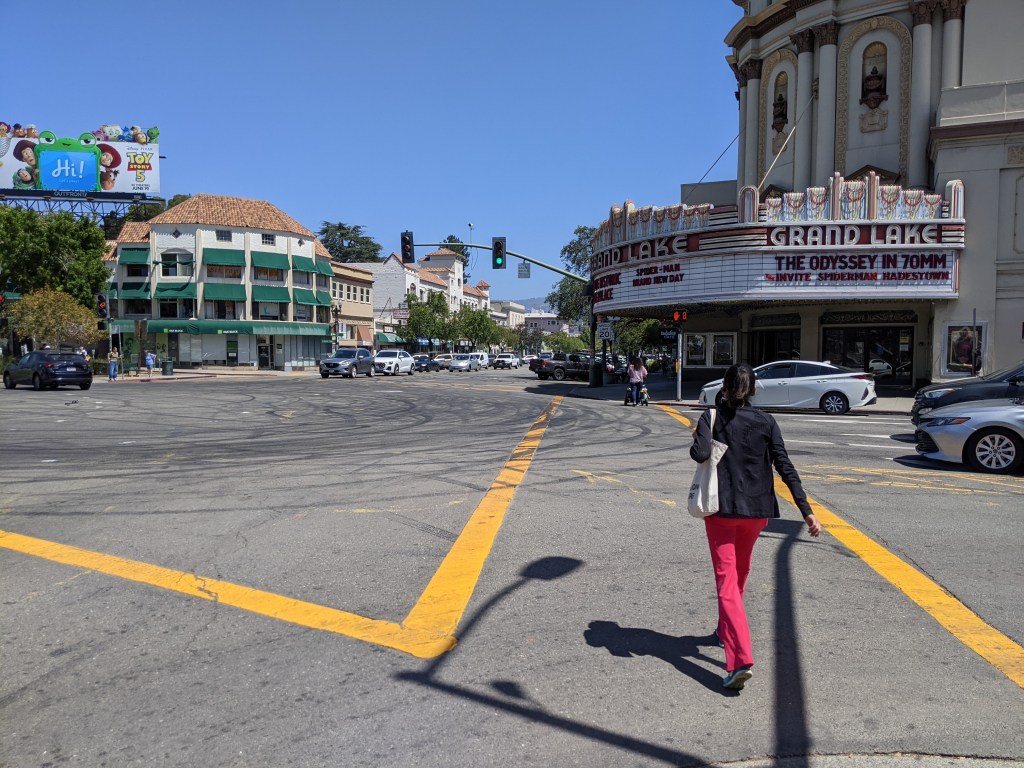
OakDOT’s updated design transforms Grand between Lake Park and Mandana from a glorified freeway off-ramp into a safer, slower, more pedestrian-oriented corridor. It reflects what Grand first and foremost is: one of Oakland’s best neighborhood destinations, with unique shops and restaurants that hundreds of people visit every day to shop, dine, meet friends, and linger.


The design includes pedestrian refuge islands at Lake Park / Santa Clara and mid-block to shorten crossing distances, slow traffic, better connect the farmers’ market to the commercial corridor, and make it easier and more appealing to access the large parking lot beneath I-580.
It also includes:
- Physically separated bike lanes on both sides of the street
- One travel lane in each direction with a flexible center lane to improve safety and traffic flow
- Angled parking on both sides of Grand, just as today
- New loading zones throughout the corridor for deliveries, passenger pick-up and drop-off, and food orders
- Bus boarding islands
- Adjustments to the slip lane to prevent illegal northbound turns and improve pedestrian safety
- Preservation of the Bay Wheels station, which sees more than 700 trips each month and has logged more than 50,000 rides since it was installed. The city is exploring a loading zone opposite the station to maximize loading space.
- Improvements at Elwood, including intersection daylighting, requested by street residents.
Perhaps most remarkably, OakDOT achieved all of this while removing just a handful of parking spaces, largely to accommodate new loading zones requested by businesses and the community. (There will be eight loading spaces in the new design, compared to just one today.)
But I just wish it hadn’t been so hard to get here.
At the recent Grand Lake Neighbors meeting, OakDOT’s Charlie Ream presented the updated design to overwhelming support. The mood in the room was genuine excitement. Neighbors praised the city for listening to concerns, working through difficult design questions, and figuring out a path forward. People were particularly excited that angled parking would remain and that pedestrian refuge islands and protected bike lanes would be added. There was broad consensus that the design pulls all the pieces together to create an inviting corridor—a far cry from the glorified freeway off-ramp Grand is today.
The one question left unanswered is the future of the corridor’s existing parklets.
The street design itself can accommodate them. However, the existing pandemic-era parklets on Grand do not comply with Oakland’s updated Flex Street Parklet Permit Program, so businesses will need to reapply if they wish to keep them.
The encouraging news is that neighbors expressed strong support for helping businesses through that process. The parklets have become part of Grand’s identity, and there’s broad agreement that they should remain wherever possible.
Some reflections, and where we go from here
I’m deeply grateful to everyone who emailed the City, attended meetings, shared ideas, and spoke up for a safer Grand. That community advocacy mattered.
I’m equally grateful to OakDOT. The staff took public feedback seriously, met repeatedly with neighbors, and worked through difficult design challenges to produce a design that advances street safety and supports the economic vitality of the corridor.
There are still opportunities to make the design even better.
I’d like to see additional measures to slow vehicles turning from Lake Park onto Grand near the theater, where the generous turn radius encourages high speeds. The left turn from Grand onto Lake Park also remains a concern, particularly during the farmers market when pedestrian volumes are exceptionally high. At a minimum, restricting left turns during market hours would improve safety.
A raised mid-block crossing would further slow traffic, and when Caltrans eventually revisits the Grand/Lake Park/Santa Clara intersection, there will be opportunities to improve the signals and further modify the slip lane. Green infrastructure, public art, street furniture, and landscaping can also be added over time.
These are refinements. Overall, this is a design that lives up to the street.
But I just wish it hadn’t been so hard to get here.
Protected bike lanes on this stretch of Grand were called for in OakDOT’s Bike Plan and the Alameda County Transportation Commission proposed an “All Ages and Abilities” bike network. Grand is on the city’s High Injury Network, the 8 percent of streets responsible for 60 percent of severe and fatal traffic collisions. The network is the city’s data-driven guide for prioritizing street safety improvements.
Walking and biking are not niche activities; they are simply part of Oakland’s transportation system. There should be no “well,” “but,” or “let’s see” attached to that reality. It’s really as simple as that, and it is the City’s responsibility to make these modes of travel safe and efficient.
Already this year, seven Oaklanders have been killed while walking. No one should lose their life simply trying to cross the street.
Navigating the trade-offs ahead

There’s one final lesson I take from this project: trade-offs. Street redesigns often become political battles over parking. We are fortunate here that OakDOT found a design that delivers protected bike lanes, a road diet, loading zones, and pedestrian safety improvements while retaining more than 90 percent of parking. Thanks to Grand’s generous 80-foot width, the trade-offs were remarkably small. This makes Grand a bit of a unicorn. Other streets will undoubtedly be more complicated.
The real question is whether Oakland is willing to prioritize street safety when the trade-offs become harder—when making streets safe requires removing more parking or significantly reducing driver speeds.
I hope the answer is yes.
But getting there will require real policy leadership from the Mayor, City Council, and OakDOT, along with a clear vision for Oakland streets—one that we stick to. Because every street in Oakland should be safe, welcoming, and economically vibrant. Months of block-by-block advocacy to get there can’t be the norm.
When I look at the updated plan, I see a truly grand street. I see myself biking down Grand with my daughters. I see families comfortably crossing the street instead of sprinting across traffic. I see people lingering over coffee, strolling between local businesses, and spending time outdoors because the street feels welcoming instead of like a freeway. And I hope I will be able to say the same about other key corridors across Oakland.
A truly grand Grand is just around the corner.
***
Arielle Fleisher is a transportation strategist. She has lived in the Grand Lake neighborhood since 2014. A version of this post first appeared on the Splashpad News site.
Streetsblog has migrated to a new comment system. New commenters can register directly in the comments section of any article. Returning commenters: your previous comments and display name have been preserved, but you'll need to reclaim your account by clicking "Forgot your password?" on the sign-in form, entering your email, and following the verification link to set a new password — this is required because passwords could not be carried over during the migration. For questions, contact tips@streetsblog.org.