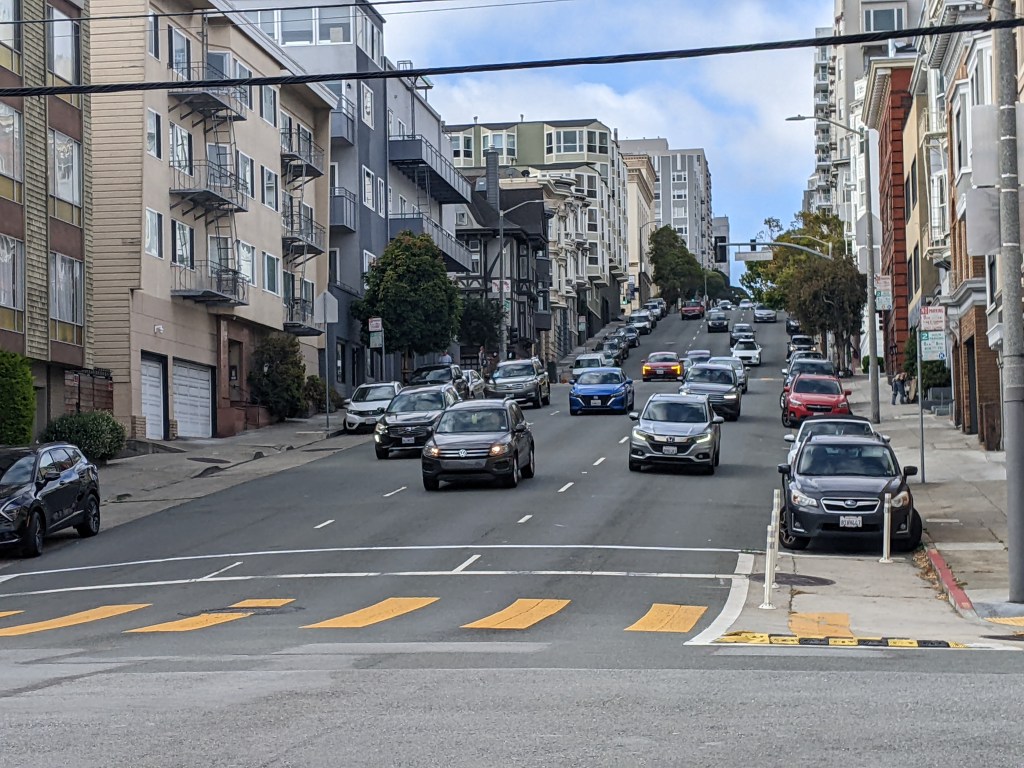
New Report Underscores Success of Speed Cameras in Oakland

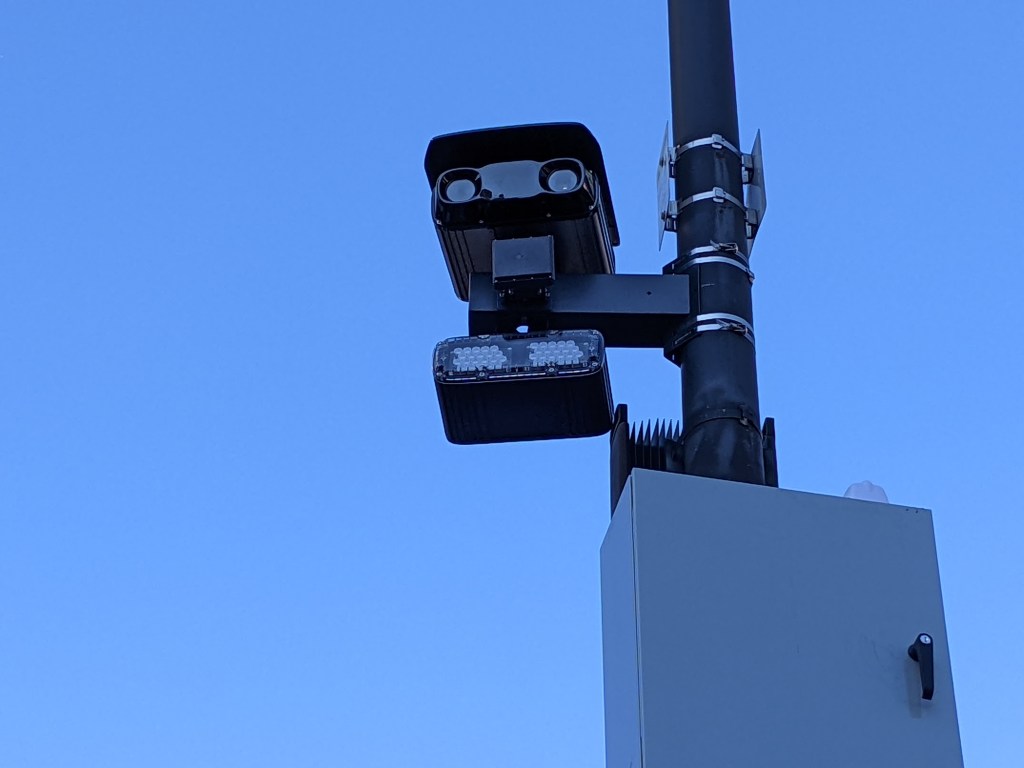
A new report from the city of Oakland shows that speed cameras are reducing speeding by 70 percent across locations where they are installed. This is consistent with results from other cities and countries.
More from Oakland DOT:
To test the efficacy of speed cameras, OakDOT conducted a before and after evaluation of vehicle speeds at camera locations in the summers of 2024, 2025 and 2026. Vehicle speeds were measured with pneumatic tube counts — an industry standard tool used to measure how fast vehicles are traveling.
Findings from that evaluation include:
- Compared to 2024 baseline data, 2026 tube counts show that drivers are slowing down at every speed camera location. The number of vehicles traveling 11 MPH or more over the speed limit dropped by an average of 70% across all 18 camera locations. That’s about 20,000 fewer speeding vehicles every day.
- The speed camera location with the greatest decline in speeding was 7th St. between Adeline St. and Linden St. In 2024, 1,700 vehicles passing the speed camera location were traveling 11 MPH or more over the speed limit. In 2026, that figure dropped to 150. This represents a 90% reduction.
- Traffic speeds are decreasing at all speed camera locations, as measured by the 85th percentile speed, a key traffic engineering metric. The 85th percentile speed is the speed at which 85% of vehicles are traveling at or below. Hegenberger Rd. saw the steepest decline. In 2024, 85% of vehicles were traveling at or below 57 MPH. In 2026, the 85th percentile speed dropped to 47 MPH.
The Oakland results echo similar results in San Francisco. Given the success, the East Bay Times is reporting that Oakland DOT director Josh Rowan wants to take another look at red light cameras, which were phased out in 2014.
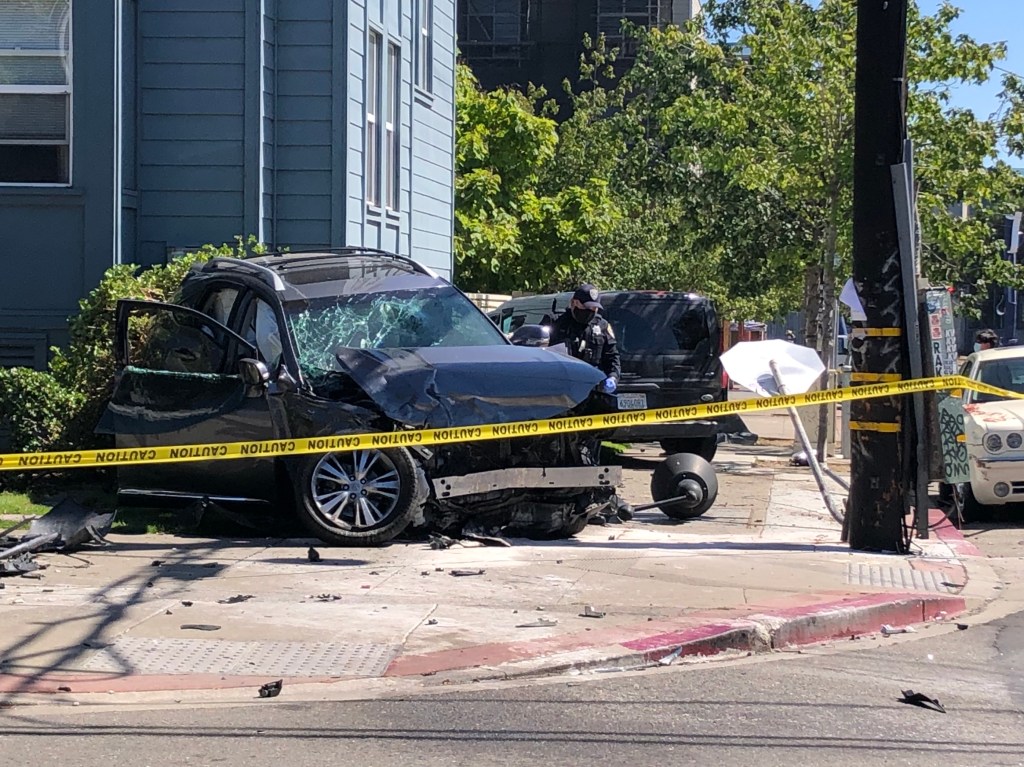
“It is important to remember why Oakland is installing cameras, lowering speed limits, and adding speed bumps,” said Bryan Culbertson, representing the group Traffic Violence Rapid Response. “23 people were killed by drivers in Oakland last year, and 10 people have been killed so far this year.”
Despite the promising results from speed cameras in both San Francisco and Oakland, it’s clear more cameras and more safety infrastructure are still needed. An earlier report this month found that the number of serious and fatal crashes continues to climb in San Francisco and is even higher than it was in 2014, when that city first signed its pledge to reduce such crashes to zero in ten years.
Bike East Bay’s Justin Hu-Nguyen was pleased to learn of the speed reductions, but had concerns about an overreliance on cameras and funding. “We hope to see revenue and budget info included in future versions of Oakland’s speed camera program reports. For the program to be sustainable, it must be self-funded, and not detract from opportunities for proven infrastructure investments,” he said, adding that “…if the program generates a lot of revenue, this means it is writing many tickets, and therefore is not achieving its goals of adequately reducing speeding.”
The report states that “for the first six months of operation, Oakland issued 526,000 violations consisting of 194,000 citations and 332,000 warnings.” And that’s from just the 35 cameras that are part of the pilot. Readers who ride a bike should remember those numbers the next time someone says something akin to “cyclists are the real law breakers.” No, actually, it’s motorists—and with far more deadly consequences.
But advocates agreed that the most important part of cutting that down, and saving lives, isn’t speed cameras: it’s physical infrastructure. “Physical changes to streets like concrete corners on Telegraph, traffic circles on 8th, and plastic posts on International have saved lives by reducing deaths from multiple times a year down to nearly zero,” said Culbertson. “Physical changes to dangerous streets such as San Leandro, 73rd, San Pablo, etc will also be needed to stop people from being killed there too.”
“As always, speeding cars are deadly, and we need to be treating traffic violence as the public health crisis it is,’ said Hu-Nguyen. “The most effective and proven way to make our streets safer is through traffic calming, which physically prevents speeding from happening in the first place.”
Read the report here.

Streetsblog has migrated to a new comment system. New commenters can register directly in the comments section of any article. Returning commenters: your previous comments and display name have been preserved, but you'll need to reclaim your account by clicking "Forgot your password?" on the sign-in form, entering your email, and following the verification link to set a new password — this is required because passwords could not be carried over during the migration. For questions, contact tips@streetsblog.org.