SFMTA Report Shows Higher Number of Severe Crashes Now than When Vision Zero was Signed in 2014

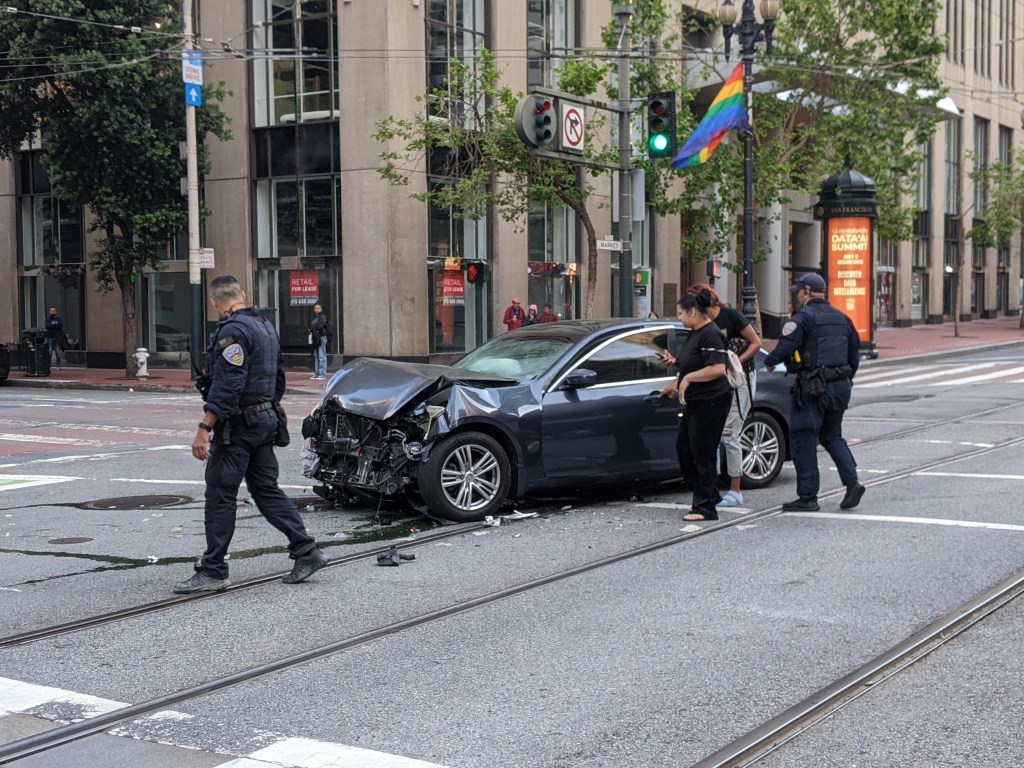
An update from SFMTA’s Street Safety Committee indicates that fatal and serious injury crashes are up 8 percent from last year. There were 100 fatal or severe crashes in the first six months of 2026 versus 96 in 2025. That’s compared to 92 in 2014, when San Francisco signed its pledge to achieve zero serious injury crashes in ten years.
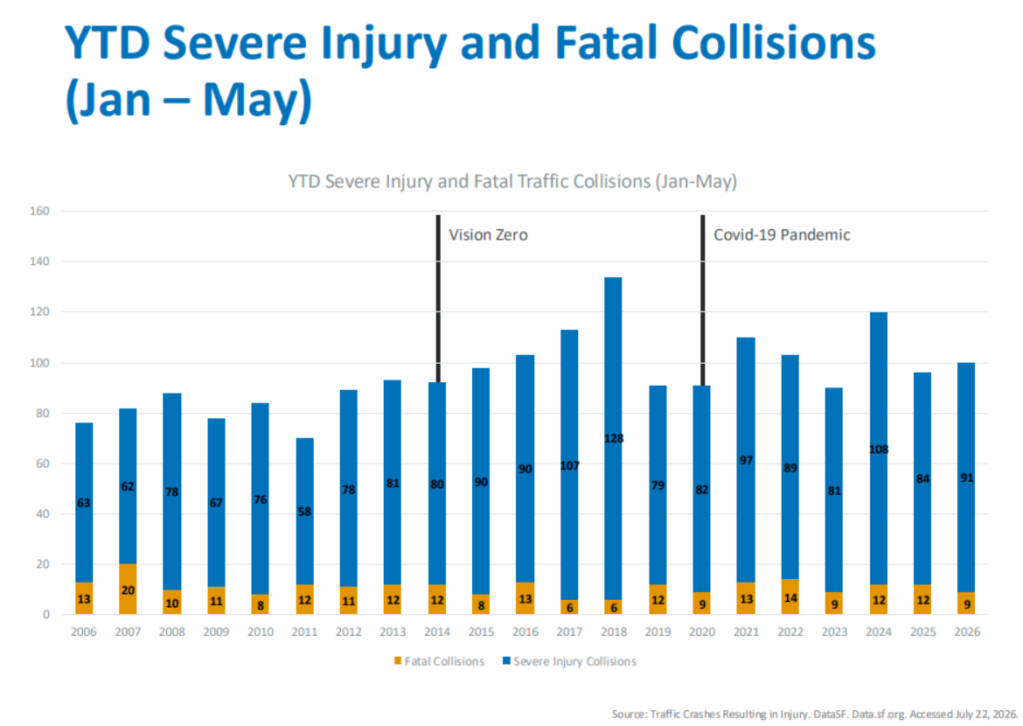
“The City’s latest traffic injury data confirms what San Franciscans intuitively know—street safety remains a constant issue and the city isn’t doing enough to make it safe, fast, and easy to get around our city,” said Streets Forward’s Luke Bornheimer.
SFMTA cites the installation of speed cameras as one area of progress. Indeed, they have greatly reduced speeding where they are installed. And speeding is the single biggest factor in deadly crashes. “They are changing driver behavior,” Walk San Francisco’s Marta Lindsey told ABC7 News in a report about the data. “But they’re only at 33 locations.”
The fact remains that fatal crashes are up. SFMTA tries to pin some of the blame on the popularity of stand-up scooters. “Injury collisions involving stand-up powered devices increased 32 percent in 2025 compared to 2024, rising to 316 reported injury crashes,” wrote an SFMTA spokesperson in an email to Streetsblog. The ABC7 News report also implied that scooter riders not wearing helmets are to blame. Christopher Colwell with S.F. General Hospital’s Trauma Center told ABC7 that they are seeing more head and facial injuries as a result.
Even accounting for upright scooters and overpowered e-motos, the raw data does not look good. According to city data, 17 pedestrians were killed in San Francisco last year. 11 have already died in the first six months of 2026. And they’re getting killed by drivers, not people on scooters.
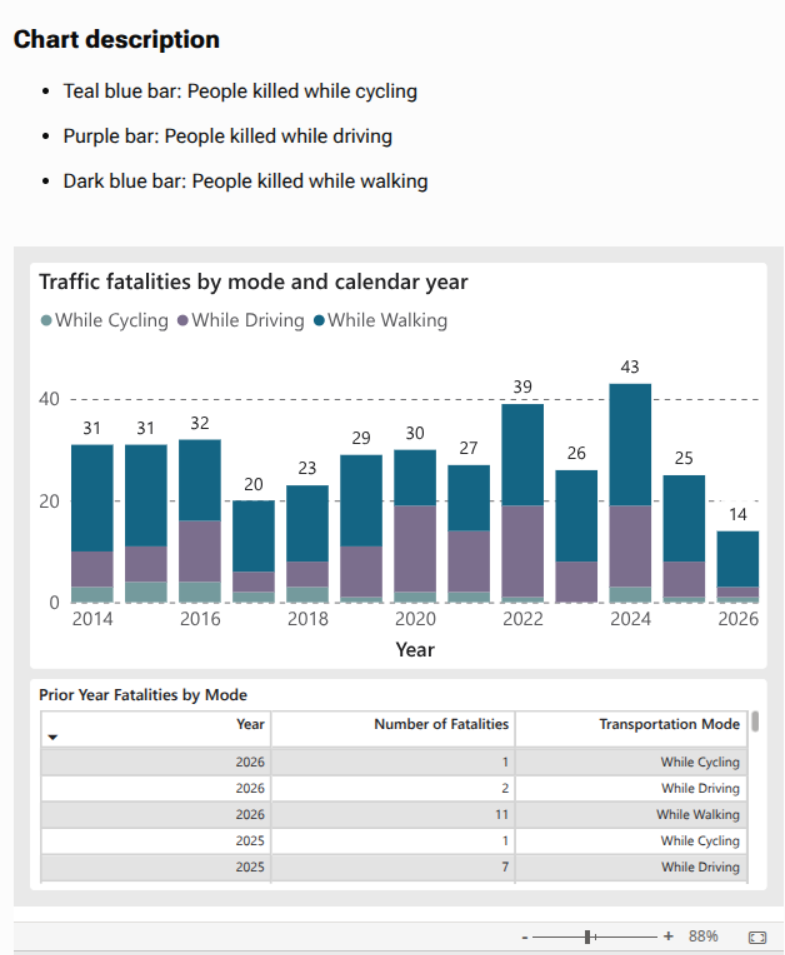
In Streetsblog’s view, yes, wear a helmet. And certainly there’s evidence that stand-up scooters and especially overpowered electric motorcycles, which are often confused with e-bikes, are making things even more perilous. However, any comparison to Vision Zero countries around the world shows that the primary contributors to the carnage are still cars and dangerous infrastructure that prioritize speed and throughput over safety and livability. And while SFMTA’s report claims that “safety remains a non-negotiable value,” that’s clearly not the case.
Market Street’s protected bike lanes were cancelled, the city opted not to ban right-on-red, the Arguello safety project continues to fester, Franklin’s lane reduction was cancelled, the West Portal safety project was heavily watered down, even after an entire family was killed by a driver—SFMTA still hasn’t even finished the protected bike lanes on Valencia. All of these projects protect both cyclists and pedestrians but were eliminated or cut way back out of concern for traffic impacts or loss of parking. In addition, San Francisco is painting curbs red for daylighting but, as a rule, doesn’t use solid objects to prevent scofflaw parking.
Meanwhile, Mayor Lurie issued a new “Street Safety Initiative”—around the same time he cleared the way for cars to return to Market Street.
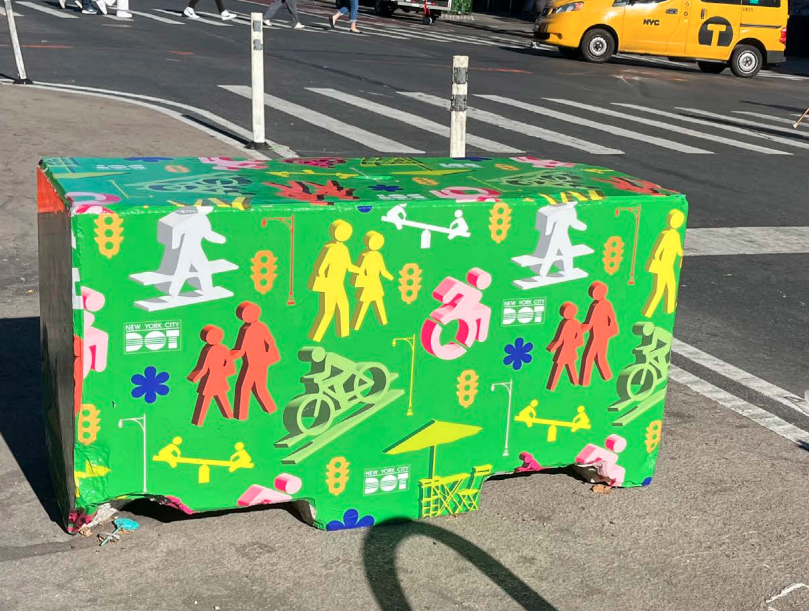
There’s no reason to think Vision Zero is going to get any better as long as safety remains a primarly performative act. And while SFMTA correctly also blames the popularity of dangerous, oversized vehicles for the lack of progress, other cities in the U.S. are reducing serious and fatal crashes, notably New York, which use large chunks of concrete to compensate for large vehicles (such as in the image below):
“Through the decade of Vision Zero and now with the first year of the Street Safety Initiative, we have consistently advocated that all collisions are preventable with slower speeds, people-prioritized streets, and better infrastructure that reduces or eliminates conflicts between cars and vulnerable road users–proven strategies to reduce serious injury and fatality,” said Claire Amable, director of advocacy for the San Francisco Bicycle Coalition.

Streetsblog has migrated to a new comment system. New commenters can register directly in the comments section of any article. Returning commenters: your previous comments and display name have been preserved, but you'll need to reclaim your account by clicking "Forgot your password?" on the sign-in form, entering your email, and following the verification link to set a new password — this is required because passwords could not be carried over during the migration. For questions, contact tips@streetsblog.org.