


Public Health
Top Categories
Why Public Health Officials Must Play a Central Role in Traffic Safety
A new study proposes public health officials and planners treat traffic violence as an epidemiological problem.
The post Why Public Health Officials Must Play a Central Role in Traffic Safety appeared first on Streetsblog USA.

August 28, 2023
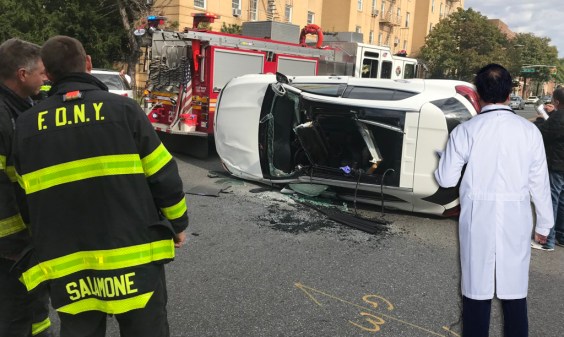
How Auto-Centric Infrastructure Is Making Us Sick
Instead of endless promises to fix America's "crumbling roads and bridges," filmmaker Andy Boenau argues we need to talk about our crumbling minds and bodies — and how our autocentric infrastructure approach contributes to them.
The post How Auto-Centric Infrastructure Is Making Us Sick appeared first on Streetsblog USA.
Kea Wilson
June 8, 2023
Everything You Ever Wanted to Know About Roadside Noise Cameras
Across America, a shocking number of drivers are illegally hacking their cars to be as loud as possible — and evidence is mounting that the phenomenon has a huge impact on public health. But what can cities do about it?
February 28, 2023

SPUR Talk: Enlivening Spaces in the Interim
"Why wait five or six years before doing anything with the space?" was the question Brad Leibin, an architect at David Baker Architects, was asked to help solve about an affordable housing project planned for West Oakland's San Pablo Avenue at 34th Street. "So we started to make a difference on that streets-cape immediately ... that project got me really interested in interim uses."
September 7, 2017
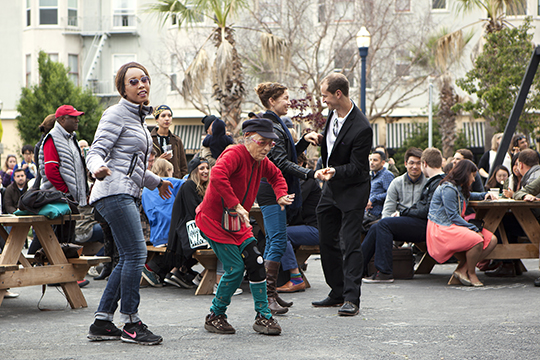
With WalkFirst, SF Takes a Data-Driven Approach to Pedestrian Safety
The city recently launched the WalkFirst program to lay a data-driven, participatory foundation for the effort to attain the main goal of its Pedestrian Strategy -- cutting pedestrian injuries in half by 2021. In the coming months, staff from the SFMTA, the Planning Department, the Controller's Office, and the Department of Public Health will field public input on dangerous streets and release new data illustrating the toll of pedestrian injuries and deaths.
December 19, 2013
City’s First “Play Streets” Event Kicks Off in the Western Addition
Two blocks in the Western Addition were closed to cars and turned into a neighborhood gathering space Saturday for the city's first "Play Streets" event. The program is an effort to build on the success of Sunday Streets and provide smaller-scale car-free spaces where people can play and socialize on a more frequent basis.
July 16, 2013
Sunday Streets to Expand With Neighborhood-Oriented “Play Streets for All”
San Francisco's Sunday Streets will continue to grow next year with a new program designed to bring more neighborhood-oriented car-free street events to places that lack park space.
November 26, 2012
Infographic: The Many Connections Between Transportation and Health
The Robert Wood Johnson Foundation launched their "New Public Health" website last year with the goal of meeting community members where they are to talk about public health. A lot of those conversations happen online, and they explore the connections between public health and policy decisions related to everything from education to transportation. Last week, they published an interview with U.S. DOT Secretary Ray LaHood.
October 29, 2012
This Is Your Brain on Cars—Oh, and Your Lungs and Heart and Gut, Too
Gerontologists in a laboratory at the University of Southern California exposed a group of mice to the same atmospheric conditions that humans encounter when driving along the freeway. Horrifyingly, they discovered that the mice’s brains showed the kind of swelling and inflammation associated with diseases such as Alzheimer’s. The researchers didn’t super-dose to get these results: The mice were exposed to freeway air for the equivalent of 15 hours a week -- less than the 18.5 hour average Americans spend in their cars. Jokes aside about getting those darn mice off the road, the study suggests that driving less may reduce our risk of brain damage.
May 17, 2011
New Freeway Revolt Grips Guadalajara
While the world has gathered in Cancun, Mexico, to discuss again a shared approach to Climate Chaos, action is already being taken in countless communities. On a visit last week to Guadalajara, Mexico, more than a thousand miles west of the Climate Meeting, I had the pleasure of discovering a vibrant grassroots movement to block the construction of a new 23-kilometer elevated freeway through the heart of the city. Interestingly, this movement leans primarily on people who live along the proposed route of the freeway, but found crucial support and activism from Ciudad Para Todos (City For All), a three-year-old group of bicycle and transit activists who are Guadalajara’s most vocal opponents to the reign of the car.
December 6, 2010