Study: Cyclists Gravitate Toward Streets With Protected Bike Lanes


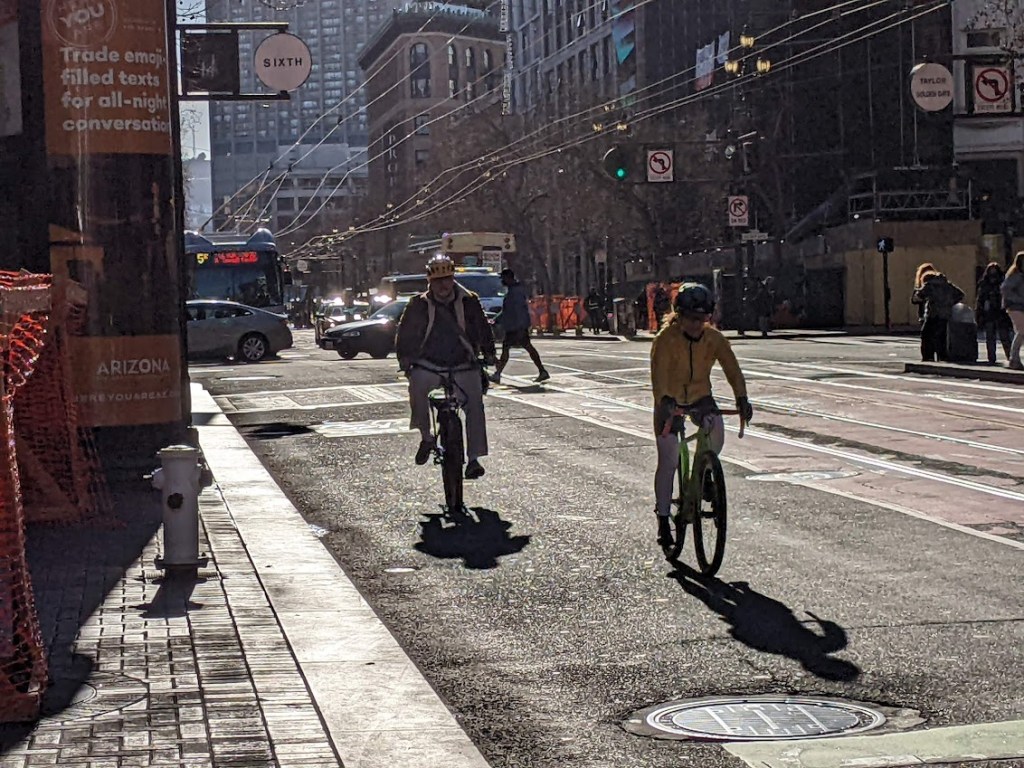
By now there’s not much doubt that protected bike lanes can be a game-changer for cycling in U.S. cities. Making streets feel safe to bike on boosts overall cycling rates, attracting people who otherwise wouldn’t even consider cycling. The safety benefits keep accruing as more people on bikes hit the streets, since drivers become more aware of the presence of cyclists and pay closer attention.
Here’s some new evidence demonstrating that bike infrastructure attracts cyclists. A study published in the Journal of Transport and Land Use [PDF] found that intersections in Montreal with protected bike lanes see 61 percent more bike traffic than those without. Meanwhile, intersections with plain old painted bike lanes see a not-insubstantial 36 percent more cyclists. The results demonstrate a strong preference for bike infrastructure — the more separation from traffic, the better. Previous research by Jennifer Dill at Portland State University has also quantified people’s preferences for bike infrastructure over streets without bike lanes.
The study, conducted by Jillian Strauss and Luis Miranda-Moreno of McGill University, examined 758 intersections in Montreal. Researchers modeled how different factors are linked to the volume of bike traffic at intersections, controlling for several variables.
In addition to the presence and quality of bike infrastructure, they also found a link to land use: the greater the “mix of uses” — or intermingling of retail, housing, and office space — the more bicycling. A 10 percent increase in “land mix,” researchers found, was associated with an 8 percent increase in bicycling. Higher employment density — or the concentration of jobs near intersections — was also found to be a significant predictor of increased bike traffic.

Read More:
Streetsblog has migrated to a new comment system. New commenters can register directly in the comments section of any article. Returning commenters: your previous comments and display name have been preserved, but you'll need to reclaim your account by clicking "Forgot your password?" on the sign-in form, entering your email, and following the verification link to set a new password — this is required because passwords could not be carried over during the migration. For questions, contact tips@streetsblog.org.