The Columbus Bus Network Redesign Boosted Ridership

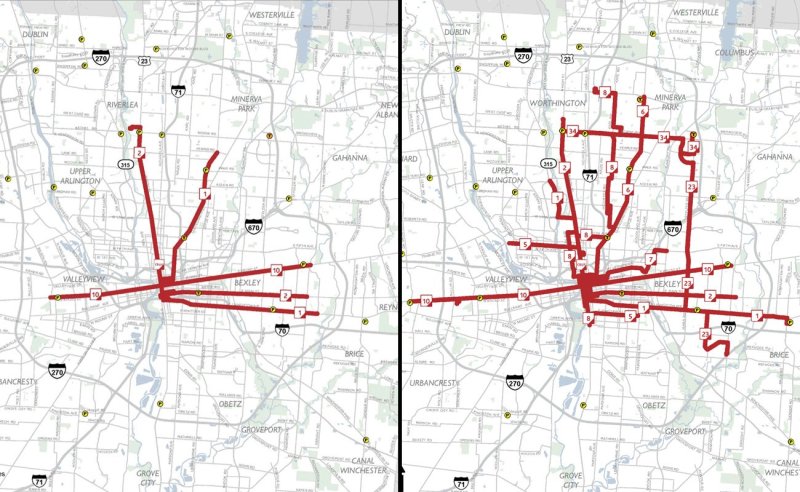
One year after the rollout of Columbus, Ohio’s completely overhauled bus system, ridership is up — a sign that the redesign is working as planned.
May 2018 ridership was 1.6 percent higher than in May 2017, when the overhaul took effect. Ridership was 3.6 percent higher in June 2018 than in June 2017.
The redesign was the first time the entire system had been systematically rethought in 40 years. Every bus route was reconsidered and reworked to emphasize frequent service in high-ridership areas and make the system easier to navigate and use.
System redesigns can be difficult politically, with riders objecting to route changes. And COTA did deal with lots of rider complaints at the outset. But Patrick Harris, COTA’s director of government affairs, says the new numbers help confirm that the effort was worth it.
“I think the ridership numbers speak to the fact that riders have enjoyed the new service,” he told Streetsblog.
More impressive, the ridership increases for COTA come at a time when many other transit agencies, even agencies that have made big investments in rail infrastructure, have seen ridership decline.
The overhauled Columbus system was designed to improve headways and weekend service — giving riders more flexibility to move around on their own schedules. Sunday ridership is up 24 percent and Saturday ridership is up 6 percent, Harris said. Weekend service was expanded dramatically. Balancing service hours over the week better accommodates changing work schedules, especially for workers with lower incomes.
Prior to the redesign, COTA executives told Columbus Underground the system had just four routes that offered service every 15 minutes or better. Those routes made up 40 percent of the system’s ridership. The number of high-frequency routes was roughly doubled by the overhaul.
COTA hoped the redesign would increase ridership 10 percent over three years. One year in it appears the agency is on track.

Read More:
Streetsblog has migrated to a new comment system. New commenters can register directly in the comments section of any article. Returning commenters: your previous comments and display name have been preserved, but you'll need to reclaim your account by clicking "Forgot your password?" on the sign-in form, entering your email, and following the verification link to set a new password — this is required because passwords could not be carried over during the migration. For questions, contact tips@streetsblog.org.