Was That an Accident?

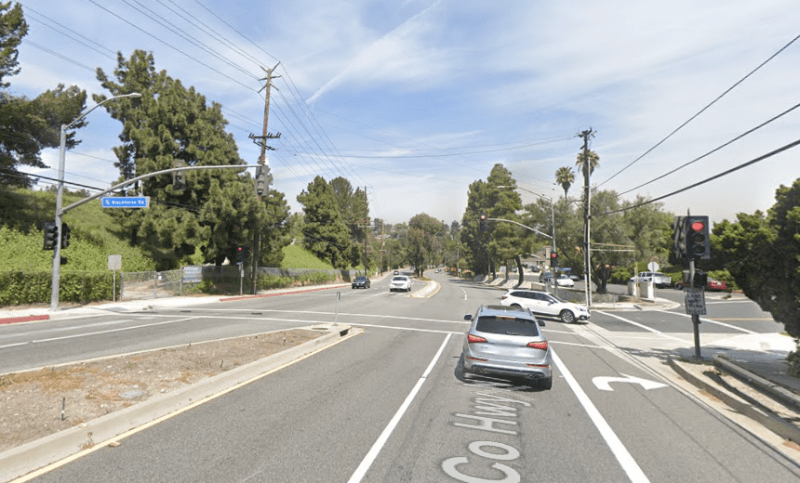
Tiger Woods crashed his car on a “steep, curvy” section of Hawthorne Blvd, badly enough that he has been hospitalized with serious injuries. Los Angeles County Sheriff Alex Villanueva was quick to assign blame, or rather to avoid assigning blame, calling the crash an “accident” and saying Woods will not be charged.
Safe streets advocates have for a long time been asking media and police to avoid using the word “accident” to describe crashes.
Researchers have found that word choice influences how people perceive blame for crashes, and “accident” tends to automatically absolve car drivers of responsibility for their behavior. In this case, using the word was a deliberate choice by Villanueva – and the media who picked it up and ran with it.
Villanueva went to some effort to place blame on the road at the spot where Woods crashed. “This stretch of road is challenging and if you’re not paying attention, you can see what happens,” he told ABC News.
Of course, paying attention is a basic requirement of safe and responsible driving.
Local residents were quoted as saying it’s easy to go too fast on that stretch of road, and that speeding tickets are common. Supervisor Janice Hahn called for a safety review of road conditions there.
But was Woods going too fast? No one will say. There will be an investigation, using the car’s black box, and the media is already analyzing every detail, but the verdict already seems to have been decided: It was the road’s fault.
Hawthorne Blvd is not the narrow mountain road that jumps to mind when someone describes it as “curvy and steep.” Engineers have already done what they can there – it’s wide, free of obstacles, and in fact looks sort of like a freeway. In other words, it’s built to encourage speeding.
Maybe Woods’ crash will bring attention to much-needed safety interventions on that stretch. But what shape those interventions take is also key. The civil engineer’s habit is to make it safer to go fast, and those chickens are coming home to roost.
But what is needed is more careful driving, and you don’t engineer that by straightening, flattening, and widening.
Tiger Woods had a bad crash, and his recovery will be difficult. We wish him well.

Read More:
Streetsblog has migrated to a new comment system. New commenters can register directly in the comments section of any article. Returning commenters: your previous comments and display name have been preserved, but you'll need to reclaim your account by clicking "Forgot your password?" on the sign-in form, entering your email, and following the verification link to set a new password — this is required because passwords could not be carried over during the migration. For questions, contact tips@streetsblog.org.