City launches income-based traffic fine pilot, halving the fees for low-income residents

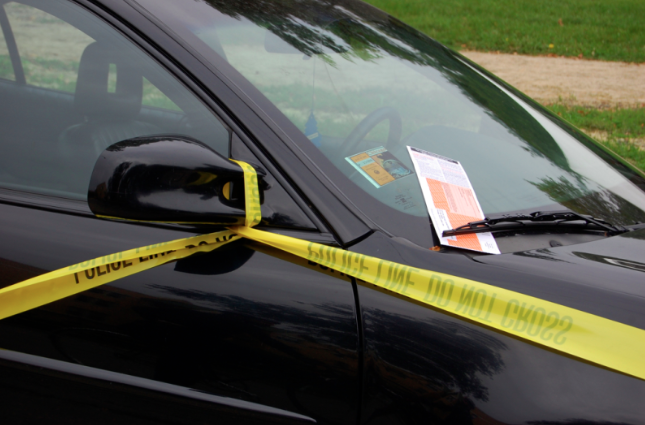
One of Mayor Lori Lightfoot’s promises while campaigning for Chicago mayor in the last election was to reign in the city’s reliance on fines and fees. To be fair, all of Chicago’s mayoral candidates at the time supported ticket reform.
A 2018 ProPublica investigation revealed that traffic tickets in Chicago disproportionately impacted low-income, Black residents. Lightfoot’s position included an idea to forgive compliance tickets (city sticker or license plate expiration tickets) for motorists once drivers become compliant with the law. Earlier this month the Lightfoot administration launched the Clear Path Relief Pilot Program, an initiative to help low-income Chicagoans with debt associated with moving violation tickets.
It could be argued that Lightfoot’s record on fines and fees have been mixed. There have been moderate reforms, which some advocates have said didn’t go far enough. On the other hand, last year the city lowered the threshold for speed camera tickets from 10 mph to 6 mph, which appears to have been very effective in encouraging safer speeds, but has also resulted in more citations. In spite of some ticketing reforms, according to ProPublica the outstanding debt owed for city tickets continues to grow, from about $1.45 billion in February 2018 to more than $1.8 billion in 2021.
The Clear Path pilot will last from now through December 23, 2023. Residents earning less than 300 percent of the federal poverty threshold (about $41,000 for a single person), will be eligible to pay half the rate for city-issued traffic fines on non-parking meter tickets. Eligible residents can eliminate all debt by paying off the original fine on tickets received within the last three years. To successfully complete the program, participants must finish their payment plan and pay their meter tickets or enroll in a meter ticket a payment plan. Any new eligible tickets issued within 365 days from the enrollment date, and paid on time, will be reduced by 50 percent. New unpaid eligible tickets will not be assessed penalties until after December 31, 2023. You can find more information and an application on the city of Chicago’s website.
“We are excited for this program to provide relief to people who need it,” said Active Transportation Alliance spokesperson Kyle Whitehead. “Traffic enforcement should never be about raising revenue for the city or burying people in debt. “[Traffic enforcement] needs to be about creating safer streets for everyone traveling on them. Chicago should pair this program with major investments in redesigning these high-speed streets, which are disproportionately located in majority Black, Brown, and low-income neighborhoods.”
“We live in a punitive society, and those who are the most punished are racially marginalized people and poor people,” said Oboi Reed, head of the mobility justice nonprofit Equiticity. “We support efforts to align the mayor’s public commitment to equity with her policies. Regressive fine structures are antithetical to racial equity. Moving government toward a more progressive fine structure is to be applauded. I would love to see the mayor do more and go further in decriminalizing poverty. For poor people, all debt should be 100-percent forgiven.”
Reed’s statement reminds me of the saying, “If the penalty for a crime is a fine then that law only exists for the lower class.” I would imagine that in Reed’s vision for a city that doesn’t rely on fines for traffic enforcement, we would have roads designed to force drivers to drive slowly and in ways that don’t endanger other road users. I agree with Reed’s overall point that there’s still more work to be done to bring about racial equity in the city’s transportation policies.

Streetsblog has migrated to a new comment system. New commenters can register directly in the comments section of any article. Returning commenters: your previous comments and display name have been preserved, but you'll need to reclaim your account by clicking "Forgot your password?" on the sign-in form, entering your email, and following the verification link to set a new password — this is required because passwords could not be carried over during the migration. For questions, contact tips@streetsblog.org.