CAPTI Falls Short of its Climate Promise
The Climate Action Plan for Transportation Infrastructure (CAPTI) is meant to help decarbonize California’s transportation systems. But the state continues to devote the bulk of its transportation budget to projects that encourage car travel.
The post CAPTI Falls Short of its Climate Promise appeared first on Streetsblog California.


The Climate Action Plan for Transportation Infrastructure (CAPTI) is meant to help decarbonize California’s transportation systems, which are responsible for half the state’s greenhouse gas emissions. But bills from Assemblymember Laura Friedman meant to give teeth to CAPTI have failed, and California continues to devote the bulk of its transportation budget to projects that encourage car travel. As we evaluate the second draft of the CAPTI Annual Progress Report, it’s time to take a hard look at the effectiveness of California’s climate initiatives around transportation and what more is needed.
Transportation funding doesn’t match climate goals
Governor Gavin Newsom sought to address climate-killing transportation emissions in 2019 with Executive Order N-19-19 and the successive development of CAPTI in 2021. This year’s draft progress report was just released for public comment, and it depicts California quickly making progress toward aligning state transportation funding with our ambitious climate goals.
However, the scale of progress the report documents, while better than nothing, doesn’t match the urgency of our climate crisis. We need a wholesale pivot to clean transportation centered on making biking, walking, and public transit appealing and accessible, yet the bulk of California’s green transportation spending is directed at EVs and charging infrastructure.
California invests far too little in active transportation and is missing opportunities to transform our state highways into Complete Streets. State transportation leaders continue to ignore the substantial investments in new types of infrastructure needed if we’re serious about a multimodal transportation system with mobility choices that reverse our climate impact. Complete Streets everywhere are a prerequisite for Californians to move away from our automobile dependency.
What a truly climate-friendly transportation budget would look like
CAPTI is a planning document that, according to the cabinet-level California State Transportation Agency (CalSTA), attempts to “identify near-term actions and investment strategies to improve clean transportation, sustainable freight and transit options, while continuing a ‘fix-it-first’ approach to our transportation system.” In even more limited scope, “under CAPTI, where feasible and within existing funding program structures, the state will invest discretionary transportation funds in sustainable infrastructure projects that align with its climate, health and social equity goals.”
What CAPTI does not do – but should if we’re serious about reducing climate impacts – is analyze the $22 billion state transportation budget. Far too many of those dollars are spent on projects and programs that increase vehicle miles traveled (VMT) and greenhouse gas emissions (GHG).
Two recent reports from the Natural Resources Defense Council (NRDC) and NextGen Policy make it clear that California continues to prioritize outmoded transportation investments such as freeway expansion projects. According to NRDC’s calculations, “California only allocates 18.6 percent of transportation funds to low-carbon mobility choices.”
Just last week, leaders from the California Transportation Commission, the Air Resources Board, and the Department of Housing and Community Development met to discuss the ongoing implementation of CAPTI, but they did not offer a substantive critique of California’s continuing policies that clearly exacerbate the climate crisis. Despite the dozens of public comments asking for an immediate freeway expansion moratorium, our state leaders were silent.
$10 Billion for Complete Streets
CAPTI is not robust or comprehensive enough to align our transportation investments with our climate goals. We are well past the time when “better than nothing” is sufficient to tackle global warming. In fact, narrow planning documents like CAPTI end up being harmful because they narrow our decision-makers’ focus while allowing them to pretend they are taking transformative action.
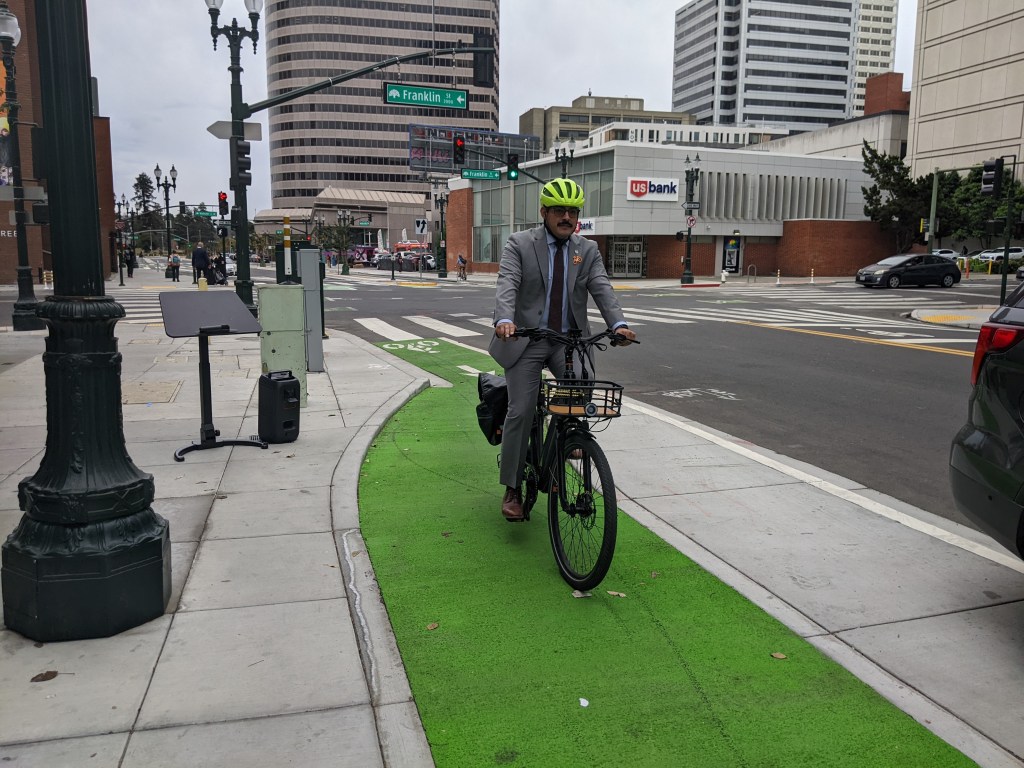
Last year, CalBike asked lawmakers to devote half of the state’s transportation dollars, about $10 billion, to active transportation. That money could fund not just more connected bikeways, but safer intersections, sidewalk improvements, and more frequent and reliable transit—all the things we need to change direction and keep from driving over a climate cliff.
The projects are out there, and communities want to build Complete Streets. The Active Transportation Program has a growing backlog of excellent projects for which there isn’t enough funding. The California Bicycle Coalition will continue to advocate for ten billion dollars for Complete Streets in the 2024 budget, and for programs to incentivize and fund the infrastructure we need to move in a warming world.
The post CAPTI Falls Short of its Climate Promise appeared first on Streetsblog California.

Streetsblog has migrated to a new comment system. New commenters can register directly in the comments section of any article. Returning commenters: your previous comments and display name have been preserved, but you'll need to reclaim your account by clicking "Forgot your password?" on the sign-in form, entering your email, and following the verification link to set a new password — this is required because passwords could not be carried over during the migration. For questions, contact tips@streetsblog.org.