Open Letter: Don’t Wait for Another Tragedy to Make Streets Safer
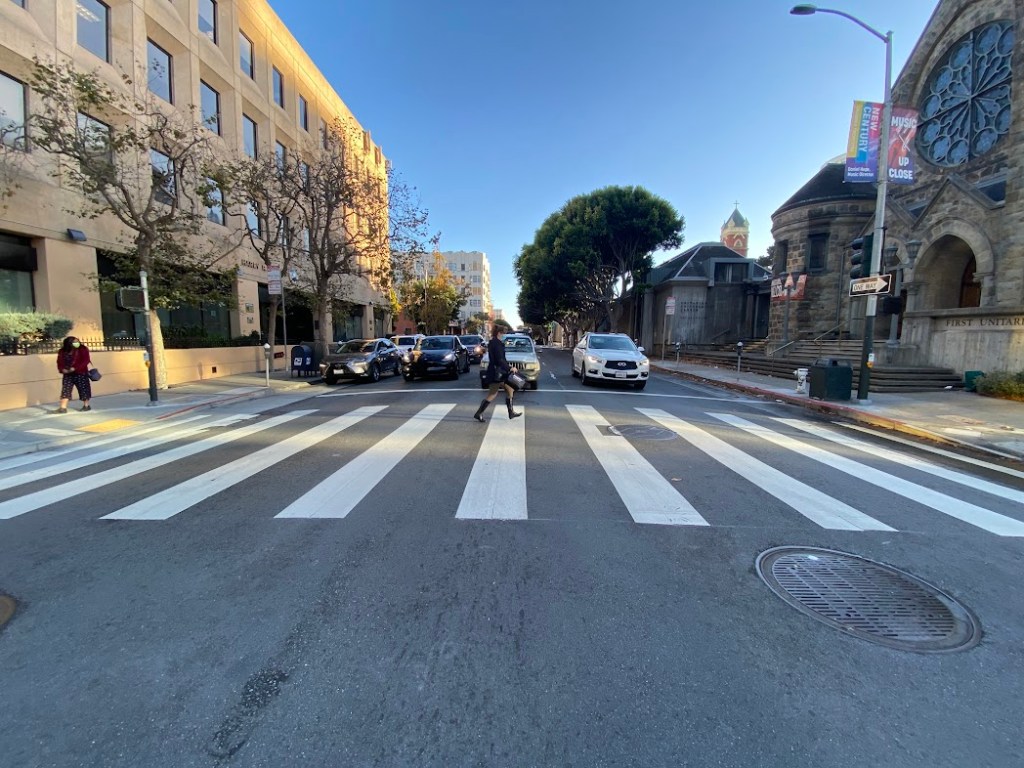
Editor’s note: Richard Zieman’s son was killed in an act of traffic violence in 2021. He recently wrote to SFMTA officials and Supervisor Myrna Melgar, arguing that they need to shift Vision Zero policy away from reacting to deadly crashes, and instead focus on streets and intersections where speeding and other forms of reckless driving are common. In other words, instead of depending on the high-injury network—a reactive system based on an accounting of deaths and serious injuries—take a proactive and systemic approach to making streets safe. Here is his email to District 7 Supervisor Myrna Melgar, commenting on her updated Vision Zero resolution, lightly edited with some emphasis added.
Dear Supervisor Melgar.
I have received and seen numerous messages and posts about your Street Safety Act being “a resolution to bring action and accountability to traffic safety.” Receiving those keeps reminding me of how elusive accountability truly is. It can be an empty and hollow word for those of us who have ever sought
accountability. I urge you to not let that be the case going forward and that you do hold people accountable.
It was just about one year ago that I spoke at the WalkSF memorial at City Hall. I was very open about having taken action against the City and seeking some level of accountability and to not let people hide behind the anonymity of City government. Force people to stand up and go on record and be accountable.
Our son Andrew was killed by a speeding driver on 11/10/21 in front of Sherman Elementary where he worked. It was just before 8 a.m. He was crushed up on the sidewalk against the building. The speeding driver did not start the crash, but multiple experts testified that without speed, Andrew would not have been killed and likely never been hit. Every car tracked along with that driver was traveling at excessive speed. Everything said by the school, parents, local residents, and city officials was about the speed down Franklin. Every action taken by the City afterwards addressed the speed on Franklin. But there was never any mystery about the chronic speeding down Franklin St through the school zone.
We know the drivers were the most at fault, but the City admitted that the signal timing on Franklin encouraged speeding. So one of our main questions was why nothing was done despite the years of pleas from the school community. The City acknowledged and defended doing nothing.
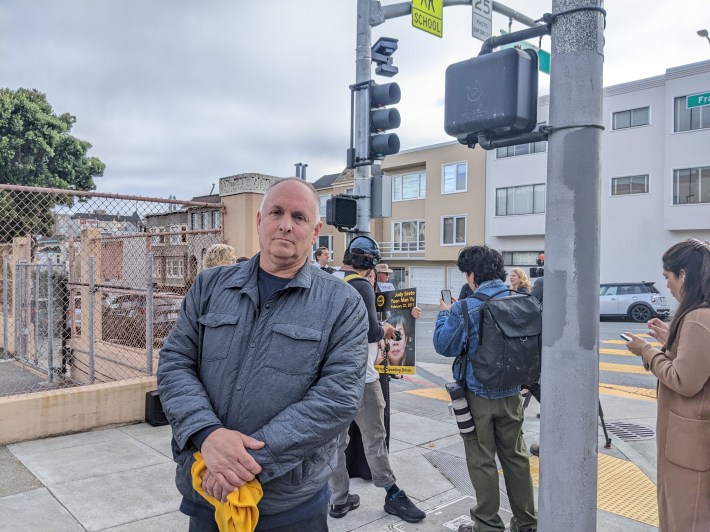
Mr. Eddie Tsui, SFMTA Senior Engineer and expert representing the City, gave us the answer. He stated that the part of Franklin through Sherman was not on the Vision Zero High Injury Network at the time Andrew was killed, so addressing the years of speeding complaints had not been a priority. This was through sworn testimony. His testimony made it clear that the City needed to see some high level of injury (or death) before that stretch of Franklin became a priority. It turned out to be Andrew, but the City was apparently just as willing to wait for it to be another school employee, a parent, or a student killed or seriously injured. Either way, a tragedy was required. That is quite a policy. And as far as I know, that is still the City’s policy.
But this leads to another important question. If inclusion into the high injury network set the priorities, why did SFMTA not just tell the Sherman community the truth all those years? Why would SFMTA not have the decency to just tell the Sherman community the speeding was not a priority until there was “high injury”? Then at least the PTA could have explored other avenues. Why string along and mislead a scared elementary school community that is pleading for help?
Of course, this may not have been an actual policy and was maybe just thrown out there at trial as something that would sound good to a jury that was already receiving limited information. Other engineers testified. Multiple PTA presidents testified about their efforts and pleas to SFMTA. I’m sure they would have remembered had they been told the street was not a priority until there was significant injury or death. Yet none of the other engineers or the PTA members
mentioned it. I don’t know what the truth is. You would need to ask SFMTA.
We do know that the City/SFMTA took action immediately after Andrew
was killed and well before the next High Injury Network map was released, which I believe was in late 2022. The first fixes to slow speed were approved within eight days. SFMTA adjusted the light timing/speed progression in December 2021, just a month after Andrew was killed.
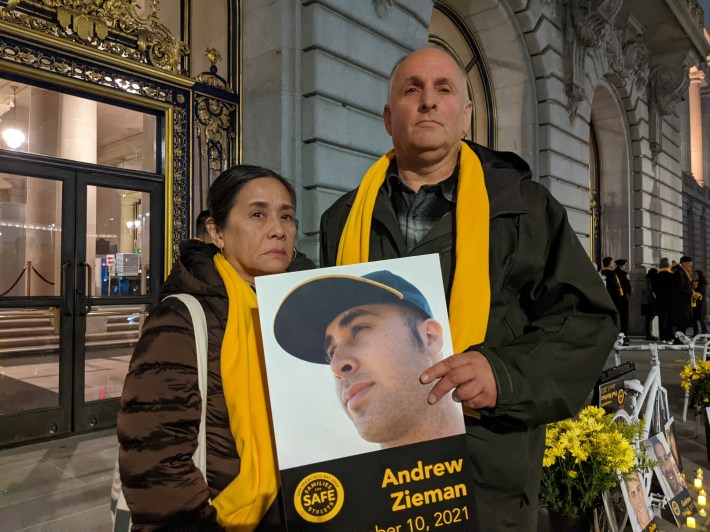
But it’s too late for Andrew. We’ll never know whether those rather simple steps SFMTA took immediately after Andrew was killed could have saved him if only done sooner. Whether SFMTA traffic engineers strung along and misled a scared elementary school community or whether the City spun a fairytale to a jury about policies and priorities is not my problem anymore. Neither would surprise me. But you are the one calling for accountability. So I am sending this to you.
It is more likely a matter of when, not if, something like this happens again. When it does, I certainly hope you take the need for accountability seriously.
Especially if a bunch of City workers line up and give another version of “gee, we thought it was safe” in response to some preventable, tragic event on the streets of the City. Remember, per SFMTA itself, the crash that killed Andrew was the 38th on that downhill stretch of Franklin in the previous five-year period. One might have thought 10 or 20 or even 30 collisions would have made someone take an interest.
Apparently not.
Thank you.
Richard Zieman
Andrew Zieman’s father
Streetsblog has migrated to a new comment system. New commenters can register directly in the comments section of any article. Returning commenters: your previous comments and display name have been preserved, but you'll need to reclaim your account by clicking "Forgot your password?" on the sign-in form, entering your email, and following the verification link to set a new password — this is required because passwords could not be carried over during the migration. For questions, contact tips@streetsblog.org.