Commentary: ‘Hardened Daylighting’ Works. Paint Alone, Not so Much

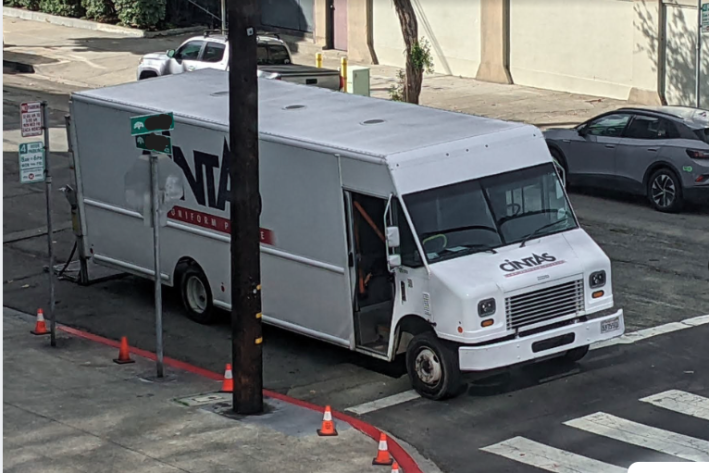
Oakland DOT was out painting a corner no-parking zone near my home last November. As I’ve written about, perhaps ad nauseam, paint alone doesn’t work. And sure enough, moments after the crew left, before the new red paint had even dried, the Cintas truck pictured below was parked in the daylighting zone.
Now imagine what happens when a little kid or even a slightly inattentive adult has the misfortune to cross in front of this truck while a driver is coming the other way? Drivers can’t even see the stop sign (not that they stop anyway).
Traffic Violence Rapid Response wrote about the recent death of a cyclist killed by a driver at 12th and Webster in Oakland and how Oakland streets lack daylighting. In the comments section, RichardC posted this, and I wanted to bring it to the attention of Streetsblog readers:
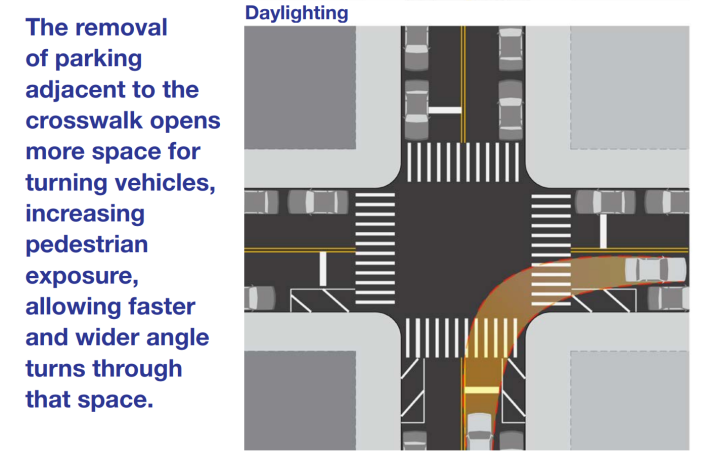
NYC did an analysis of daylighting and found it’s only effective when physical obstacles were placed in the daylighted space (which they term “hardened daylighting”). Just prohibiting parking didn’t improve safety at all, and in some cases made it worse. They hypothesize that’s because more open-feeling intersections encourage drivers to drive faster and make wider, faster turns.
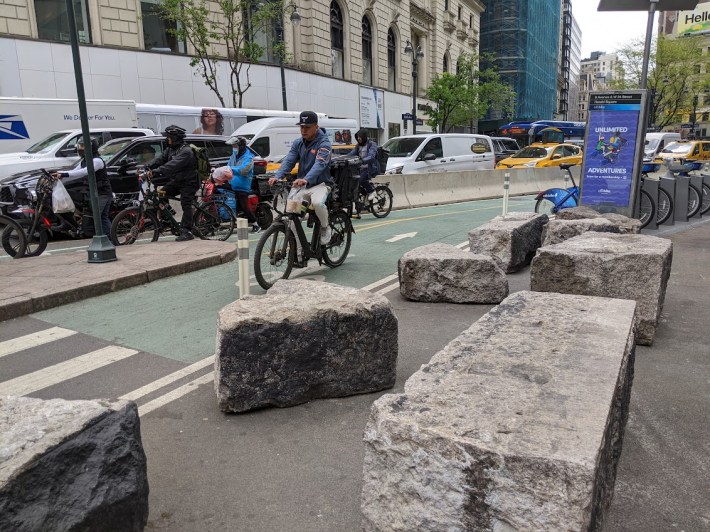
I knew New York City DOT, despite its problems, was doing much better than the Bay Area in reducing deaths and serious injuries. And I knew they use concrete prodigiously. But I had missed that they studied the effects of concrete-hardened daylighting specifically. From the intro to Daylighting and Street Safety: An Analysis:
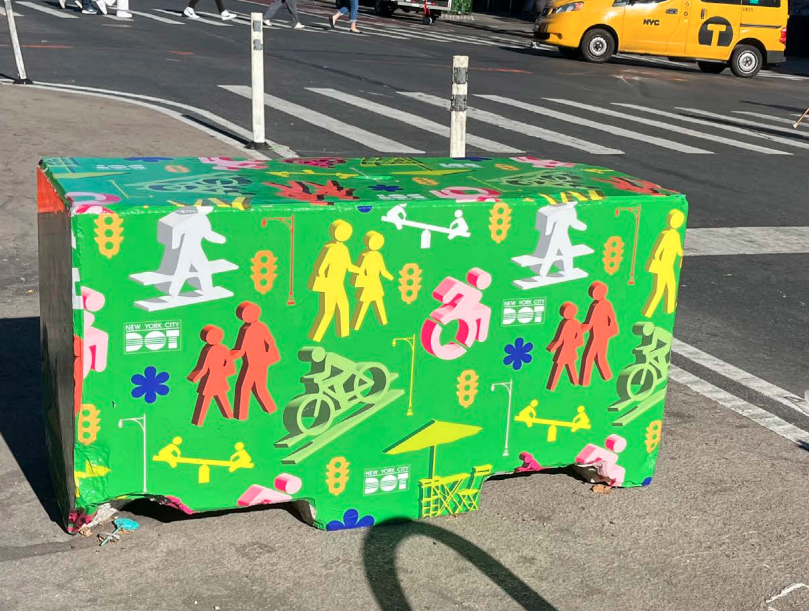
Daylighting is becoming increasingly popular in Vision Zero cities across the nation as a tool for increasing visibility and safety at intersections. In particular, New York City has been a leader in installing “hardened daylighting,” which installs a physical barrier, such as posts or granite blocks, to prevent vehicles from parking next to intersections. In 2024, DOT implemented hardened daylighting at nearly 300 locations.
And here’s what they found:
Hardened daylighting, or daylighting with physical infrastructure installed such as planters or safety bollards, had a statistically significant safety benefit with relation to pedestrian injuries, but was less effective than other street safety treatments.
- Locations where hardened daylighting treatments were installed had, on
average after installation, a pedestrian injury every 3.4 years. Without the treatment, DOT estimates a pedestrian injury would have occurred every 2.3 years.- Locations where neckdowns were installed had, on average after installation, a pedestrian injury every 4.7 years. Without the treatment, DOT estimates a pedestrian injury would have occurred every 1.4 years.
On average, daylighting with signs alone was not found to have a statistically significant safety benefit, but may be useful in certain cases when visibility is a particular concern
As noted by RichardC, the study authors also suggest that daylighting with just paint may actually make corners a little more dangerous, since it, in effect, widens the intersection and may inadvertently encourage drivers to take corners at faster speeds.
That part of the study, as our Streetsblog counterparts in New York point out, wasn’t well substantiated and was used by pro-parking politicians and the right-wing press to justify not daylighting at all. But the dispute about whether paint alone makes things better or worse is a red herring: what is clear is that hardened daylighting definitely works. But that requires concrete in the form of sidewalk extension bulb-outs (which are expensive) or cheap, fast alternatives such as planters or concrete blocks.
Hardened daylighting can use materials that are already on hand. Oakland DOT, for example, seems to have an unconstrained budget to put concrete blocks on streets to keep out encampments.
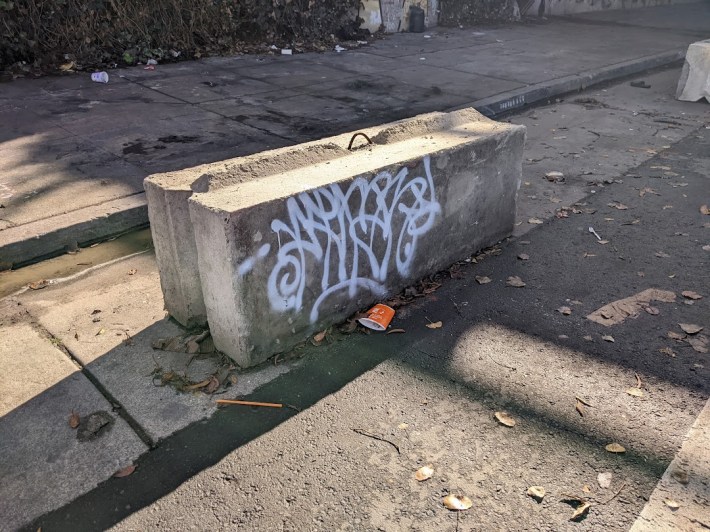
San Francisco even puts temporary concrete blocks down for events.
Please, DOTs, write this on the blackboard 1,000 times: use concrete or planters or something real to harden the daylighting zones and keep drivers out.
Otherwise, you’re just painting a red curb on a parking space for the next Cintas truck.

Streetsblog has migrated to a new comment system. New commenters can register directly in the comments section of any article. Returning commenters: your previous comments and display name have been preserved, but you'll need to reclaim your account by clicking "Forgot your password?" on the sign-in form, entering your email, and following the verification link to set a new password — this is required because passwords could not be carried over during the migration. For questions, contact tips@streetsblog.org.