Oakland Celebrates First Protected Intersection in Chinatown

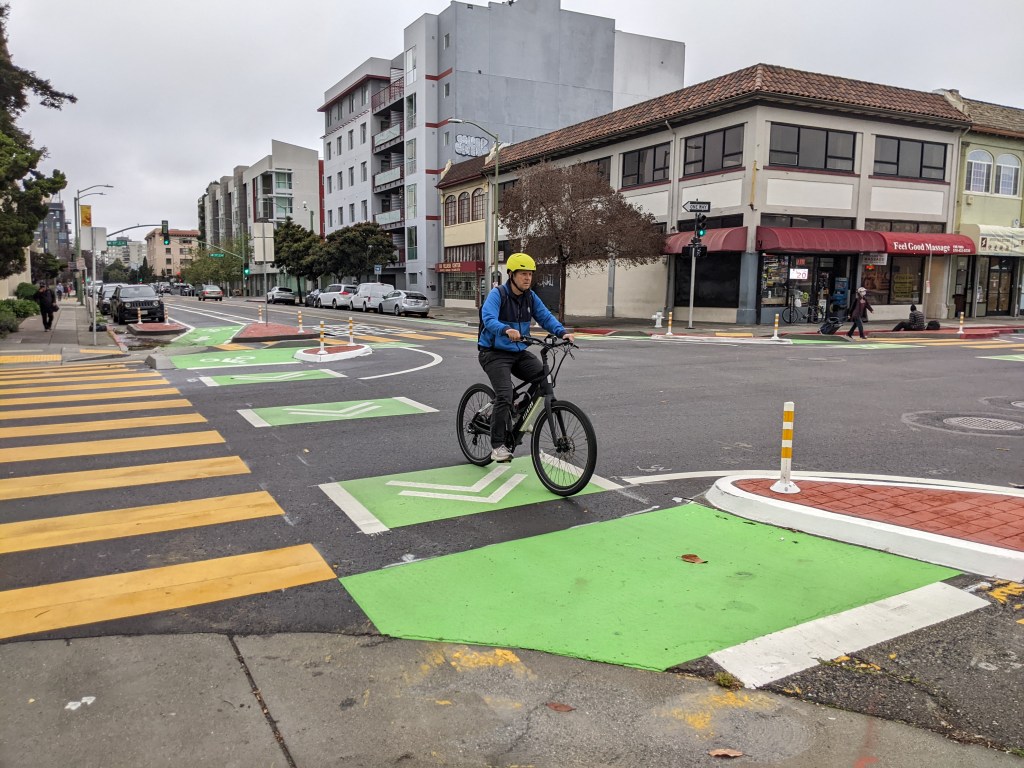
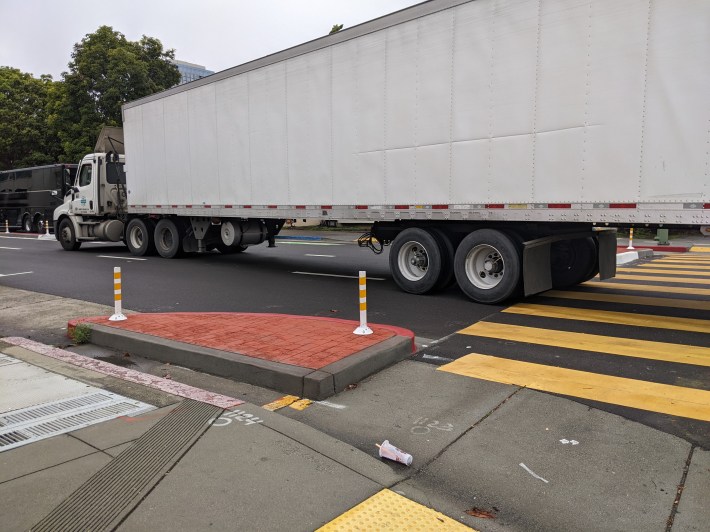
As if on cue, an 18-wheeler turned through the newly protected intersection of Jackson and 10th in Oakland’s Chinatown neighborhood just as a press event celebrating its completion kicked off.
Josh Rowen, Oakland Department of Transportation director, told Streetsblog it was evidence that his staff had correctly followed the required dimensions to accommodate all vehicles while also providing a safer intersection and drop-off adjacent to Lincoln Elementary. “My son is on the 2nd floor of Lincoln,” he said, pointing to the school building at Wednesday morning’s event. “So I benefit several times a day.”
The project, which Rowen estimated cost about $1 million, was funded as part of a $4 million grant from the Alameda County Transportation Commission Safe Routes to Schools program. “I’m really excited to see this come to fruition,” said District 2 City Councilmember Charlene Wang. “Traffic safety is public safety.”
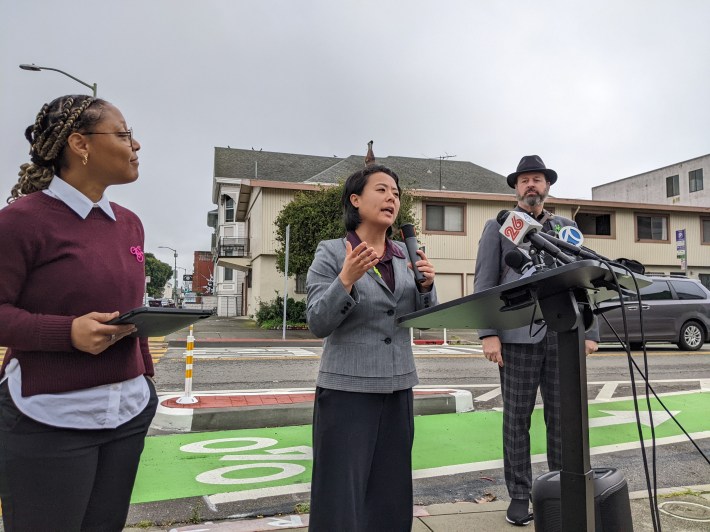
She pointed out that there have been 11 serious crashes in the area in the past five years. This protected intersection, school drop-off (and a block of protected bike lane) was part of an ongoing effort to address that.
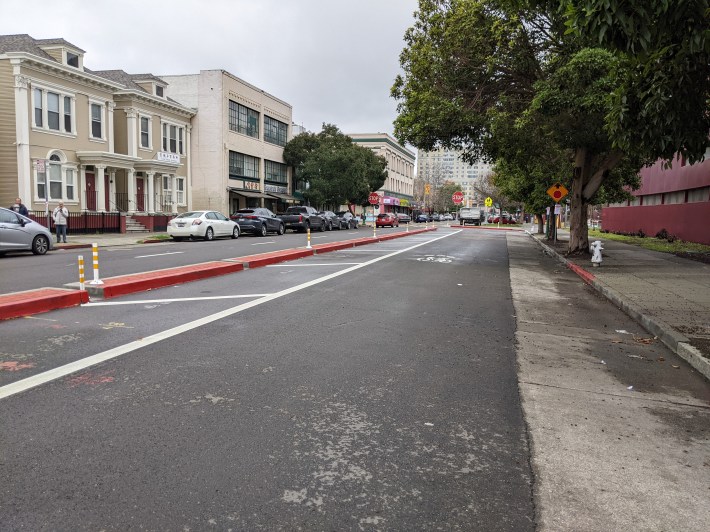
More from Oakland’s release about the new intersection:
The project repaved 10th St. between Madison St. and Webster St., delivering significant traffic calming and pedestrian safety upgrades. The improvements were coordinated in partnership with the Alameda County Transportation Commission Safe Routes to School program, which identifies and funds traffic safety improvements that support students and families who walk and bike to school.
Advocates, meanwhile, look at this as a toehold to getting protected infrastructure through Oakland’s Chinatown, which has been politically fraught when it comes to safer bike lanes.
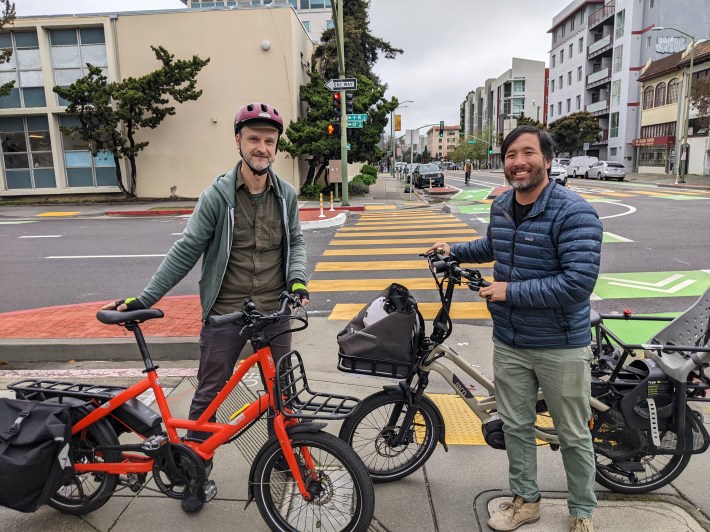
Bike East Bay’s Robert Prinz explained that his organization provides bike riding classes in Chinatown, sometimes in Cantonese, but that riders always ask, “Okay, but where can I ride?” Now, with the start of protected infrastructure that’s safe for all ages and abilities getting installed, it will be easier to answer that question. He hopes political support will grow to add more.
“This is valuable in what it can connect to.”
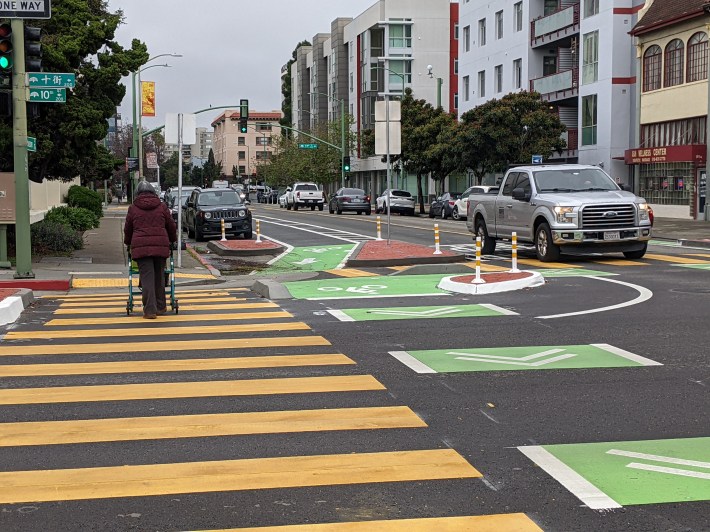
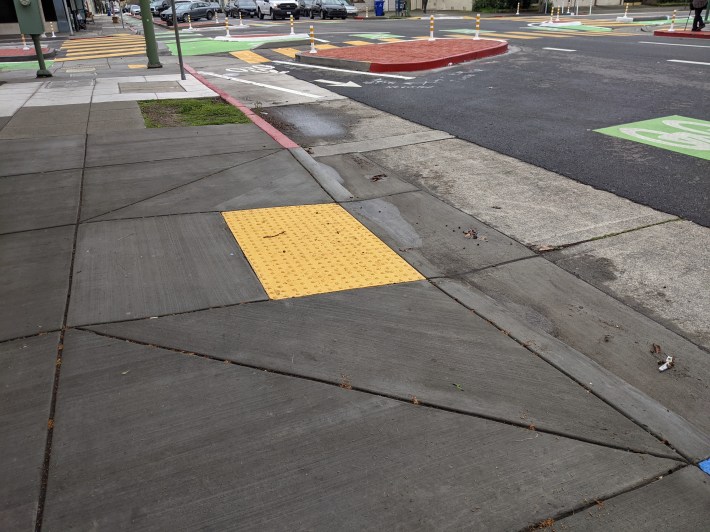
Prinz said he appreciated that the bike lanes were wide enough to accommodate cargo bikes and trailers. He also praised Oakland’s Department of Transportation for prioritizing accommodations for disabled people, including two wheelchair ramps at each corner and an additional one mid-block.
Streetsblog, meanwhile, pointed out one issue with the project: there are short curb sections between the bike space and the crosswalks to prevent drivers from parking in the intersection’s bikeways. However, while most of the new curbs were painted white, these sections are gray and hard to see at night, especially in rainy conditions. They could cause a cyclist to crash.
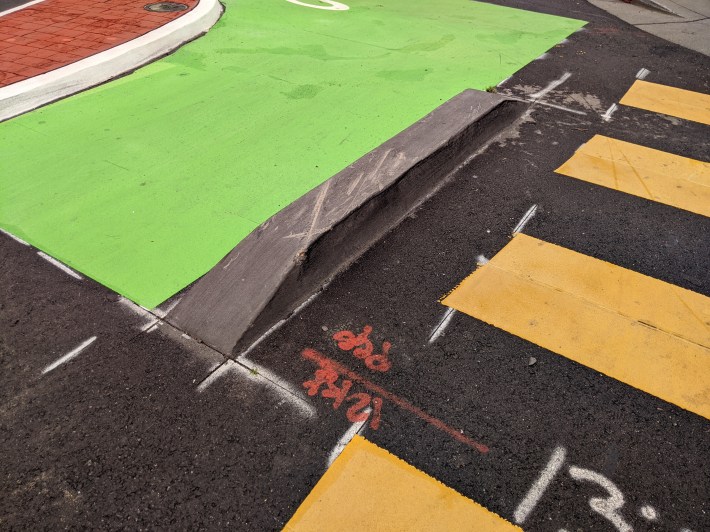
Apparently, this was an oversight, not a design choice. “They were supposed to be white,” Rowen told Streetsblog, who added that crews will return shortly to paint them.

Streetsblog has migrated to a new comment system. New commenters can register directly in the comments section of any article. Returning commenters: your previous comments and display name have been preserved, but you'll need to reclaim your account by clicking "Forgot your password?" on the sign-in form, entering your email, and following the verification link to set a new password — this is required because passwords could not be carried over during the migration. For questions, contact tips@streetsblog.org.