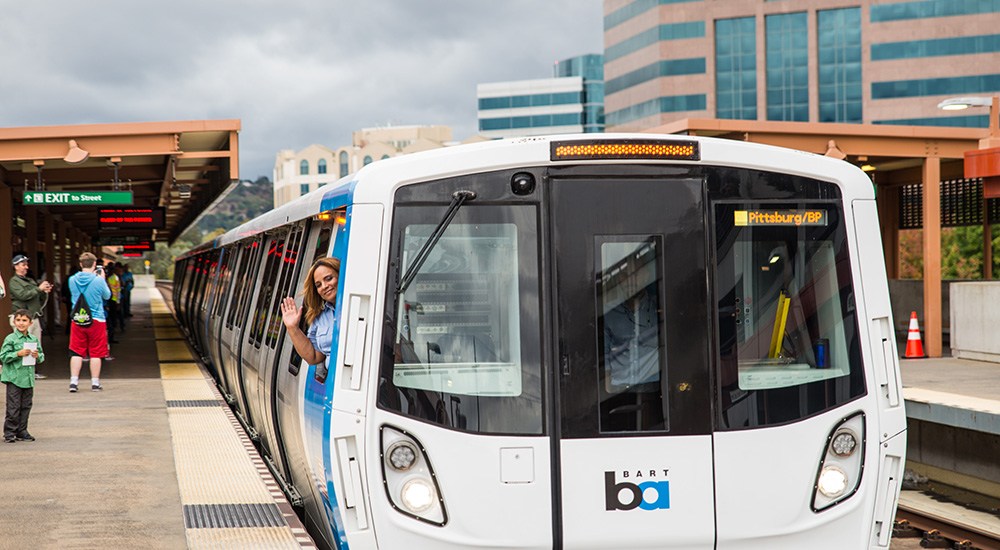
As Bike Cars Overflow, Caltrain Bans Large Bikes and Panniers

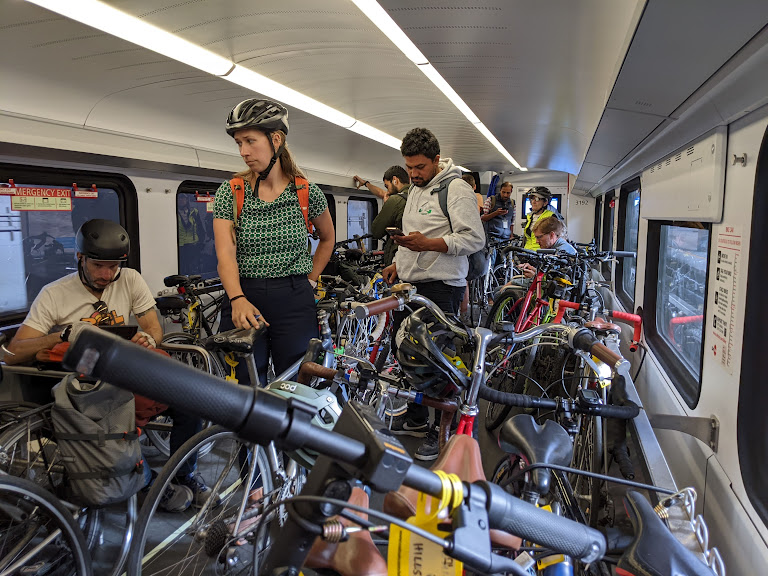
Advocates were outraged to learn this week that Caltrain will start banning cargo bikes and any bike that doesn’t conform to the railroad’s required dimensions.
“Caltrain’s bike cars are designed to carry 36 bikes safely and efficiently (four bikes per rack),” states the Caltrain bike rules page. “Oversized bikes are not allowed onboard to maximize the number of riders with bikes on board.”
While that sounds reasonable, the specifics include bikes that few cyclists would define as “oversized.”
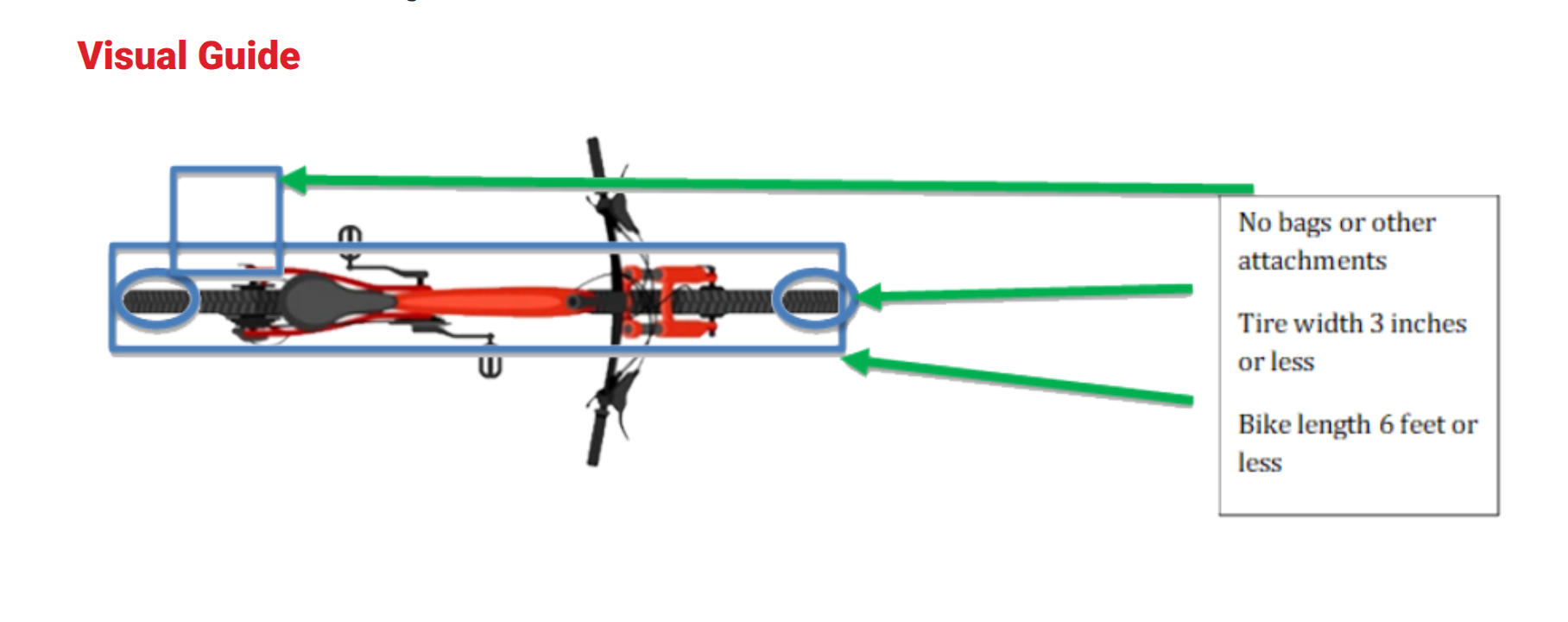
Also from the new Caltrain bike rules: [emphasis added]
What Makes a Bike Oversized?
Some bikes take up more space than the racks are designed for, including:
• Wide or extra‑fat tires (more than 3 inches wide)
• Extra‑long frames or wheelbases (a bike cannot be longer than 6 feet)
• Cargo bikes, longtails, and extended e‑bikes
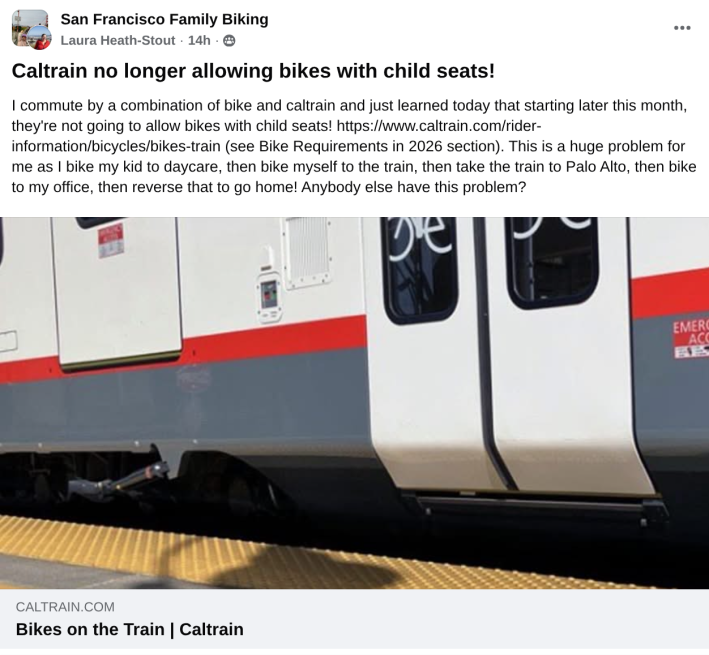
• Attachments such as baskets, panniers, child seats, or trailers
As one cyclist who uses Caltrain put it on Facebook: “wtf? and no panniers?? It’s a commuter train.”
It also means that many families with small children will be unable to use Caltrain if their trips require a bike.
“As with the ever-bloating size of cars on our streets, due to a similar trend of increasingly oversized/overweight e-motos, e-bikes, and maybe a few larger/wider ‘acoustic’ bikes and their attachments being brought aboard, there were increasing complaints/issues raised by crews and/or other bike car users about their disproportionate use of rack space & longer boarding times,” wrote Adrian Brandt, a Peninsula rail advocate and a San Mateo County representative on the Caltrain Citizens Advisory Committee (CAC), in an email to Streetsblog. “So staff advised the Bicycle and Active Transportation Advisory Committee and the CAC that they were working on a revised or tightened bike carriage policy to address the issue.” They didn’t provide the details, however, said Brandt.
“While crowded bike trains have been an issue as Caltrain has increased its ridership, the core problem is that they haven’t allotted enough space on their updated fleet of trains to accommodate an appropriate volume of people riding bikes,” wrote the San Francisco Bicycle Coalition’s Christopher White. “Many cargo bikes are under six feet in length, so inconsistently banning cargo bikes even if they’d fit within the limits is confusing and will cause riders to unnecessarily avoid Caltrain.”
“An outright ban on family bikes is too extreme. While commute period trains can get crowded, mid-day and weekend trains are not,” wrote Shirley Johnson, who helped found the advocacy group BIKES ONBoard. “Instead of a ban, it would be better to ask people with larger bicycles to use their discretion and travel off-peak whenever possible. Caltrain needs to remember that every passenger with a bicycle is a paying customer.”
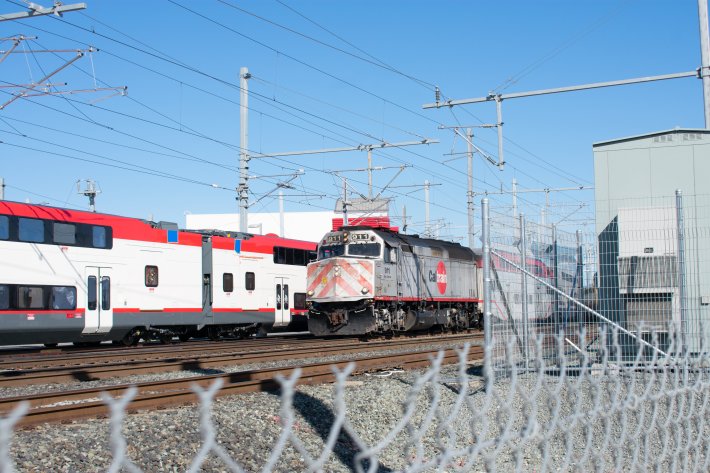
Johnson, along with White and others, stressed that Caltrain itself is responsible for the overcrowding these new rules are trying to address. Back in pre-COVID 2019, bicycle advocates begged Caltrain to have three bike cars per electric train (instead of two).
“As was long-known/established, with the new electric trains’ bike space dropped 10 percent from 40 per bike car on the old/retired gallery cars to 36 per bike car (or from 80 down to 72 per train),” said Brandt.
“Today, we see riders with bikes turned away because the cars are at capacity. Now, they are trying to address that with more restrictive rules on what types of bikes are allowed on board,” wrote the Silicon Valley Bicycle Coalition’s Amy Thomson. “Banning large bikes is likely to shift bike + transit trips to a car, which we absolutely cannot sustain or afford as a region. More than 20 percent of Caltrain riders arrive or leave the station by bike.”
Streetsblog reached out to Caltrain and will update this post.
Caltrain’s response, March 6: Caltrain is proud to carry more bikes on board than any other heavy rail system in the United States and wants all bike-riding passengers to feel comfortable using Caltrain. In response to concerns from cyclists regarding oversized bikes Caltrain introduced an update to its oversized bike policy at the November Bicycle and Active Transportation Advisory Committee (BATAC) meeting and will hold a detailed policy discussion at the upcoming BATAC meeting on March 19 as we work to finalize the policy. We welcome feedback from the riding public and encourage riders to share their perspectives on how we can best support bicycle access on Caltrain. If you are unable to attend, comments may be submitted via email at BATAC@samtrans.com

Streetsblog has migrated to a new comment system. New commenters can register directly in the comments section of any article. Returning commenters: your previous comments and display name have been preserved, but you'll need to reclaim your account by clicking "Forgot your password?" on the sign-in form, entering your email, and following the verification link to set a new password — this is required because passwords could not be carried over during the migration. For questions, contact tips@streetsblog.org.