Who Will be Left Behind if the Bus Stops Running?
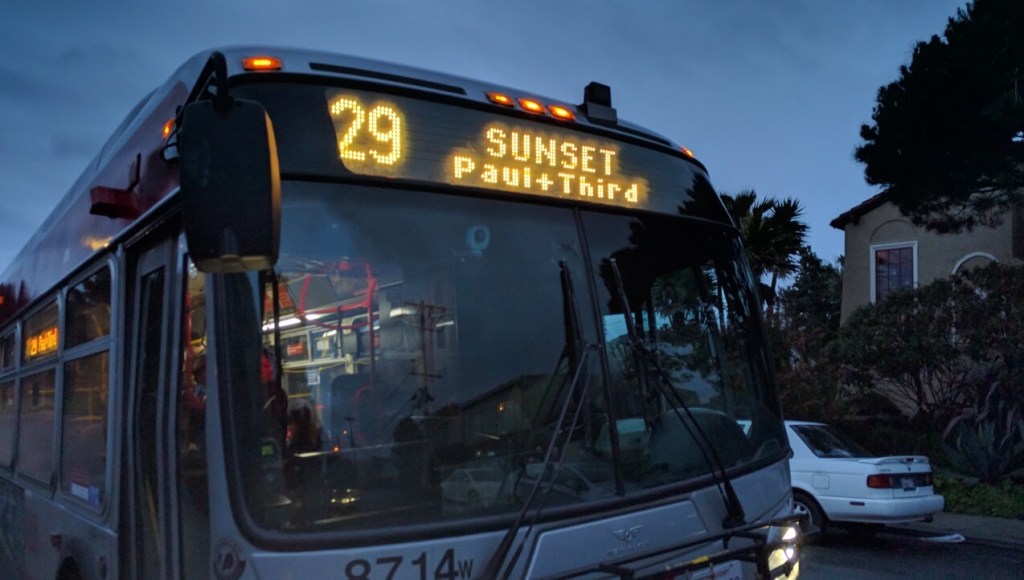
Growing up in San Francisco, the 48 Quintara was my lifeline. It got me across the city to school in the Sunset, to hang out with friends in West Portal, and then back to the Mission for soccer practice.
Whether I sat up front with the seniors and their grocery carts or was crammed in the back, wishing someone would crack the window, 35 cents got me wherever I wanted to go, surrounded by a microcosm of San Francisco’s wonderful people and cultures.
My son is two years old now, and the 29 Sunset is his lifeline. We take it to daycare, the playground, to the pediatrician, and to see his grandparents on the other side of the city. But if the Bay Area fails to pass the two transit measures on the ballot this November, his lifeline will go away.
RTM, the Regional Transit Measure, will add a half-percent sales tax in Alameda, Contra Costa, Santa Clara, and San Mateo Counties and a 1-percent tax in San Francisco. For transit agencies facing a downward spiral of insufficient funding, RTM is a critical lifeline. BART could close up to 15 stations and cut service by 70 percent. Caltrain would run one train per hour, and Muni could cut one-third of their service. In San Francisco, Measure H also needs to pass to prevent further Muni cuts that could eliminate up to 20 routes, double wait times, and end regular nighttime services.
My organization, Transform, works with low-income communities throughout the Bay Area, providing ‘Know-how-to-go’ travel trainings and signing folks up for transit benefits programs to help them get around easily and affordably. When we ask the people we serve what would happen if their bus line was cut, the answers are harrowing:
“I wouldn’t be able to get my shopping necessities.”
“Seeing a doctor would be difficult.”
“I don’t know…it’s necessary for survival.”
Public transit is essential for everyone in the Bay Area, but it is a lifeline for our most vulnerable residents. According to the Metropolitan Transportation Commission’s Snapshot Survey, 44 percent of transit riders have a household income under $50,000 a year. For two-thirds of all transit trips, the bus or train is the only way they can get around.
The cost of living in the Bay Area is so high; it’s tough to ask residents to pay new taxes. But the cost of losing transit is much higher. A new SPUR report found that families would pay $3,280 more per year in transportation costs if the Regional Transit Measure fails. For the 30 percent of households that don’t own a car, that cost could skyrocket as high as $20,000. Failing to pass the Regional Transit Measure would also drive up housing costs. To meet our growing housing need, we need to build 441,176 new units by 2031, including 180,000 units at 30-80 percent below market-rate.
California has recently passed numerous laws encouraging housing development near transit for middle- and low-income residents. These include exemptions and streamlined approvals, waiving minimum parking requirements to lower building costs, and loosening zoning restrictions for affordable housing. If the regional measure fails and transit service gets cut, these landmark housing laws will be significantly weakened or rendered ineffective, further increasing the cost of living as housing and transportation costs spike.
That’s why Transform and our partners have spent almost a decade building a strong coalition of housing, labor, and community organizations to bring the Regional Transit Measure to the ballot. We know transit is often the fastest and most cost-effective way to get where you need to go, and that the Bay Area’s economy, housing, and climate goals depend on it. Public transit is a lifeline for many, but it is also a joy for all. I cherish the smiles when my toddler shimmies up onto an open seat, the honks from friendly bus drivers as we depart, and the sense of belonging that riding the bus brings in our increasingly polarized world. I want a future where my son can enjoy all the people, cultures, and opportunities the Bay Area has to offer. I want him to grow up in a place with enough housing so everyone can afford a home. I want transit to be the lifeline for him that it was for me.
Please vote yes on Measure RTM and Measure H this November.
***
Zack Deutsch-Gross is the Executive Director of Transform, a Bay Area nonprofit that works to reshape housing and transportation decision-making around equity, climate, and community. He lives in Ingleside with his wife and two-year-old son.
Streetsblog has migrated to a new comment system. New commenters can register directly in the comments section of any article. Returning commenters: your previous comments and display name have been preserved, but you'll need to reclaim your account by clicking "Forgot your password?" on the sign-in form, entering your email, and following the verification link to set a new password — this is required because passwords could not be carried over during the migration. For questions, contact tips@streetsblog.org.