Eyes on the Street: Shrinking the Gap Between Fruitvale BART and the Cross-Alameda Trail

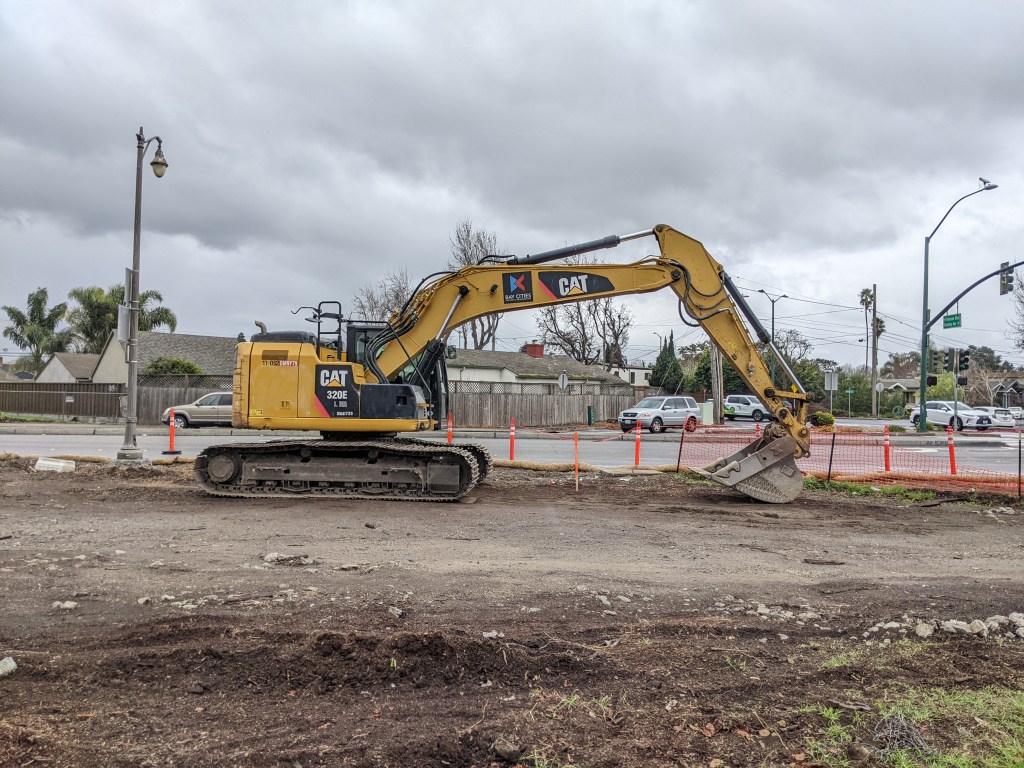
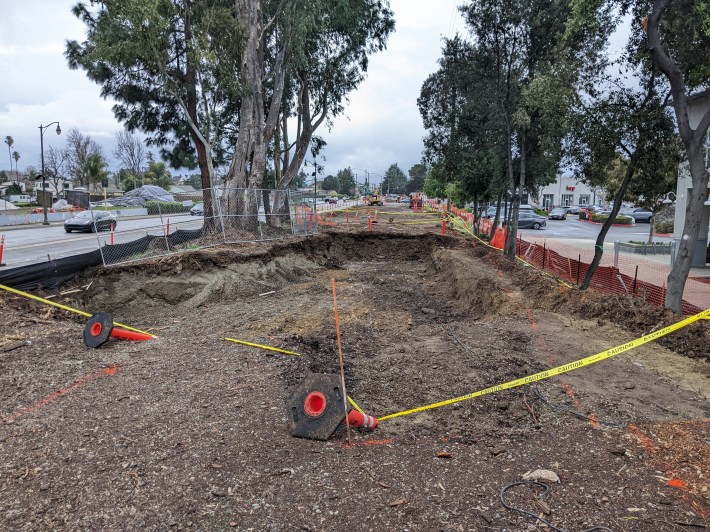
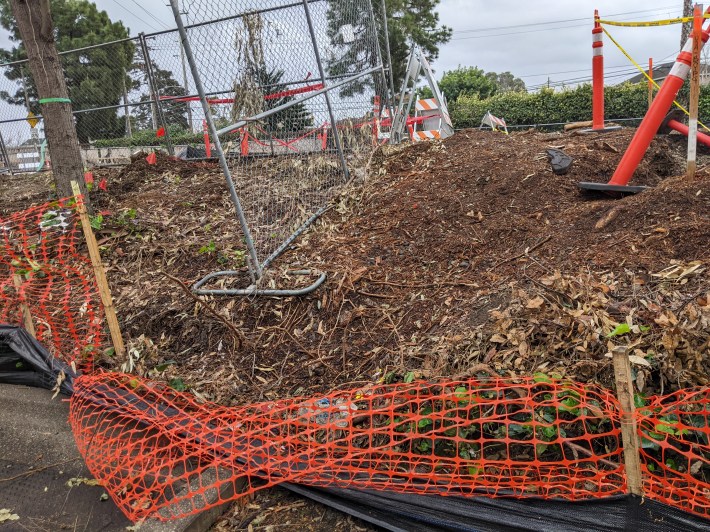
Work is underway in Eastern Alameda to construct a roundabout at Tilden Way/Blanding Avenue/Fernside Boulevard. Part of the project will also provide a safe, off-street connection between the four-mile cross-Alameda trail and the Fruitvale Bridge.
“The construction you are seeing is in preparation for bike/ped safety, a roundabout, and a new dog park,” wrote Alameda’s Sarah Henry, in an email to Streetsblog. “The project does not change the bike/ped path on the bridge itself, but the lead up to the bridge will include significant safety improvements.”
Previously, the area was part of a disused railway to the defunct lift bridge across the estuary channel; that bridge is next to the Fruitvale Avenue/Miller Sweeney car-and-pedestrian drawbridge. For people not familiar with the area, the railway bridge is stuck in the raised position.
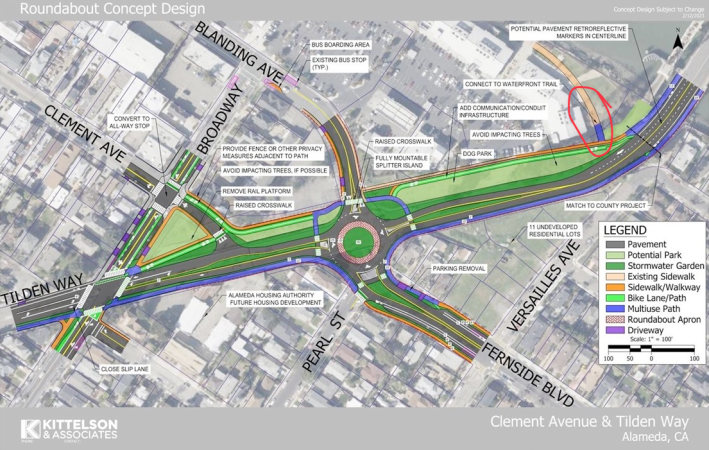
These new pathways, when finished in August or Mid-September 2026, will provide a comfortable route for cyclists all the way from the Alameda Seaplane Ferry Terminal to the channel. On the other side of the bridge, cyclists can use the sidewalk-level bike lanes to connect to the Jingletown neighborhood, Fruitvale BART, and points north.
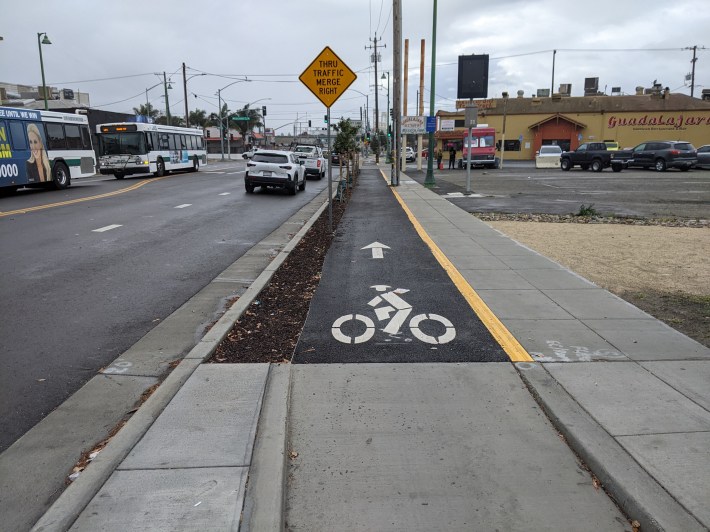
But there will remain that aforementioned gap: the Fruitvale Avenue/Miller Sweeney bridge itself.
From Alameda’s project page:
The long term recommendation by the City of Alameda is to have separated biking and walking facilities across the Estuary, connecting the Cross Alameda Trail with Oakland’s Fruitvale Avenue sidewalks and separated bike lanes. In the interim, the Alameda County Public Works Department, which owns the bridge, is considering adding bicycle lanes to the bridge (date TBD), and the City of Alameda continues to advocate for filling this critical gap.
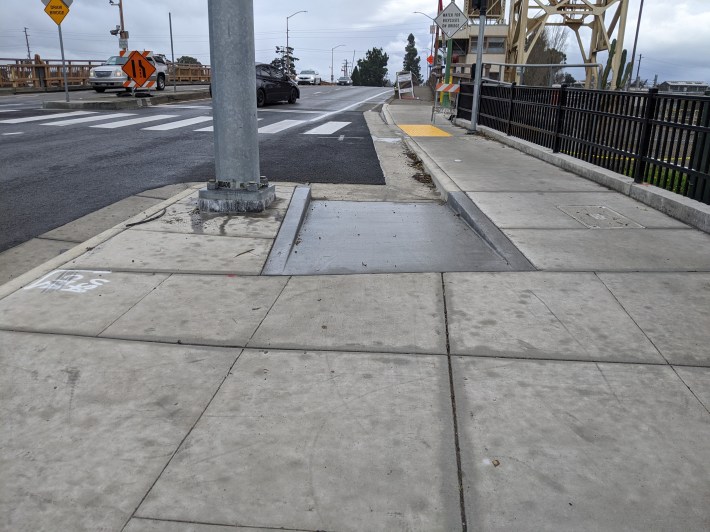
From Streetsblog’s view, don’t even bother adding painted bike lanes on the bridge (although it appears the city has already started painting them, going by the above photo). That’s a non-solution on a four-lane bridge with such fast-moving traffic. Anyone with a sense of self-preservation uses the sidewalks anyway. The obvious answer is to road diet the bridge and provide concrete protected lanes.
As to the existing sidewalk paths, Bike East Bay’s Robert Prinz explained that banning cyclists from sharing them is due to a technical restriction about the height of the railing. “They should raise the fence between the sidewalks and the road surface on the bridge to conform to regulations about where a cyclist can ride.” Raising the railing slightly and putting up signs reminding cyclists to yield to pedestrians seems like an appropriate, short-term solution to closing this gap (especially since it’s what bicyclists are forced to do anyway).
More pics below:

Streetsblog has migrated to a new comment system. New commenters can register directly in the comments section of any article. Returning commenters: your previous comments and display name have been preserved, but you'll need to reclaim your account by clicking "Forgot your password?" on the sign-in form, entering your email, and following the verification link to set a new password — this is required because passwords could not be carried over during the migration. For questions, contact tips@streetsblog.org.