Q&A with Senator Scott Wiener

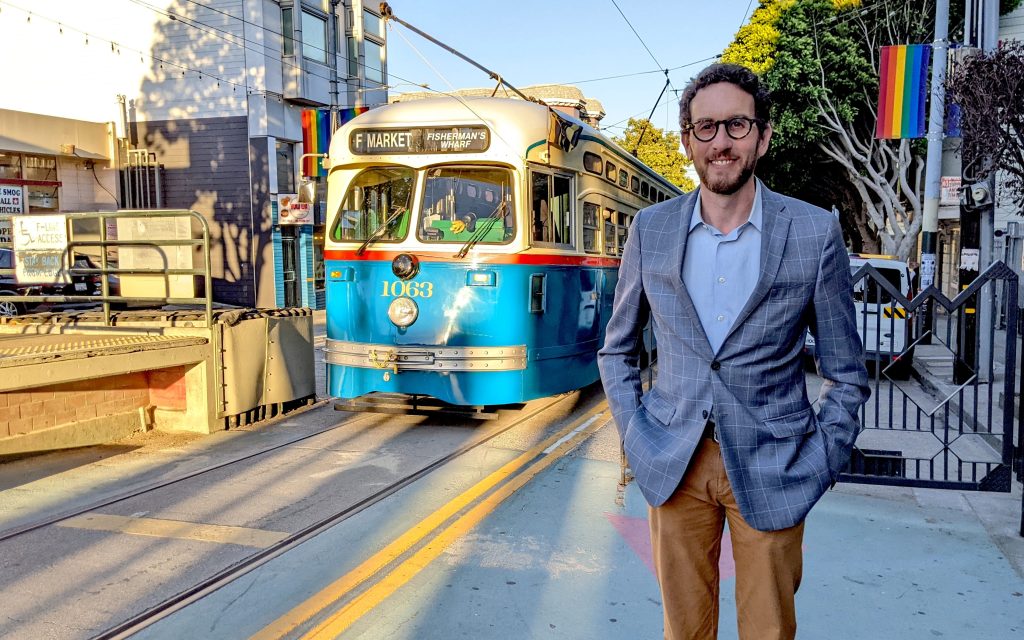
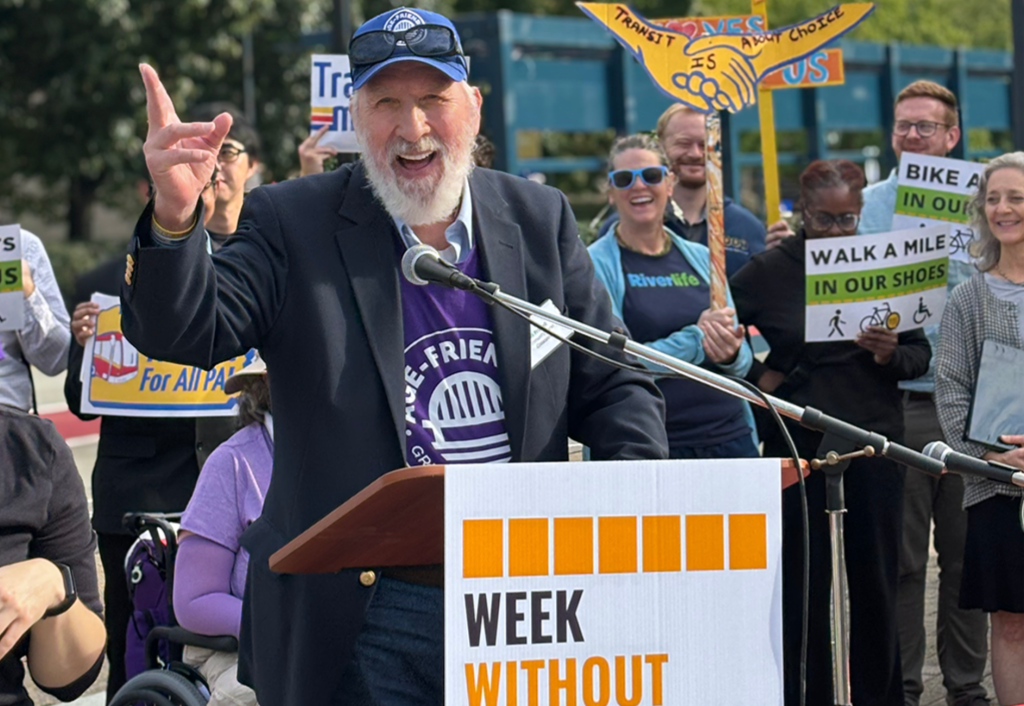
It was a year ago that Nancy Pelosi announced her retirement from Congress. Now, the remaining candidates, District 11 State Senator Scott Wiener and District 1 Supervisor Connie Chan, are duking it out to replace her. Streetsblog reached out to both candidates to talk about transportation funding, housing, and other issues near and dear to the livable streets community. Here is our Q&A with Wiener, whose staff scheduled a sit-down at a coffee shop in the Castro. Streetsblog started with a question about a year Wiener spent in Chile and how it informed his views today.
Scott Wiener: It was right after college. I was on a Fulbright Scholarship. I was there during the transition from the Pinochet government to democracy. It was a fascinating time. There were a lot of people there who were still pro-Pinochet. He was terrible, but there were people who liked the retirement system he set up. I also got to know a lot of people who hated Pinochet. But it was a really fascinating time to be there as democracy was being reborn. There was very high poverty. When I would visit in subsequent years, the economy was getting better and poverty was starting to be alleviated.
Streetsblog: I know there are probably lessons in this about what’s going on in the U.S. today, and we’ll get to that, but since we’re an urbanist blog, what was the transportation like in Santiago?
SW: I lived in a neighborhood that was outside of downtown, so I would take these “micros” buses.
SB: Micro what?
SW: These jalopy buses. They were not the safest to ride.
SB: That was it for Santiago transit?
SW: I think there was only one subway line. I didn’t live anywhere near it. I went back a few times in the 1990s. And then I didn’t go until 2018. Now they have six subway lines, including a stop that is two blocks from where I used to live. I could have really used that when I lived there.
SB: Kind of puts the Central Subway in perspective. And not in a good way.
SW: They really stepped it up and built subways like crazy over there to cover a big swath of the city.
SB: So what does that say about our inability to build like that?
SW: It says you put your mind to it, you can do it. We need that “can do” attitude again. We have lost that in our country. We look for reasons why things can’t be done. It’s described in a book I like, Why Nothing Works by Marc J. Dunkelman.
SB: Speaking of which, I remember a study by one of the managers of California high-speed rail who concluded that the problem with the state’s rail modernization project is that we create these agencies to build projects but then don’t give them the power to do it.
SW: We are building it. But if we’re going to deliver big projects, we need to deal with eminent domain. Not in a way that’s reckless or unfair, but we need a system where once we decide we’re doing something, we fund it, and make it clear it needs to happen. We have to stop the vetocracy, where every town, city, county, utility can sabotage a project. We need to stop doing that because it’s harming our society.
SB: I remember, years ago, you talking about how the Central Subway should not get completed without another subway project already in motion.
SW: I wrote an essay that went viral in 2015, called “We should always have a subway under construction”.
SB: Unfortunately, that didn’t happen.
SW: We still haven’t even expanded the Central Subway to North Beach, even though the tunnel is bored. And then there’s the extension of the M. But it will take major mayoral leadership to make those happen and major regional and federal support.
SB: We’ll talk about state support. Obviously, federal support isn’t happening for a while. What about city support?
SW: Mayor Lurie has been great on transit. When he came into office, I didn’t know what his view was; I was a little nervous because we were doing all this work around the regional transit measure (RTM).
SB: Which is polling well, thankfully, fingers crossed. I know I’ve seen Mayor Lurie at several rallies speaking strongly in support of RTM and Prop. H, the Muni measure.
SW: He came in and made it clear he deeply understood that without strong transit, there is no economic recovery for downtown or anywhere. I’m glad he went to the mat for Prop H and RTM. He’s been great to work with on transit issues.
SB: And housing. When do you think we’ll start to see a real impact from some of your housing legislation, such as S.B. 79, which facilitates density near transit?
SW: I think we’re already seeing significant changes in land use; permitting is getting done faster for many kinds of projects now. 79 went into effect July 1. I think it will have a real impact.
SB: And Lurie’s been complimenting your legislative work with his Family Zoning plan. He’s not so great on bike lanes, though. Speaking of not-always-helpful politicians, I know you are frustrated by the on-again-off-again support for transit funding from the Governor.
SW: I think that the self-help with RTM and Prop. H is critically important, but it is also true that the State of California does not do nearly enough for transit. We worked really hard at getting emergency funds and getting capital investment.
SB: And then when they do come through with one hand, they take it away with the other–thinking of the California Air Resources Board (CARB) reformulations that took money right back from transit and housing.
SW: It’s one of my greatest frustrations in the capital is that we have this fight every year just to get basic funding for transit. Yes, this year we had CARB’s actions and the governor’s budget and we got some of the funds restored but not all.
SB: But there’s always funding for highways. Caltrans is widening a highway right near where I live. It’s maddening.
SW: Transit matters enormously in the Bay Area. It matters more and more in LA. And it matters in other parts of the state. But I will say when you compare California to other big blue states, they’re taking transit more seriously.
SB: It feels like Newsom just doesn’t get it when it comes to transit.
SW: I’m aligned with the governor on many, many things, but yes, I don’t think transit funding has been a top priority. I just want both the legislature and the governor to truly prioritize funding for transit. I don’t know where Xavier Becerra stands.
SB: Well, we know where the federal government stands right now, and it’s pretty bad. Assuming you win, how are you going to bring your advocacy to D.C.?
SW: In terms of the federal government, it’s going to be a high priority to work with other members and to try and grow the federal pie for transit, to increase investment in capital, and also try to do more for operations. It’s so important as we invest more federal dollars in capital, but we need to tie that money to efficient project delivery, and also we should be prioritizing projects that are complemented by good land use.
SB: I want to hear more about that, but I’m wondering how you really work with this federal government. Secretary Sean Duffy called bike lanes DEI. That’s so stupid; I can’t even wrap my head around it. How did transit, HSR, bike lanes, all become part of these crazy culture wars? I mean, does Duffy really hate bike lanes?
SW: I don’t know that he does, but there’s a major neanderthal contingent in the MAGA movement. It’s like red meat to their base to declare things DEI, and “socialist” and “communist” and all of that. They take these ridiculously extreme positions to score points with their base, as they’re driving up prices because of this destructive and illegal war in Iran.
SB: So how do you work with these guys? Is it even possible?
SW: The first two years are going to be tumultuous. We’re still going to have this horrible administration. There’s going to be a lot of triage. We have to reverse medicare cuts, to use every ounce of leverage we have so we’re not cratering our healthcare system. We’ll use the leverage we can. The “Road to Housing” Act was bipartisan, and that passed almost unanimously in both houses. There are areas where you might be able to make bipartisan progress. And then we have to get them out of the White House and really start all of the important work we need to do.
SB: Sounds as if you’re optimistic about this upcoming election at least.
SW: I think Democrats take back both houses. The House margin will be smaller than it should be because of all the racial gerrymanders in the South, but the polling in the U.S. Senate races is good. We’re winning in Kansas and Ohio; the Republicans’ Senatorial committee has withdrawn from North Carolina. It looks as if James Talarico is doing really well in Texas. My prediction is we get both houses.
SB: And what if Speaker Johnson refuses to seat democrats?
SW: Johnson could refuse to seat in close races. The question is, is there a handful of Republicans who would refuse to go along with that? It would go down in history as an absolute coup. It would result in immediate litigation. We have to be very prepared for Johnson trying to steal the election. If we let them get away with that, it will truly be the end of democracy.
SB: Well, I hope the Democrats have truly gamed that out and are prepared to act. On a much lighter note, I was out at the ribbon cutting for the Shipwreck Cove playground. Have you been there and what do you think? Do you see Prop. G failing badly and what does that say about San Francisco’s desire for more car-free space?
SW: I missed the opening. Car politics are always intense in SF. I arrived in 1997 in time for multiple Central Freeway ballot measures. The Embarcadero had been settled before I got here. Look at the JFK Promenade, which was a 50-year fight, and now it’s wildly popular.
SB: So Sunset Dunes is just an extension of the larger fight.
SW: (Nodding) Sunset Dunes was a hard-fought fight. Now people see it’s a wonderful space. People really want the physical changes to make it even better. But you can’t take anything for granted. Proponents of Prop G have a big mountain to climb, trying to take away a popular park. I’m cautiously optimistic we’re going to beat it. I hope it’s by a significant margin so we can move forward.
SB: Let’s hope so. What’s next on your busy schedule?
SW: A Muni event in Cole Valley.
SB: Apropos. Have fun and thanks for your time.
***
This interview was edited for length and clarity.

Streetsblog has migrated to a new comment system. New commenters can register directly in the comments section of any article. Returning commenters: your previous comments and display name have been preserved, but you'll need to reclaim your account by clicking "Forgot your password?" on the sign-in form, entering your email, and following the verification link to set a new password — this is required because passwords could not be carried over during the migration. For questions, contact tips@streetsblog.org.