Q&A with Former Supervisor Joel Engardio

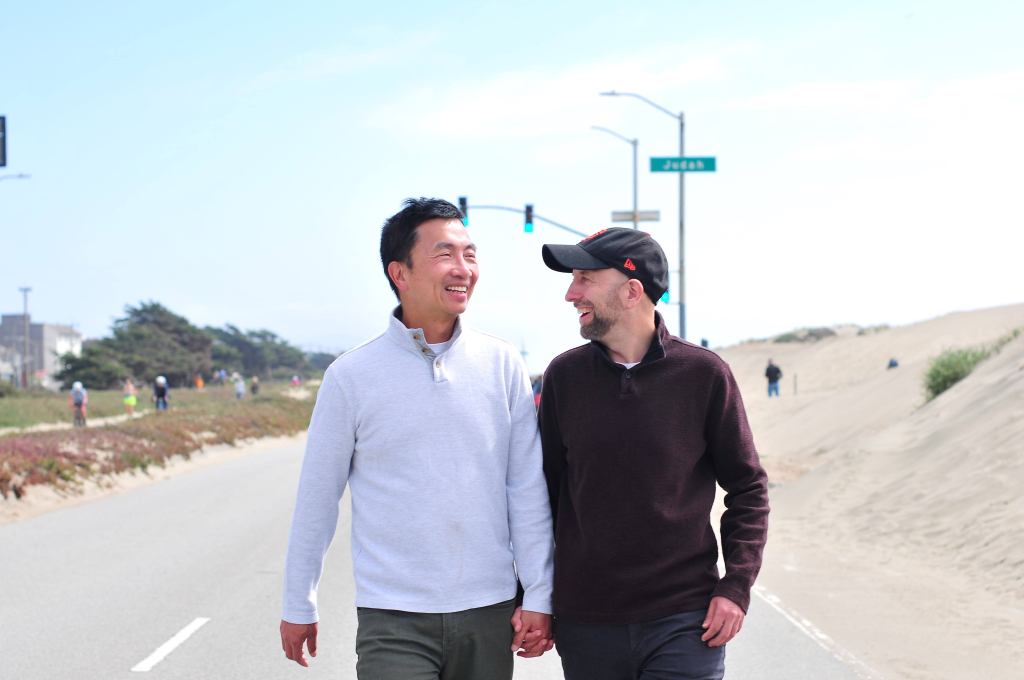
Supervisor Joel Engardio, recalled for his support of Sunset Dunes, asked Streetsblog for a sit-down. We spoke with him about his experiences supporting more housing, open-streets events, and a San Francisco that looks to the future. Here is that interview:
Streetsblog: How are you doing? I know any political loss can be devastating. I’d imagine a recall, especially so. Do you have any regrets about supporting Sunset Dunes?
Joel Engardio: I’m confident that I was on the right side of the issue. I’ve gotten a number of notes and comments from well-wishers who tell me they’re sorry about what happened. That makes me feel good. Whenever I go for a walk with my husband on Sunset Dunes, we can’t walk more than ten feet without being stopped by well-wishers. More people stop. A group forms. It’s wonderful to see all the diverse people using the park. It is benefiting so many people’s physical health, mental health, not to mention the businesses that are seeing an increase in sales. Sunset Dunes only provides positive benefits, and it’s more apparent every month that goes by. Politicians come and go, but we really did something good for society that will endure the test of time.
SB: You talk about the positive benefits of the park. But of course, the recall petitioners insist it caused traffic jams.
JE: People are still railing against that boogie man. It doesn’t exist. The road’s been closed to traffic for eight months. Traffic carmageddon never came and it’s not coming. There’s minimal traffic impact according to multiple studies. SFMTA’s data shows that. The Chronicle‘s independent analysis shows that. What traffic has come can be managed. Chain of Lakes Drive has always been backed up with traffic, but we’ve done a lot to reconfigure the roads to go around the park instead of cutting through it.
SB: What about people who claim the traffic was diverted to the avenues?
JE: Because the streets have been closed for years off and on, MTA has years and years of data. They go down Sunset Boulevard, which is still under capacity. While the mainstream media only talks about how “the Great Highway is closed,” it’s important to remember that there are three parts. The southern part is falling into the ocean and the northern section remains open, connecting the Sunset and the Richmond. Sunset Dunes is just the middle section. The road lost its greatest utility as a connection to Daly City, south of Sloat, a long time ago. We’ve never thought about closing the northern part, and that is still open. It’s just the middle part. But the mainstream media, when they reference Prop K, it’s always framed in a negative, as in “Prop. K closed the Great Highway to traffic.” The most factual way to say it is Prop. K formed an ocean-side park and kept sections of the Great Highway open to traffic.
SB: Well, we don’t do that. But yes, that is the framing in the mainstream media. Can you talk about the night markets, your other great accomplishment in using streets for something other than driving?
JE: I’m really proud of the night markets that we created with community partners. We proved what was possible. If you go back two or three years, people were saying it’s not possible; they said nobody will show up in the cold, foggy Sunset. And now there are night markets all over the city.
SB: So streets aren’t only for cars?
JE: It goes to show what’s possible if we re-imagine our streets also as places for people to gather together. It was also good for public safety because it activated the street. It was definitely right for local businesses. It was great for morale because people were hungry not just for good food, but for a community experience. And we did all that just by closing a road for a few hours to cars. It’s just wonderful to see how we can continue to re-imagine all of our urban spaces to create our best city.
SB: How do you feel about recalls generally and how has your view changed? Do we need recall reform?
JE: I’m the last person to say “nobody should be recalled,” given that I supported recalls in the past.
SB: The school board.
JE: Recalls have been part of the California ethos for more than a century. But the school board recalls had broad, citywide support across the spectrum from moderate to progressive. We should certainly look at what we can do locally to create a threshold for a recall so it’s not so easy. But in my recall, as an individual supervisor, I did not have the power to create a park or close a road, what I did is join four other supervisors to put a question on the ballot, so people could choose what to do with their coast. I was recalled for supporting democracy.
SB: It’s crazy to think, but a citywide vote on the future of Great Highway is exactly what the opponents of Sunset Dunes said they wanted.
JE: That got lost in the media coverage, but yes, it’s such an irony that the folks who are screaming about “how come the whole city is voting for something in the Sunset” put it before a citywide vote back in 2022.
SB: Prop. I, which would have reopened it to cars 24/7.
JE: Prop. K was just following the precedent and getting clarity about what to do with the space.
SB: The other thing they continually claim is that you didn’t make it clear where you stood on the issue, which is complete nonsense.
JE: When I was a candidate for supervisor, Prop. I was on the ballot and I was strongly against. As I explained at the debates, I was against it for two reasons: one, it would kill the weekend compromise and two, it would preclude making it a permanent park. Gordon Mar was afraid to utter the words “permanent park,” but I said it on my website. I was always a booster of the park.
SB: (Joking) But why did you betray your voters!
JE: I know. It doesn’t make any sense. But there’s so much misinformation fueled by Nextdoor and WeChat and the Facebook Sunset groups, it’s overwhelming how much misinformation and disinformation was believed. It was unfortunate to see that on the local level in San Francisco when we’re trying to fight that nationally in the age of Trump.
SB: I razz my one friend who hates Sunset Dunes that he’s become part of our local MAGA.
JE: There’s so many layers to it. It’s not just about the park or housing. It’s about urbanism. It’s about people who are afraid of or don’t want any change. During my recall you could see this evolution about the messaging. Early on it was about the traffic and carmagedon. But that never happened. And the park became more popular. So by mid-to-late summer it became about that line from Aaron Peskin: “Don’t turn Ocean Beach into Miami Beach.”
SB: Oy.
JE: That spread and flourished on WeChat and Facebook. When I was knocking on doors I had to fight all those untruths about condo towers on Sunset Dunes.
SB: But are these people San Francisco MAGA?
JE: It became an unholy alliance of actual Republicans and some of the more far-left progressive groups. They aligned on the fear of apartment buildings. It was wild to see. You’d see people who you’d think would never agree on anything, but they did agree on this NIMBYism and formed this coalition. It’s the epitome of the political horseshoe, coming together for nefarious purposes. I believe we need to be at the bottom of the horseshoe. You need people who believe in San Francisco values, such as sanctuary cities, but who are also urbanists who want to create the housing we need. I know people resist change and are afraid of change, but change can be good. The change we’re talking about is going to benefit newcomers and long term residents. For example, when people grow old and can no longer get around, they need apartments with elevators so they can stay in their neighborhoods. We need housing so families can stay together and their kids don’t grow up just to be forced to move out of the city. I use the example of Dorothy Lathan, who was one of the first black residents allowed to buy a home in the Sunset 65 years ago. She’s contributed immensely to our community. She became principal of a public school and a community leader in retirement. She loves Sunset Dunes and she has such a positive forward looking outlook and spirit. She’s 93 and the antithesis of the angry old man who yells at clouds.
SB: She remembered that only the change and evolution of the neighborhood gave her a chance to live there in the first place.
JE: Let’s give something back to the next generation and leave it better than when we found it.
SB: But your belief in the future also cost you your job in the end. How should politicians balance that? After all, if you lose your seat you can’t vote anymore, and that takes away your biggest tool for making change.
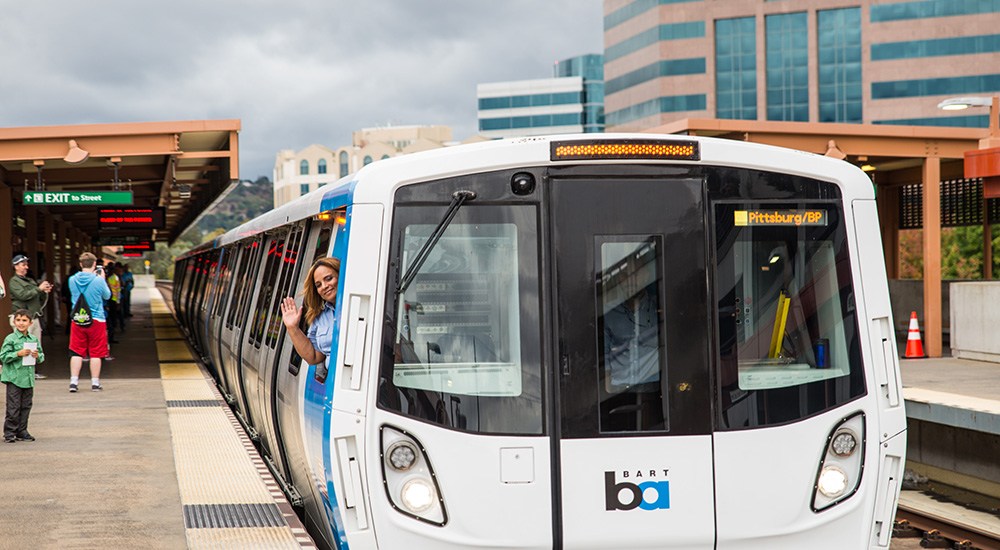
JE: When I gave my farewell speech I talked about the plaque above my desk that says “what would Jimmy Carter do?” He did so much that was on the right side of history. He literally put solar panels on the roof of the White House 50 years ago. Imagine if we’d continued on that trajectory. Imagine where we’d be with renewable energy if we stayed on that track. Okay, he was a one-term president, but he won the Nobel Prize, he lived to be 100, and he did so much. Who better to emulate than Carter? As politicians it’s in our nature to want to save our jobs and create a legacy. But how many supervisors do we remember from 60 years ago? Imagine if the supervisors of 60 years ago had made a decision to have a BART line down 19th Avenue and up to Marin? They didn’t do that because it was not politically popular at the time. Now we have a BART system that doesn’t serve our needs and those politicians are forgotten.
SB: Anything else?
JE: We have to think about the future. What can we do today that future populations will be grateful for, whether or not we’re remembered for it? That, to me, is the point of public service. I believe in my bones that I did the right thing and future generations will be grateful for Sunset Dunes. I think it’s important to put our egos aside and try to do what’s best for society.
This interview was edited.

Streetsblog has migrated to a new comment system. New commenters can register directly in the comments section of any article. Returning commenters: your previous comments and display name have been preserved, but you'll need to reclaim your account by clicking "Forgot your password?" on the sign-in form, entering your email, and following the verification link to set a new password — this is required because passwords could not be carried over during the migration. For questions, contact tips@streetsblog.org.